
Khamenei Asked Putin to Supply Iran with S-400 Systems — The Telegraph
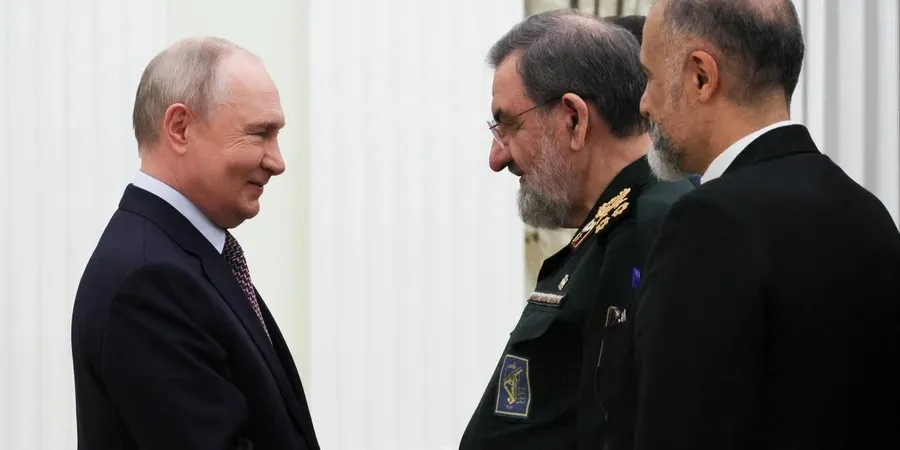
Iran is once again trying to reach an agreement with Russia on the supply of advanced S-400 air defense systems. According to The Telegraph, the country’s Supreme Leader, Mojtaba Khamenei, even sent an envoy to Moscow with a personal letter to Vladimir Putin. Tehran hopes to acquire the Russian systems after U.S. and Israeli strikes exposed weaknesses in Iran’s air defense.
On Thursday, November 5, Mojtaba Khamenei dispatched the head of his security service, Mohsen Rezaei, to the Kremlin. Rezaei delivered a personal letter to Vladimir Putin. One of Tehran’s main demands was for Russia to transfer weapons to Iran, specifically modern air defense systems. After the meeting in Moscow, Rezaei said that the parties discussed several important issues. Among them were the situation in the region following the end of the war and possible mechanisms for ensuring security in the Middle East. Representatives of the two countries also discussed the construction of a new gas pipeline between Russia and Iran.
The negotiations regarding the S-400 also drew attention due to statements by U.S. President Donald Trump. He had previously claimed that Russia was not helping Iran at all. However, reports of a possible supply of air defense systems indicate that military cooperation between Moscow and Tehran remains a topic of discussion. According to The Telegraph, Iran has already concluded a series of military agreements with Russia. These may be part of Tehran’s long-term plan to strengthen the country’s defenses and preserve the stability of the Islamic Republic amid its standoff with the U.S.
The publication also reviewed confidential documents from Iranian security services. These documents reveal that even before the war with the U.S. and Israel began in February, Iranian officials had prepared recommendations on how the country should act in the event of a prolonged military conflict. Among the proposed steps were deepening strategic and military ties with Russia and China. The documents devoted particular attention to strengthening air defense, developing missile systems, and producing drones.
The need for the S-400 became particularly acute following the U.S. and Israeli strikes. During the attacks, Iran lost some of its air defense assets. The strikes also demonstrated just how vulnerable the country’s airspace can be to enemy attacks. Iran was unable to adequately protect a number of military and nuclear facilities, as well as members of the country’s top leadership. Among the dead was the country’s former Supreme Leader, Ali Khamenei.
Tehran is now counting on Moscow to provide systems that would help strengthen its airspace defenses. At the same time, it remains unclear whether Russia will agree to this request.
Why Russia Might Reject Iran’s Request
According to The Telegraph, the prospects for a deal remain uncertain. Analysts and regional officials point out that Moscow has been promising Iran the delivery of such systems for many years but has yet to fulfill these commitments. The publication cites the Kremlin’s concerns about the reaction of Israel and other Middle Eastern countries as one possible reason. Transferring modern Russian weapons to Tehran could complicate Moscow’s relations with these states.
There is another problem: Russia itself currently needs air defense systems. Ukrainian drones and long-range missiles regularly attack Russian oil refineries, air bases, and other facilities. As a result, Moscow may simply not have enough spare systems to transfer to Iran.
Russia is already manufacturing missile equipment for Iran
At the same time, military cooperation between the countries is not limited to negotiations on the S-400. On November 5, documents from the Russian defense industry were made public, indicating the production of helicopter-launched missiles for Iran. According to the publication, Russian state-owned enterprises are manufacturing special launch equipment under an export contract codenamed K-10. The documents specify that this code refers specifically to Iran.
Back in September, the Financial Times reported that Russia was secretly helping Tehran develop supersonic cruise missiles. The publication called this one of the most notable instances of the transfer of strategic military technology from Moscow to Iran. Experts on missile weapons and military equipment interviewed by The Telegraph believe that the technology in question is almost certainly intended for anti-ship and ground-attack cruise missiles.
The possibility of cooperation in the space sector is also being discussed separately. It was previously reported that Russia, together with China, is developing its own satellite system, which is intended to be an analog of Starlink. According to Member of Parliament Yegor Fedorenko, Iran could potentially gain access to it as well.
Putin Assured Tehran of His Support
Russian dictator Vladimir Putin has publicly declared his support for Iran and its Supreme Leader Mojtaba Khamenei. On September 1, he assured Tehran that Moscow is ready to provide the necessary assistance. Putin also expressed admiration for the “courage and resilience” of the Iranian people.
Iranian President Masoud Pezeshkian, for his part, described relations between the two countries as strategic. However, these statements of support do not yet mean that Russia will agree to transfer the S-400 to Iran. Negotiations are currently ongoing, and Moscow’s final decision remains unknown. This was reported by The Telegraph, citing a high-ranking Iranian official.
Iraq has developed contingency plans in response to a potential military conflict between the United States and Iran. According to officials cited by Asharq Al-Awsat, the authorities have stepped up surveillance in border cities, deployed military units to border areas, and authorized commanders to respond immediately to armed incursions without consulting the commander-in-chief.
Iraq has proposed establishing a committee of foreign ministers from countries in the region, which would visit Tehran and Washington to seek peaceful solutions to current disputes. The initiative was discussed during a phone call between Iraqi Foreign Minister Fuad Hussein and Iranian Foreign Minister Abbas Araghchi, according to the Anadolu Agency.




