
Chinese-Egyptian expedition finds artifacts at Sekhmet Temple
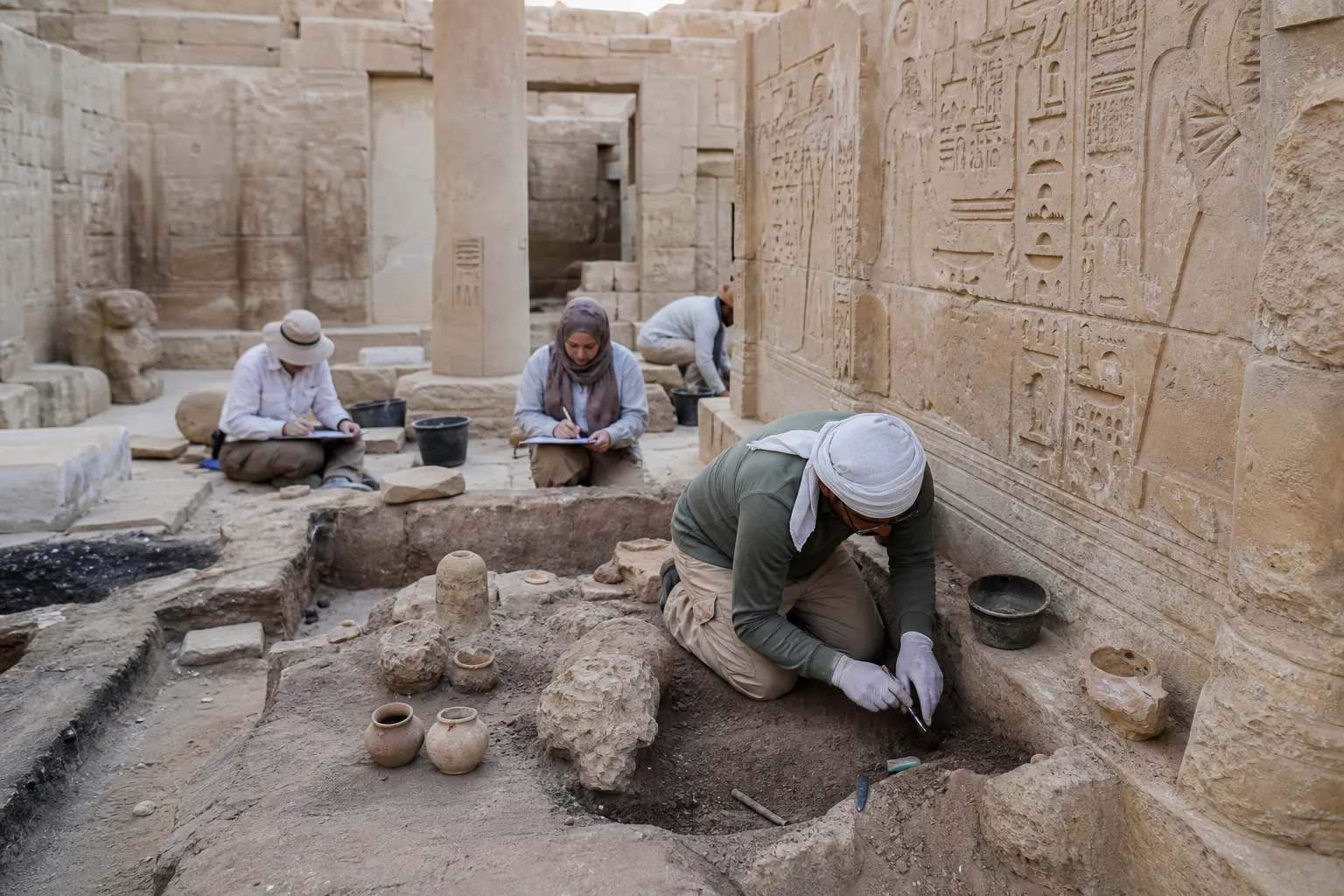
A joint Chinese-Egyptian archaeological expedition has discovered ruins and artifacts at the ancient Temple of Sekhmet in Mit Rahina, Giza Governorate, west of Cairo. Egypt’s Ministry of Tourism and Antiquities reported the findings, ECNS writes.
The ministry said the discoveries provide new evidence about the use and settlement of the area around the temple during different periods of Ancient Egyptian history.
Inscriptions and traces of winemaking
Archaeologists cleared the temple’s main above-ground structure and uncovered limestone walls with ancient hieroglyphic inscriptions. Nearby, they found a residential complex made of mud brick, as well as a limestone press containing grape seeds. This indicates that the press may have been used for wine production.
Other discovered items include stone blocks, statue fragments and pottery. Some of the stone artifacts are dated to the New Kingdom period, which lasted approximately from 1550 to 1069 BC.
More current news is available on the UA.News Telegram channel Telegram.
Joint archaeological mission
The excavations are being conducted by Egypt’s Supreme Council of Antiquities and the Shanghai Museum. The mission is co-led by Reham Zaki of the Supreme Council of Antiquities and Shanghai Museum Deputy Director Chen Jie.
According to Chen Jie, the Shanghai Museum and the Supreme Council of Antiquities will work on a long-term cooperation framework. It will cover archaeological excavations, research, conservation, exhibition and practical activities, as well as academic exchanges between the two countries in the field of archaeology.
The Temple of Sekhmet, accidentally discovered in 1959, was part of the Great Temple of Ptah, the main religious complex of ancient Memphis.


