
Holiday on September 3, 2026 — Bra Birthday: The Story of Caress Crosby and Her Patent
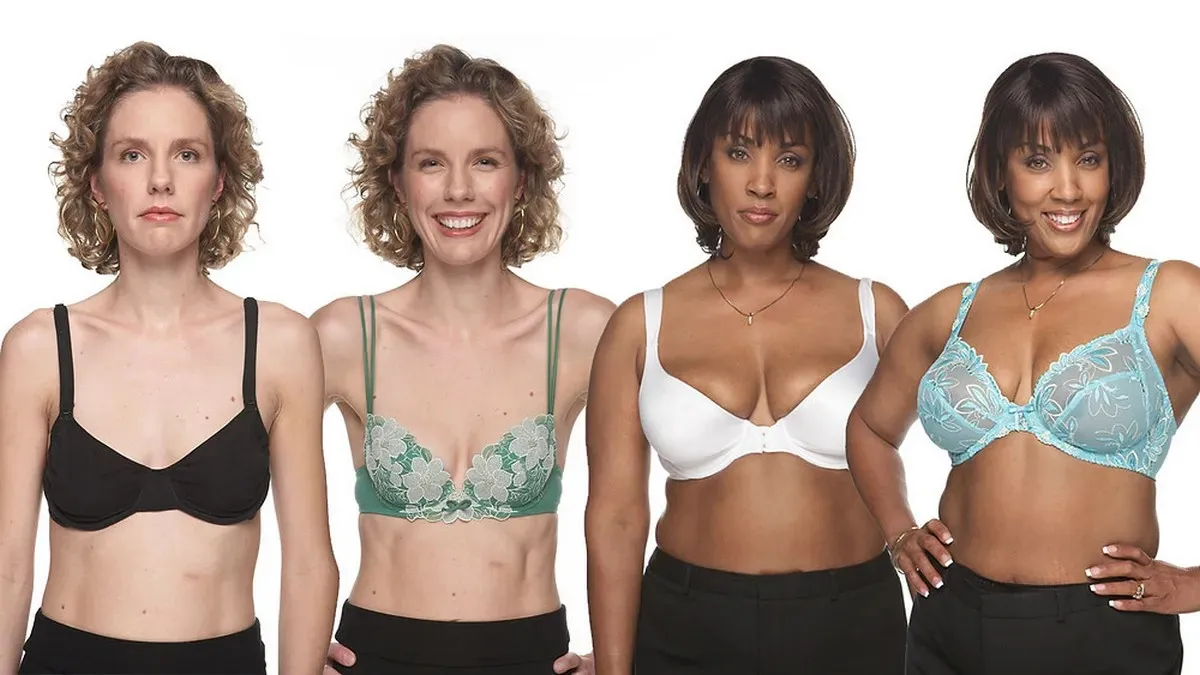
September 3 is unofficially celebrated as Bra Day—an occasion to reflect on the history of one of the most common items in a woman’s wardrobe. The modern bra began to take shape over a hundred years ago, when women gradually moved away from stiff corsets in favor of lighter and more comfortable undergarments. And the story of Caress Crosby’s invention didn’t begin in a laboratory at all, but rather before an ordinary festive ball.
The bra’s “birthday” falls on September 3. This date can be found in calendars of unofficial and themed holidays. However, it is not a national or official international holiday, but rather a symbolic day dedicated to the history of women’s lingerie and one of the most famous items of clothing.

The date is linked to the history of the invention of the modern bra, although popular accounts of this holiday often contain an error. A common version claims that on September 3, 1914, American Mary Phelps Jacob, later known as Caress Crosby, received a patent for her invention. In fact, patent documents show a different date: she filed the application on February 12, 1914, and U.S. Patent No. 1,115,674 for her “Backless Brassiere” was issued on November 3, 1914.
Therefore, September 3 should be viewed as the unofficial date of this themed holiday, rather than the exact date of the patent grant. This is important when discussing the history of the bra without spreading inaccuracies. Crosby’s invention itself was indeed an important milestone in the development of modern lingerie. But it would also be incorrect to unquestionably call her “the first person to invent the bra,” since various designs for supporting the breasts existed long before 1914.
What Women Wore Before the Bra
Before the modern bra appeared, women had been using various methods to support their breasts for centuries. Even in the ancient world, there were fabric bindings that helped support the breasts during sports activities. A well-known depiction of such designs can be seen in a mosaic from the Roman villa Villa del Casale in Sicily. In it, women are depicted wearing fabric bindings that resemble a very early version of a modern sports bra.
However, for many centuries in European fashion, it was not the bra but the corset that played the leading role. It was used not only to support the breasts but also to shape the entire figure. Using lacing, women cinched their waists, altered their silhouettes, and adapted their bodies to the fashion standards of a particular era.
Corsets became particularly rigid in the 19th century. They were made of fabric, metal, whale bone, and other materials. Such garments could be heavy and uncomfortable, and their design restricted movement. That is why there was a gradual demand for lighter undergarments that could support the breasts without constricting the entire body.

By the second half of the 19th century, various prototypes of bras already existed. They were called support corsets, breast belts, or other similar terms. Such designs were created in England, the United States, Germany, and France. In other words, the modern bra didn’t appear overnight—it evolved gradually as fashion, medicine, and everyday life called for more comfortable clothing.
How Caress Crosby Came Up with Her Own Design
The story of Caress Crosby has become one of the most famous stories in the history of the bra. Her real name was Mary Phelps Jacob. In 1910, when she was 19 years old, she was getting ready for a festive ball and bought a dress made of sheer fabric.
The problem was that the stiff corset was clearly visible under the dress. Not only did it ruin the look of the outfit, but it also prevented her from moving freely. So Mary, together with her maid, came up with a simple design using two silk handkerchiefs and ribbons. Instead of a heavy corset, she ended up with lightweight undergarments that weren’t visible under the dress and allowed her to move more freely. Her invention quickly piqued the interest of her friends. Women who saw the new design asked her to make the same ones for them. Soon, Mary realized that her idea could be more than just a home experiment—it could be a product.
She even began selling these bras. Later, Crosby founded her own company, the Fashion Form Brassière Company, and tried to set up production. However, the business was not a great success, and she eventually sold the patent to the Warner Brothers Corset Company for $1,500.
Interestingly, the company that acquired the patent went on to earn significantly more from bra production in the decades that followed. That is why Crosby’s story is often cited not only as the story of a fashion innovation but also as an example of how even the creator of a promising idea can underestimate its potential.
Why the Bra Gradually Replaced the Corset
It wasn’t just fashion that influenced the bra’s popularity. At the beginning of the 20th century, women’s lifestyles were changing. They were increasingly working outside the home, playing sports, moving more, and wearing clothes that required a different silhouette. After World War I, looser-fitting clothing became fashionable. The old silhouette with a very narrow waist gradually became a thing of the past. The bra was better suited to the new style than the heavy corset. In the 1920s, it began to actively replace the corset, especially among young women.

Old designs were replaced by elastic materials, lighter fabrics, and simpler fasteners. Manufacturers began to think not only about how to support the bust but also about how to make undergarments comfortable for different body types.
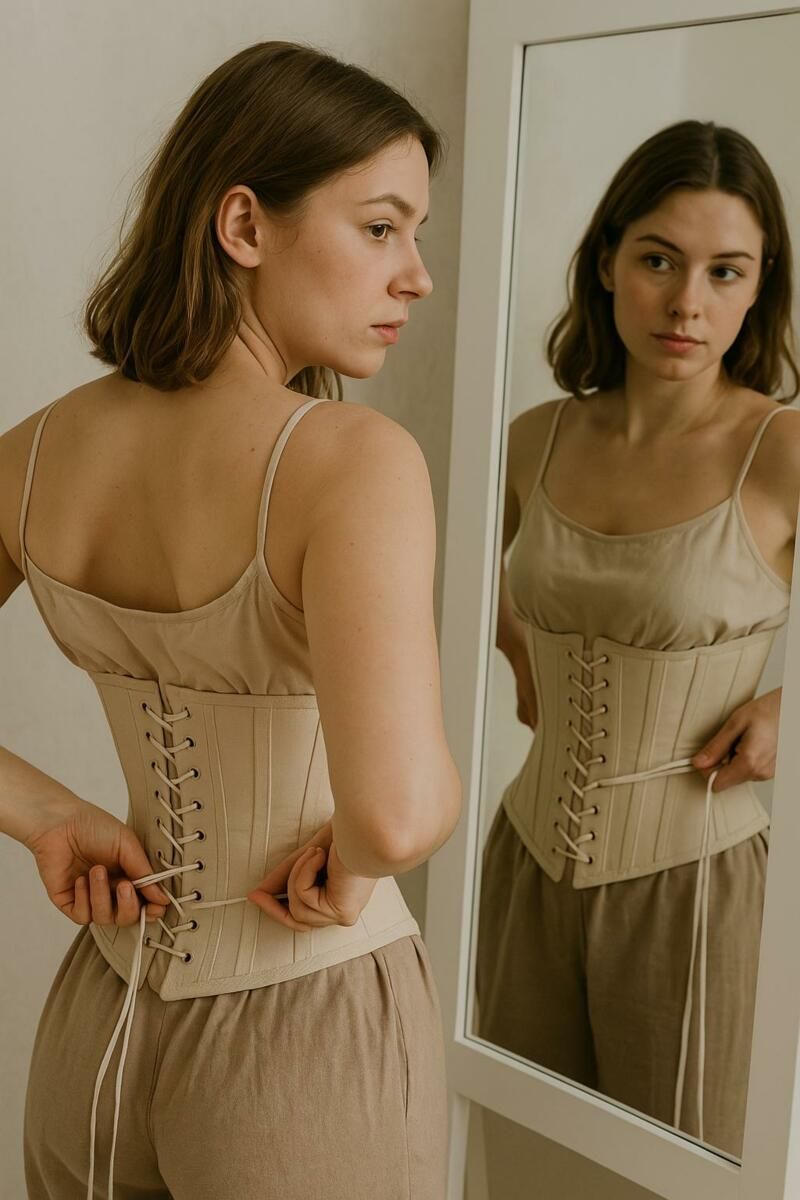
Fashion itself also played an important role. Clothing became less bulky, and women’s underwear was increasingly tailored to the specific style of a dress. A bra could be made almost invisible or, conversely, used to create the desired shape. Thus, ordinary underwear gradually evolved into a separate industry. By the mid-20th century, bras had already become a common part of women’s wardrobes in many countries.
Where Did Cup Sizes A, B, C, and D Come From?
It’s hard to imagine a modern bra without cup sizes. However, at the beginning of its history, no such system existed. A significant milestone came in the 1930s, when manufacturers began creating cups of various sizes. It was then that the system of designating cup sizes with letters gradually took shape. Sizes A, B, C, and D became widespread in the industry, and bras began to fit women with different body types much better.
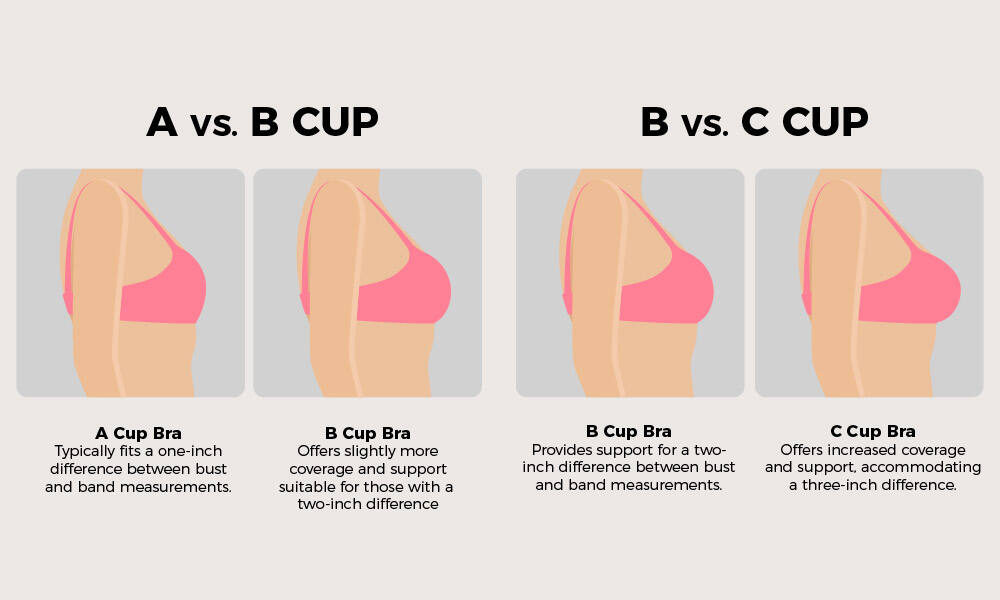
The American company Maidenform, founded by Ida and William Rosenthal, played a major role in this. William worked on cup design and the creation of standard sizes, while Ida handled production, sales, and brand development. Their company quickly grew from a small business into a major manufacturer of women’s lingerie.
By 1928, the company had already sold about 500,000 bras. Later, Maidenform became known not only for its designs but also for its bold advertising. In 1949, the brand launched its famous “I dreamed… in my Maidenform bra” campaign, which ran for about 20 years. So, the lettering on labels that we take for granted today is the result not of a single invention, but of many years of manufacturing development. It made bras more personalized and allowed women to choose lingerie that fit their figures.
How the Bra Survived the Technological Revolution
Materials have also changed significantly. The earliest designs were made primarily from fabric and ribbons. Later, manufacturers began using various types of corset fabrics, silk, elastic materials, and other fibers. The widespread adoption of synthetic materials marked an important technological milestone. In particular, the advent of nylon opened up new possibilities for manufacturers. Lingerie became lighter, more durable, and easier to produce.
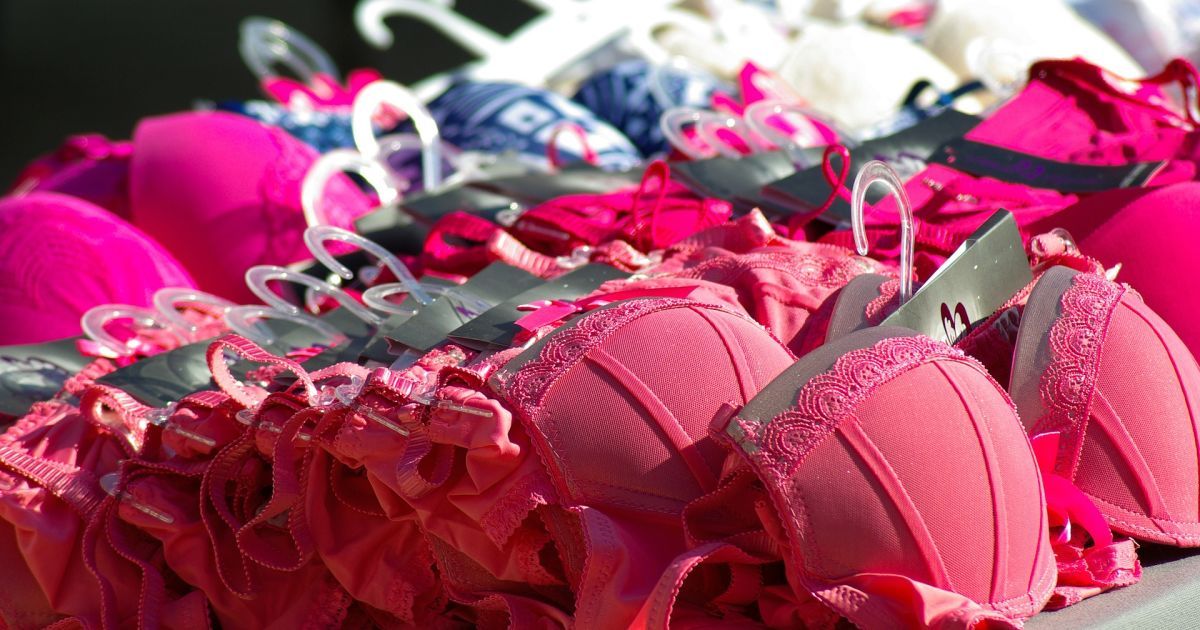
Over time, dozens of different designs emerged. Bras began to be made for sports, breastfeeding, body contouring, everyday wear, and evening wear. Wire-free models, sports bras, and designs tailored to different body types developed separately.

Today, a bra can be almost invisible under clothing or, conversely, become part of the outfit. It is made from lace, cotton, microfiber, stretch fabrics, and various synthetic materials. Advances in technology allow for the creation of styles that combine support, comfort, and aesthetics.
The Bra and World War I
The history of this garment is surprisingly linked to war. During World War I, the United States began conserving metal, which was needed for the military industry. Corsets of that time contained a significant number of metal elements. The American public was urged to stop wearing metal corsets so that the raw materials could be diverted to the army’s needs. According to historical records, this effort freed up about 28,000 metric tons of steel—which, by a common estimate, would have been enough to build two warships.
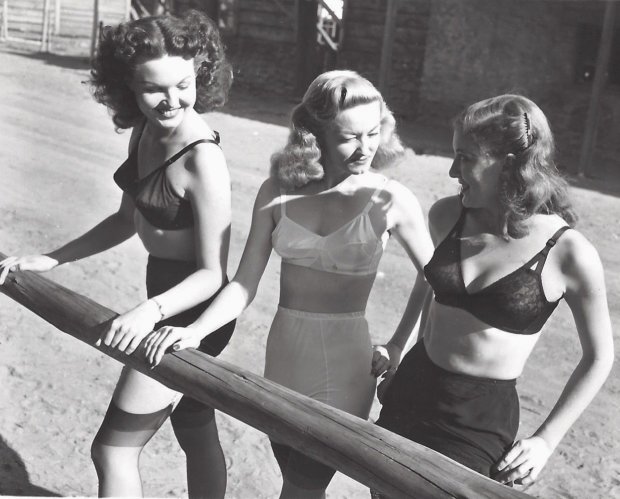
But it would be incorrect to say that the war “invented” the bra. Its designs existed earlier, and the transition from corsets to lighter undergarments had begun even before 1914.
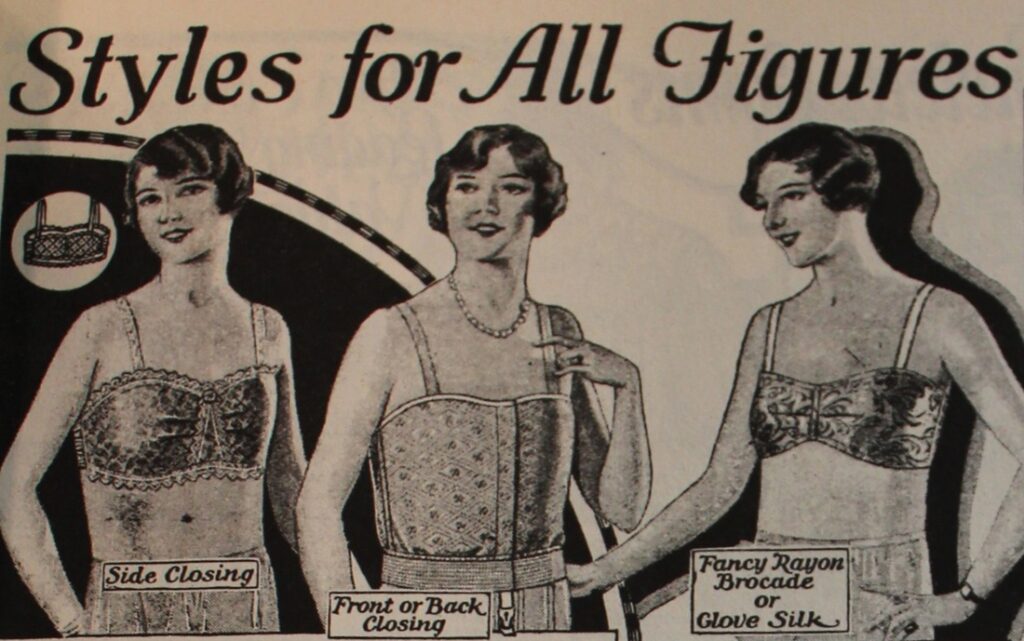
The war merely accelerated changes that were already taking place in society. Women were working en masse in jobs that had previously been dominated by men. A heavy corset was uncomfortable for physical labor, whereas lighter undergarments were better suited to the new lifestyle. Therefore, World War I was one of the factors that contributed to the corset’s eventual decline in popularity.
The bra became not just underwear, but also a part of culture
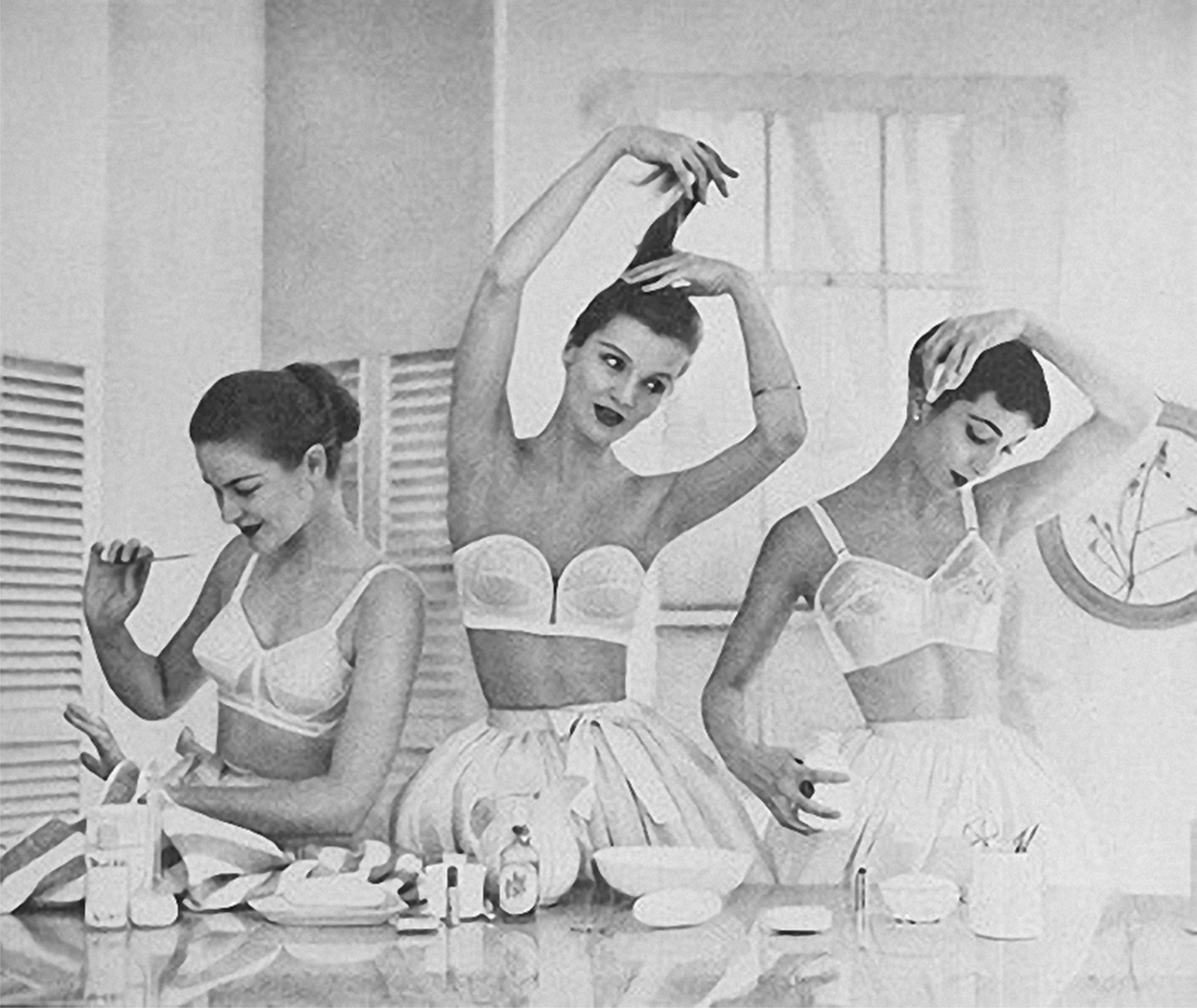
In the 20th century, the bra ceased to be merely a practical item. Movies, advertising, and fashion made it part of the image of femininity. In the 1940s and 1950s, styles that created a more pronounced breast shape gained popularity. Hollywood actresses also influenced fashion. Lingerie increasingly became part of the general perception of attractiveness and the feminine image.
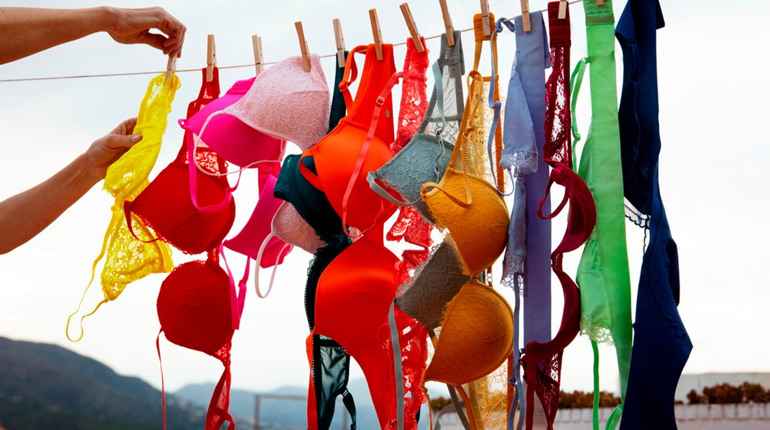
But attitudes toward the bra eventually changed. In the 1960s and 1970s, part of the feminist movement opposed the imposed standards of female appearance. The bra became one of the symbols of the debate over whether women should dress according to societal expectations.
This is where the famous story of “bra-burning” at feminist protests comes from. In reality, this story has largely become a myth: during a protest against the 1968 “Miss America” pageant, activists did stage a symbolic act of discarding items they considered symbols of imposed standards, but there was no mass burning of bras, as is often depicted in popular culture.
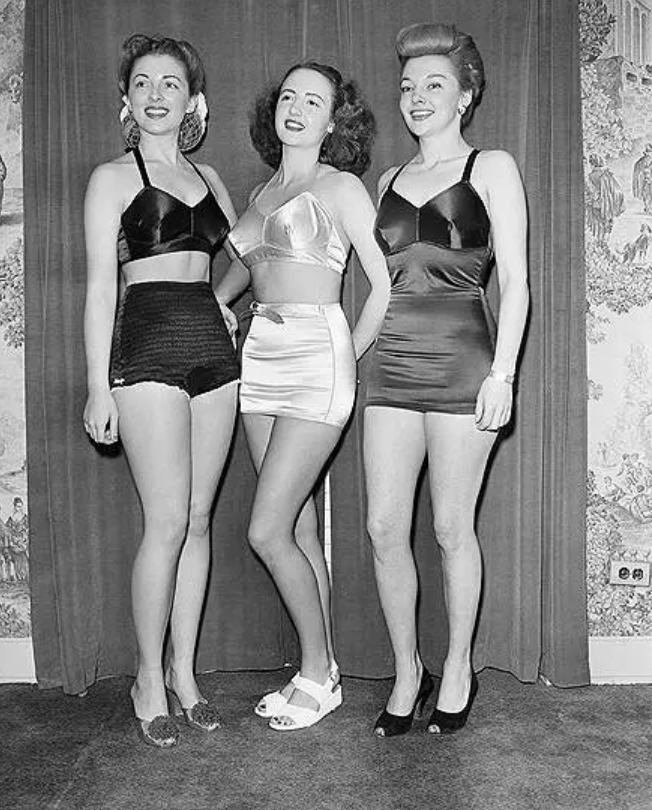
Thus, the bra has become an intriguing cultural artifact. At one time, it was seen as a symbol of femininity; at others, as a symbol of restriction. Today, attitudes are much simpler: some wear it every day, some opt for sports bras, and some choose not to wear such undergarments at all.
Interesting Facts About the Bra
The history of the bra is full of surprising facts. For example, Mary Phelps Jacob was very young when she came up with her design. She was only 19 years old when she created the first version for a party dress.
Her invention bore no resemblance to most modern models. It was a lightweight design made of fabric, consisting of two pieces and straps, which left the back exposed. That is why, in the patent, her invention was called the “Backless Brassière,” meaning a bra with an open back.
Another interesting point is the name itself. The word “brassière” comes from French. It had a longer history and was not originally used quite in the same sense as it is today. In the early 20th century, the term gradually came to be associated with women’s underwear. In 1904, the word was used in an American advertisement, and by 1907, it had already been published in American Vogue. In 1911, the term was included in the Oxford English Dictionary.
It’s also interesting to note that Caress Crosby wasn’t just an inventor. She later became a publisher and patron of the arts, and together with her second husband, Harry Crosby, she founded Black Sun Press. This publishing house released works by modernist writers, including Ernest Hemingway, James Joyce, and other well-known authors.
- And here’s another important fact: the modern bra cannot be attributed to just one person. Before Crosby, there were numerous designs that served a similar function. Fashion historians point to a whole series of inventors and designers who gradually transformed women’s undergarments. That is why 1914 is best regarded as a significant milestone in the history of the modern bra, rather than the moment of its creation from scratch.
How the Bra’s Birthday Is Celebrated
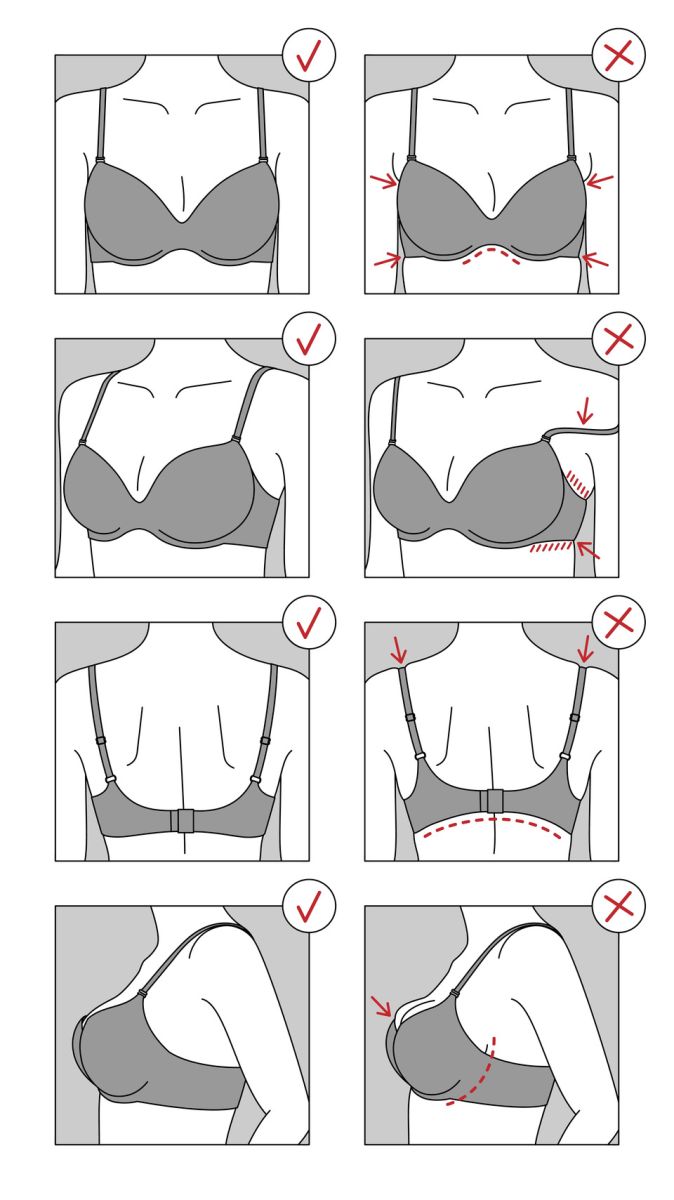
Since this is an unofficial themed holiday, there is no single established way to celebrate it. No one dictates exactly how it should be observed. Therefore, it all depends on how each person personally views this date. For some, it’s simply an excuse to read interesting facts about the history of fashion. Others may use the day to sort through their lingerie and get rid of items that have long since lost their shape or become uncomfortable. Another option is to choose a new style if the old one no longer fits properly or flatters your figure.
Fashion brands and lingerie stores can use such themed dates for special offers, photo shoots, posts about the history of lingerie, and showcases of new styles. On social media, this day also serves as an opportunity to discuss fashion, comfort, self-esteem, and body image. But the most important thing here is that there’s no obligation whatsoever. Whether or not to wear a bra is a personal choice for everyone. Modern lingerie is designed to meet a variety of needs, so there’s no one-size-fits-all rule.
Why This Day Is Still Relevant
A bra seems like such an ordinary thing that we hardly stop to think about how much it has changed over time. In just over a hundred years, it has evolved from a simple design made of fabric and straps to a vast array of styles, sizes, and materials. Its history largely reflects the history of women themselves in the 20th century. Fashion has changed, as have work, attitudes toward the body, and notions of beauty and comfort. Lingerie has evolved alongside these changes.
That’s why the Bra’s Birthday can be seen as more than just a fun date on the calendar. It’s an occasion to reflect on how a single simple everyday need sparked an entire industry and became part of fashion history. And perhaps the most interesting thing about this story is that the modern bra began with a very simple situation. A young woman needed to put on a dress for a ball, but her corset was getting in the way. She took two handkerchiefs, a few ribbons, and came up with something more comfortable. More than a hundred years later, this story remains one of the most famous in the fashion world.


