
Roman concrete provides grounds for a hypothesis about the blocks of the Giza pyramid
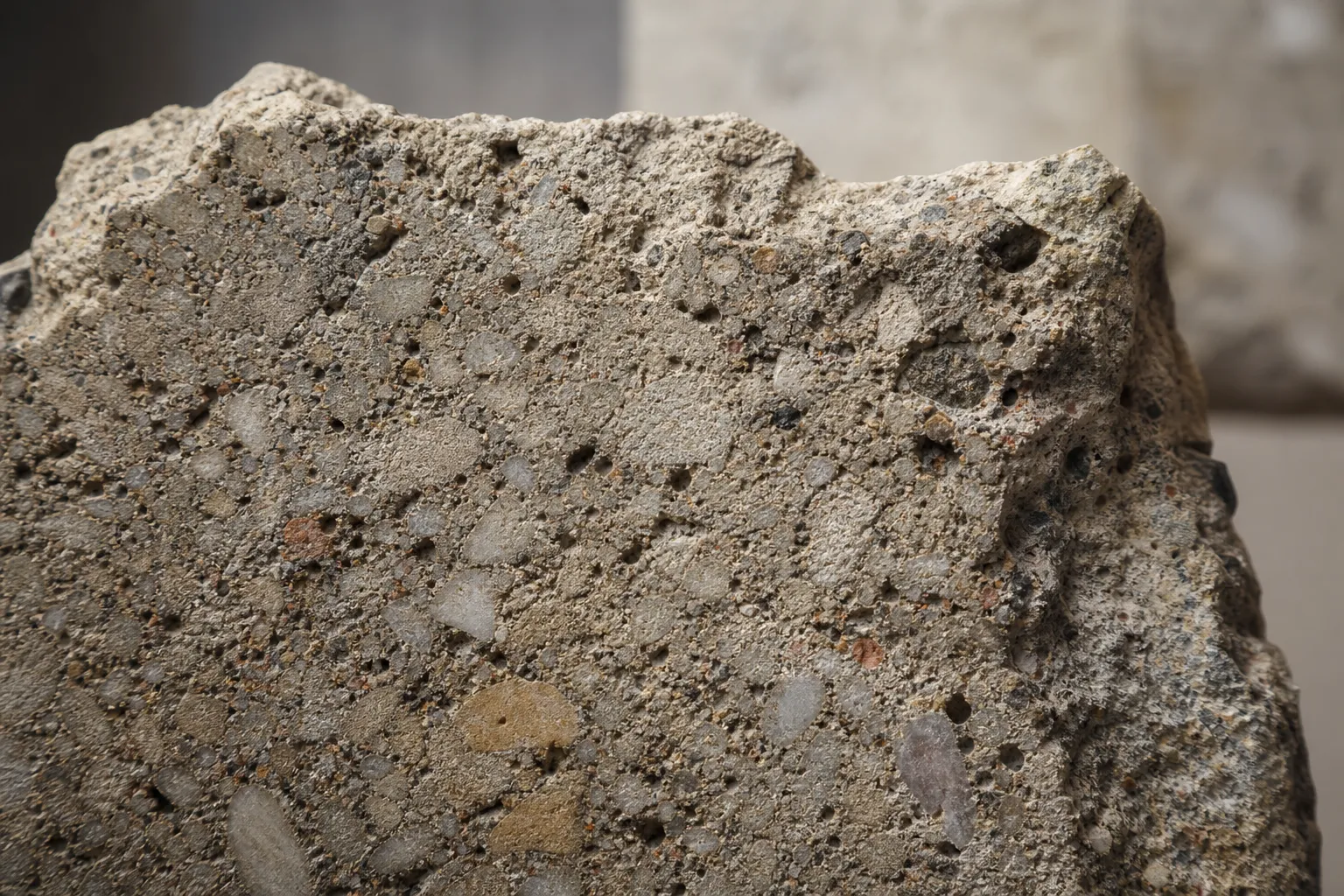
A study of nearly 2,000-year-old Roman concrete has pointed to a mechanism that could theoretically explain the durability of artificial building materials in the Great Pyramid of Giza. At the same time, scientist Zhu Xiaohong stressed that he did not study the pyramid directly, and the assumption that the ancient Egyptians used concrete or artificial stone has not been proven.
The study was reported by the South China Morning Post. The work was published in the peer-reviewed journal Science Advances in July. The team led by Zhu of Beijing University of Technology, with the participation of specialists from several U.S. scientific institutions, analyzed concrete from a public toilet at Hadrian's Villa in Tivoli, Italy.
Calcite fills microcracks
Using high-precision imaging, the researchers found that the durability of the Roman material is linked to the gradual formation of calcite crystals that fill pores and microcracks. This process is partly facilitated by carbonation: calcium-rich compounds react with moisture and atmospheric carbon dioxide, forming calcium carbonate.
More current news is available on the UA.News Telegram channel Telegram.
For modern reinforced concrete, carbonation is often considered a problem because it lowers the material's pH and may contribute to corrosion of embedded steel. However, in ancient unreinforced concrete, according to the study's authors, this process can promote mineral growth and densify the structure. Dense layers of calcite formed around older mineral phases, in pores and cracks, strengthening the material and reducing pathways for water penetration.
A materials science hypothesis
According to the main archaeological version, the pyramids were built from natural limestone and granite blocks that were precisely worked and transported to the site. An alternative theory suggests that the blocks of the Great Pyramid, which consists of about 2.3 million multi-ton stones, may have been cast from an early form of concrete.
Zhu suggested that if Egyptian builders used a calcium-rich concrete-like mixture, prolonged carbonation, mineral precipitation, and pore filling could have densified the material over time. He called this a well-founded hypothesis from a materials science perspective, rather than proof of the blocks' concrete origin. The researchers also believe that observations of Roman concrete may help develop modern materials capable of gradually filling pores and microcracks.




