
Key UN General Assembly Terms From UNGA to G77 — TimesLIVE
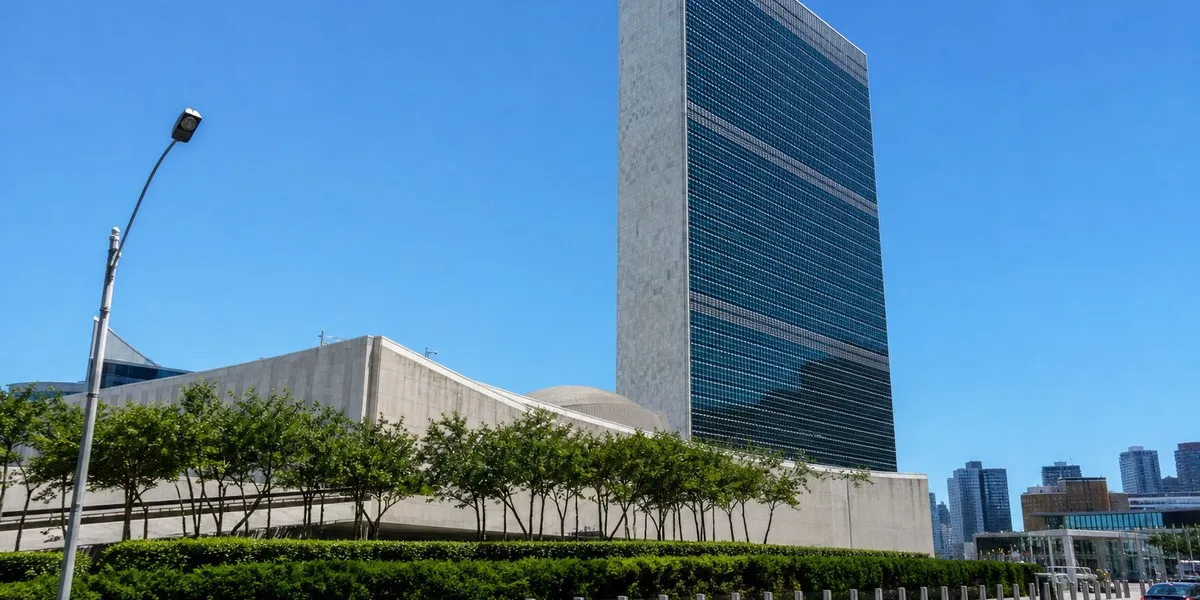
In New York, United States, the annual high-level week of the UN General Assembly brings together heads of state and government, diplomats and ministers from the organization’s 193 member states. TimesLIVE explains the main abbreviations and concepts that accompany meetings and speeches at UN headquarters.
UNGA is the common abbreviation for the United Nations General Assembly, also used to refer to its high-level week. The central part of the programme is the general debate: each state may give its leader or representative the floor to speak about global and national issues. At the same time, bilateral meetings, or bilats, play a significant role — closed-door talks between senior officials from two countries.
Security Council and groups of states
The UN Security Council has 15 members and is responsible for maintaining international peace and security. It can adopt binding resolutions, impose sanctions and deploy peacekeeping forces. The P5 are its five permanent members with veto powers: China, France, Russia, the United Kingdom and the United States. The E10 are ten non-permanent members elected by the General Assembly for two-year terms on a regional basis.
More current news is available on the UA.News Telegram channel Telegram.
G77 means the “Group of 77 and China” — an association of developing countries created within the UN system in 1964. Despite its name, it now includes 134 states. Frequently used abbreviations also include SIDS — small island developing states, LDCs — least developed countries, and IFIs — international financial institutions, including the World Bank and the International Monetary Fund.
Climate and diplomatic concepts
Key terms include the SDGs, or Sustainable Development Goals, which UN countries unanimously adopted in 2015 as a 15-year action plan. They cover combating climate change, hunger and poverty, as well as gender equality. Separately, there is the goal of limiting warming to 1.5°C compared with the pre-industrial period, which countries agreed to work toward under the 2015 Paris climate agreement.
In diplomatic vocabulary, multilateralism means global or near-global cooperation to develop common rules. Multipolarity describes a world with several distinct, sometimes competing centres of power. The two-state solution envisages the creation of an independent Palestine that would coexist peacefully with Israel. The term “unilateral coercive measures” is usually a critical way of describing sanctions imposed by one country in an effort to induce another to take certain actions.


