
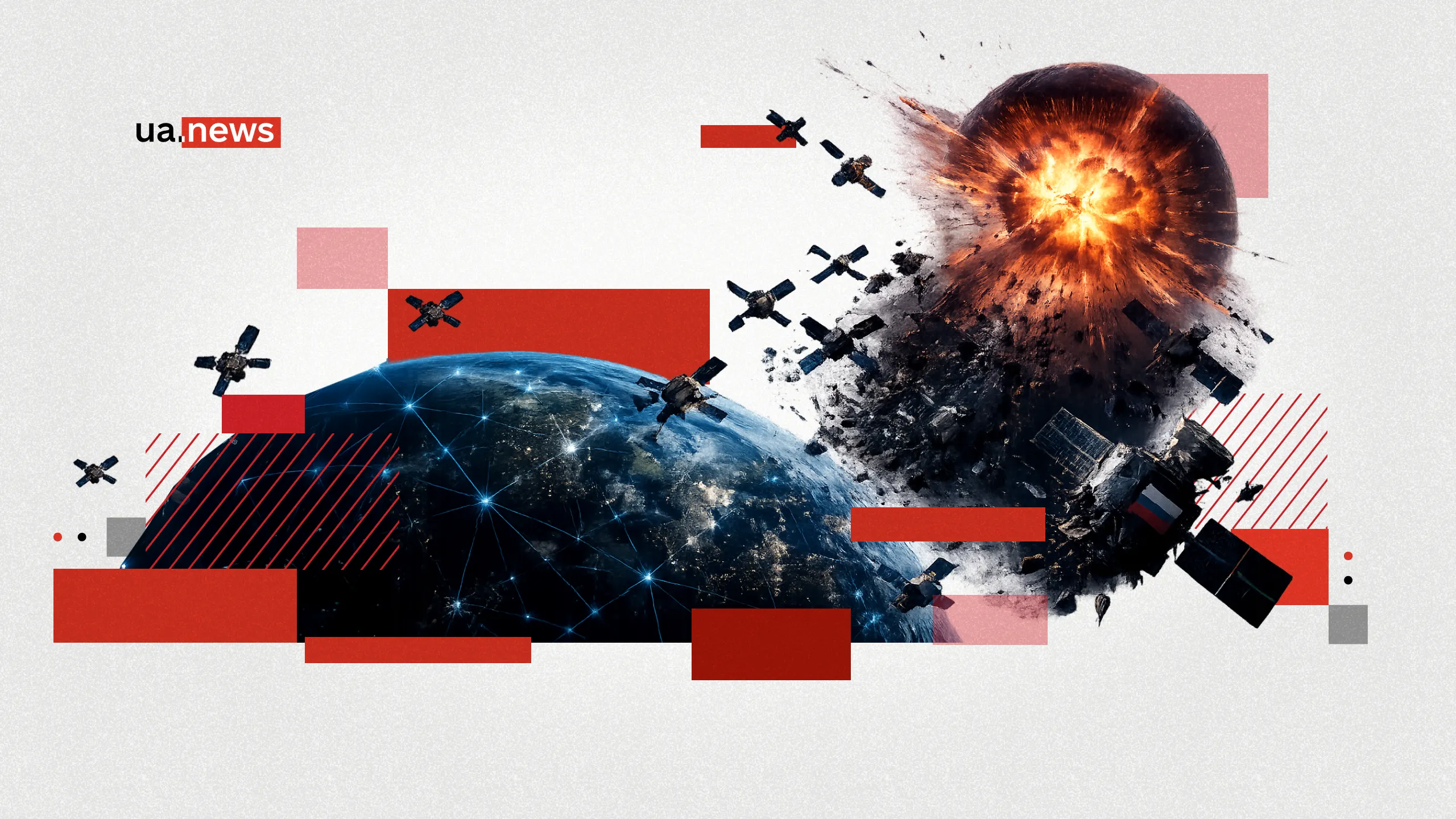
Recently, the British newspaper *The Times* published an interview with General Stephen Whiting, head of U.S. Space Command, in which he issued some rather alarming warnings. According to U.S. intelligence, Russia is considering the possibility of deploying nuclear weapons in Earth’s orbit capable of destroying or disabling up to 80% of all satellites in space with a single explosion. Whiting called this scenario a “space Pearl Harbor”—that is, a sudden, devastating attack capable of setting humanity back decades in technological development in a matter of minutes.
A few days later, Defense One reported on the conclusion of secret command-post exercises during which U.S. Space Command, together with allies and over 60 defense companies, simulated a “worst-case scenario”: Russia’s use of nuclear weapons in space. Representatives from Australia, Canada, New Zealand, the United Kingdom, as well as the Pentagon, the U.S. Department of Energy, and NASA participated in the exercises. This indicates that the threat is perceived at the highest levels not as hypothetical, but as entirely real and requiring immediate preparation.
So what is really going on? Why has the world suddenly started talking about a nuclear explosion in space? What would the consequences be if this scenario were to actually unfold? UA.News investigated the matter.
Anatomy of the Threat: What Exactly Is Russia Planning and Why
It should be noted right away that reports of Russia’s possible deployment of nuclear weapons in space did not emerge today. As far back as 2024, the administration of U.S. President Joe Biden stated that a Russian satellite, which U.S. intelligence identifies as a test platform for nuclear anti-satellite weapons, has been in orbit for two years. This refers to the “Kosmos-2553” spacecraft, launched by Russia under the guise of a research satellite. Moscow’s official position is that “Kosmos-2553” is intended solely for testing onboard instruments in high-radiation environments. However, American analysts are convinced that the true purpose of this satellite is to support the development of nuclear anti-satellite weapons capable of destroying entire satellite constellations, including the Starlink network, which is actively used by the Ukrainian Armed Forces.
The principle of operation of such weapons does not involve precision strikes against individual satellites—unlike kinetic anti-satellite missiles, which Russia, the U.S., China, and India have already tested in the past. A nuclear explosion in space is a weapon of mass destruction against orbital infrastructure, indiscriminate by nature. The Secure World Foundation’s report “Global Counterspace Capabilities” notes that such an explosion would occur in two waves: the first—the instantaneous destruction of satellites within direct line of sight of the blast epicenter; the second—the gradual degradation and failure of satellites exposed to elevated radiation levels captured by the Van Allen radiation belts.
The key factor making this threat so massive is the “pumping” effect on the radiation belts. The Van Allen belts are natural regions around Earth where the planet’s magnetic field traps high-energy charged particles, primarily from the solar wind. The inner belt is located at an altitude of approximately 1,000 to 12,000 km, and it is through this belt that the orbits of many satellites pass. A nuclear explosion in space creates a huge number of additional charged particles, which the Earth’s magnetosphere captures and retains for a long time. As a result, the natural radiation background in orbit increases by two to three orders of magnitude, turning near-Earth space into a deadly trap for any electronics.
Incidentally, a historical precedent already exists. In 1962, the United States conducted the Starfish Prime test as part of Operation Fishbowl—detonating a 1.4-megaton thermonuclear bomb at an altitude of about 400 km above the Pacific Ocean. As a result, the electromagnetic pulse knocked out power grids in Hawaii, located hundreds of kilometers from the epicenter; at least three satellites were destroyed instantly, and the artificial radiation belt created by the explosion persisted for nearly a decade (!), gradually dissipating but continuing to pose a threat to spacecraft.
It is important to note that at the time of the Starfish Prime test, there were only a few dozen satellites in orbit. Today, there are over 12,000. The scale of a potential catastrophe has increased by orders of magnitude since then.
What Russia Says
In fact, deploying nuclear weapons in space would constitute a direct violation of the 1967 Outer Space Treaty, which was signed by over 100 states, including Russia (as the successor to the USSR) and the United States. Article 4 of this treaty explicitly prohibits “placing in orbit around the Earth any objects equipped with nuclear weapons or any other weapons of mass destruction.” A violation of this provision would effectively dismantle the entire system of international space law.
Russia’s official position on these allegations is, as always, one of denial: “We did nothing.” Russian Foreign Minister Sergey Lavrov emphasizes that Moscow has never deployed and does not plan to deploy weapons of mass destruction in space. Instead, the Kremlin traditionally accuses the United States of doing so.
At the same time, it is worth noting the utterly Jesuitical stance of the Russian side. In April 2024, Russia vetoed a resolution proposed by the U.S. and Japan in the UN Security Council that would have banned the deployment of nuclear weapons in space. The official explanation was that Moscow is not opposed to banning nuclear weapons per se, but rather advocates for a complete ban on any weapons in space—a position the U.S. does not support, as it would limit its own military space programs.
In other words, both sides are using international law as a tool for their own strategic positioning. This significantly complicates the search for a real compromise and leads to an increased risk of the militarization of space.

What Would Happen After a Nuclear Explosion in Space
To grasp the scale of a potential catastrophe, just imagine a typical day in the life of an average modern person, and then “turn off” everything in their life that depends on satellites.
First, GPS navigation will disappear—and this isn’t just about not being able to plot a route on your smartphone while driving or traveling by car. Without satellite time synchronization, bank transactions, stock exchanges, power grid control systems, and more would grind to a halt. Satellite internet would cease to function—including Starlink, which today provides connectivity not only to remote regions but also to the Ukrainian army on the front lines. Satellite TV, radio communications, emergency alert systems, etc., will disappear. Civil aviation, which increasingly relies on satellite navigation, will find itself in a situation where flights become extremely risky.
General Whiting stated in an interview with The Times that, in his opinion, “the next major war will begin in space.” He explained that from the perspective of Russia, which lags far behind the U.S. and NATO in conventional weapons, neutralizing the enemy’s space capabilities is a way to “level the playing field.” And this is indeed the case, as the modern U.S. military machine is critically dependent on satellites. This includes reconnaissance, communications, guidance of precision-guided weapons, and so on. Disabling most satellites would effectively “blind” and “deafen” the U.S. military. It
is also worth emphasizing once again the indiscriminate nature of such weapons. A nuclear explosion in space does not distinguish whose satellite it destroys—American, Chinese, European, or, for that matter, Russian. Russia also has a significant satellite constellation, including the GLONASS navigation system, as well as satellites for communications, military reconnaissance, and early warning of missile attacks. Their destruction would inflict colossal damage on Russia’s own defense capabilities. Furthermore, satellites belonging to China—a strategic partner of Moscow—are in orbit, as well as the International Space Station with a crew on board and the Chinese Tiangong space station. All of them would fall victim to such an attack.
Expert Opinions
Military expert and commander of a Ukrainian Armed Forces reconnaissance unit, Denys Yaroslavskyi, considers American concerns to be entirely justified.
“It is not only Moscow that is preparing for a confrontation in space. China, above all, is preparing for this—developing weapons to destabilize satellites, developing laser weapons to destroy satellites, and so on. Space is a priority today. The U.S., China, and Russia—all are engaged in such developments. This is 100% accurate information. When I was on a business trip to the U.S., I spoke with a Pentagon representative who told me exactly the same thing and confirmed it. So such developments are indeed underway, and Russia is striving to catch up with China and the U.S. As for Ukraine and whether it can counter such Russian weapons—I know for a fact that, at least until the war, there were two enterprises in Kharkiv that were developing special space rockets in collaboration with the French. There were institutes that could at least partially participate in such programs alongside Europeans. “I believe that Ukraine can still join forces with partner countries to counter a potential threat even in space,” Denis Yaroslavsky is confident.
However, military expert and retired U.S. Navy Captain Harry Tabach assesses the situation somewhat more skeptically. At the same time, he still urges us not to let our guard down
.“If all this is led by a hypothetical Rogozin (former head of Roscosmos—ed.), then it is quite likely that the carrier of such a weapon will not take off at all. If it does take off, it will be empty. And if it isn’t empty, it will crash. If it doesn’t crash but is still defective, it will only take out Chinese satellites. Because all the Russian ones have long since crashed on their own. However, the threat itself is always present. You can and should expect anything from the KGB. In principle, they can cause any kind of disaster,” noted Harry Tabakh.
In summary, the potential deployment of Russian nuclear weapons in space represents a fundamentally new challenge to global security, taking the militarization of space to a new level. A nuclear explosion in space would be an “apocalypse” for all of humanity’s space infrastructure, with consequences that would be catastrophic for everyone without exception.
Could Russia really take such a step? There is no clear answer. And to take the Kremlin at its word in 2026 would mean being either very naive or very foolish.
For Ukraine, this situation is of particular importance. Starlink satellite communications are critically important for the Armed Forces of Ukraine on the front lines, and any disruption to its operations would have a direct impact on the course of hostilities. Moreover, in everyday life, Ukrainians use satellite technologies on a massive scale, even if most are not even aware of it.
The 1967 Outer Space Treaty, which has remained the foundation of international space law to this day, clearly needs updating: it prohibits only weapons of mass destruction, leaving other types of anti-satellite weapons unaddressed. However, given the current climate of deep mistrust between Russia and the West, reaching a new consensus seems highly unlikely.




