
Developing countries demand greater influence over AI rules — TimesLIVE
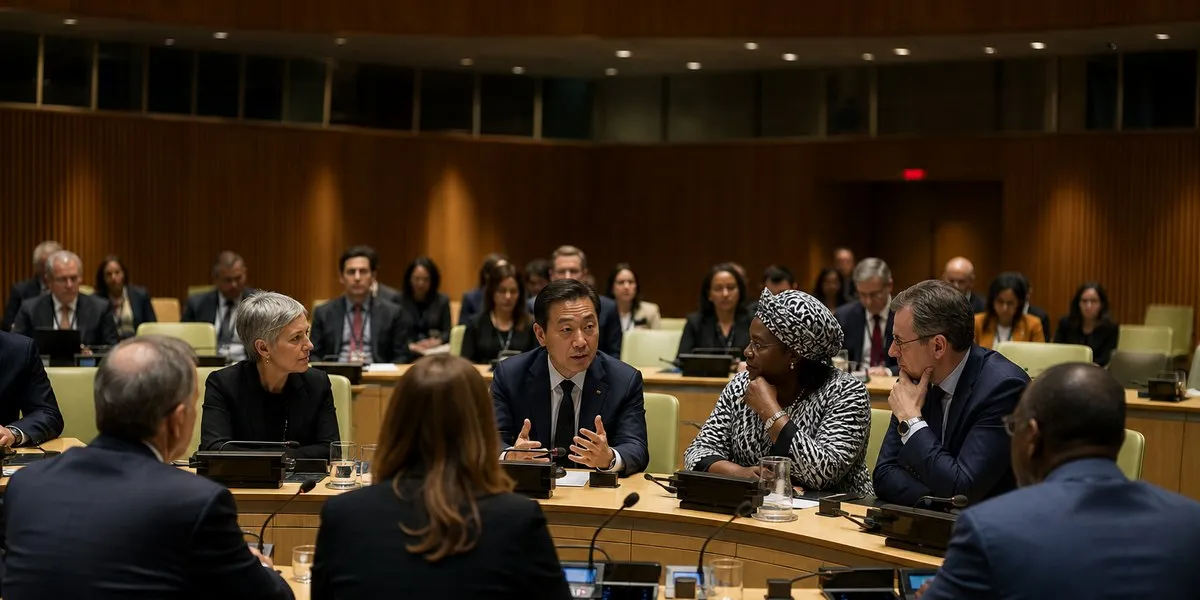
Developing countries called for greater influence over the shaping of artificial intelligence regulation rules during discussions at the UN in New York, United States. They warned that the concentration of AI development and regulation in wealthy states could deepen global inequality, TimesLIVE reports.
Participation in setting standards
Democratic Republic of Congo Foreign Minister Thérèse Kayikwamba Wagner said that developing countries should not be reduced to the role of users of technologies created in other states or recipients of standards and norms in whose development they did not adequately participate. According to her, the technological changes of the 21st century must not reproduce the economic imbalances of previous decades.
Wagner spoke at a UN Security Council meeting dedicated to artificial intelligence. It was also attended by leaders of leading AI laboratories, including Sam Altman of OpenAI and Dario Amodei of Anthropic, who called on governments to cooperate in governing this technology.
More current news is available on the UA.News Telegram channel Telegram.
Bangladesh Foreign Minister Khalilur Rahman, who chaired the debate, noted that four years ago only five delegations raised the topic of AI in this chamber, while this year it was mentioned by 128 delegations. He said that participants in the discussion viewed AI primarily as a matter of governance: who creates it, who receives the benefits, who assumes the risks, and who is responsible for the harm caused.
Potential and risks of the technology
The World Bank said in a report last month that artificial intelligence could help developing countries achieve in a decade progress that would normally require a century. At the same time, they need to rapidly close gaps in access to electricity, connectivity and skills. The International Monetary Fund reported in July that, under the right conditions, AI could increase the economies of sub-Saharan African countries by about 4% over the next decade.
UN Secretary-General António Guterres compared discussions about the risks of artificial intelligence to the climate crisis and stressed that developing countries must have an equal voice in both issues. Belize Prime Minister John Briceño also said that proper AI regulation can expand access to knowledge and improve public services, while weak governance can deepen inequality, endanger critical systems, displace workers and increase the technological dependence of such states.




