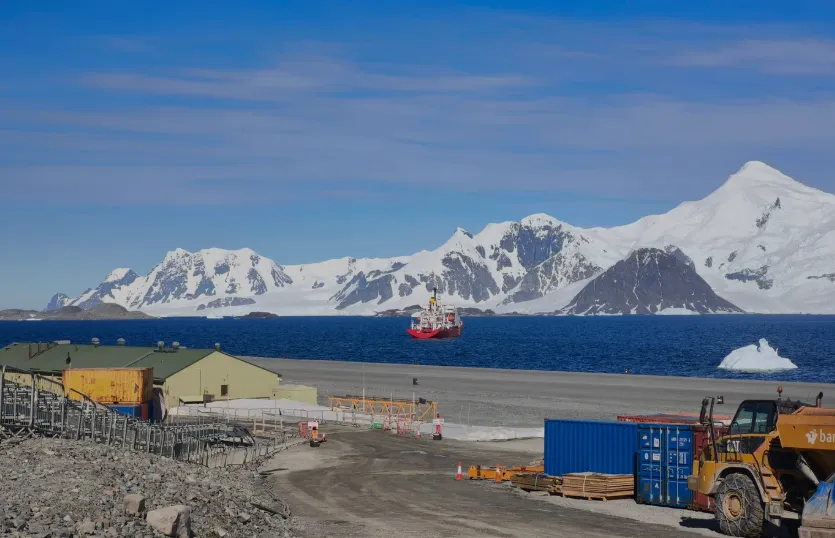
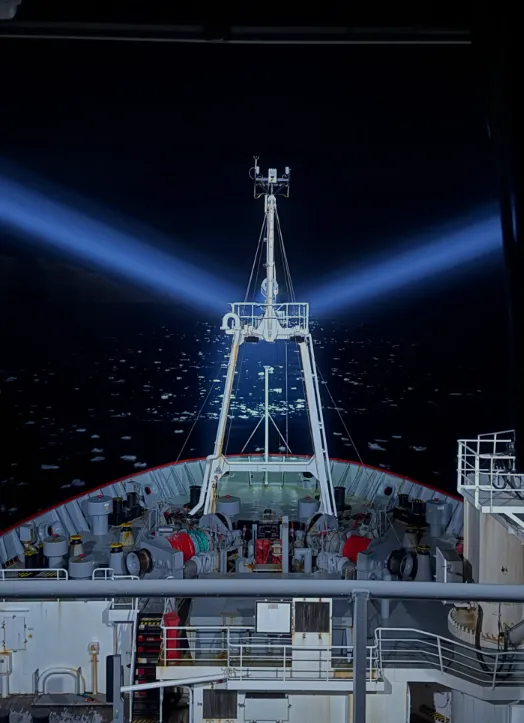
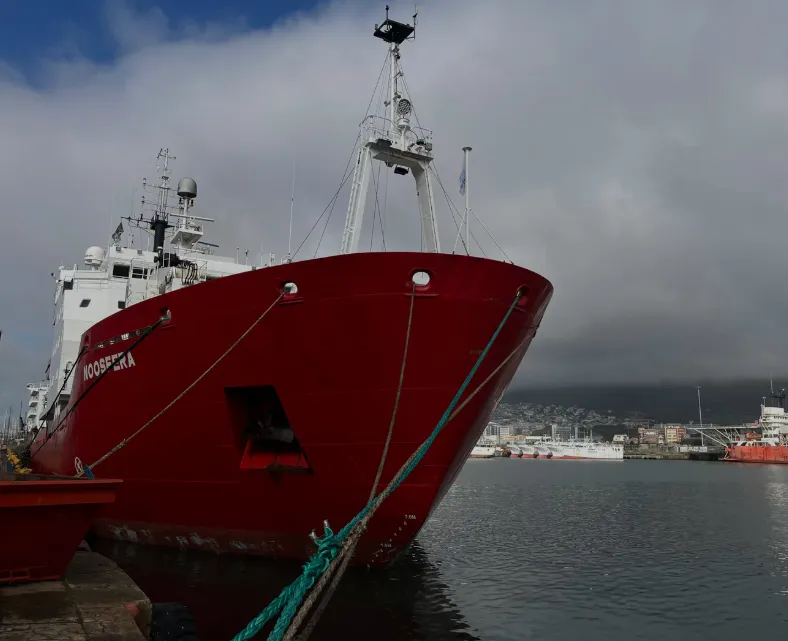
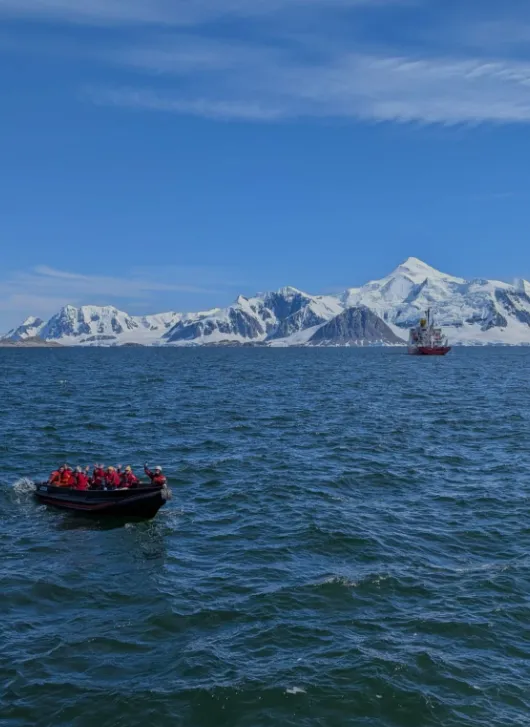
The Ukrainian research icebreaker "Noosphere" has completed its fifth Antarctic season and returned to the port of Cape Town in South Africa. This mission set records for duration, number of voyages, and the scope of scientific research.
This was reported by the National Antarctic Scientific Center.
The season lasted over seven months—from mid-October 2025 to the end of May 2026. During this time, the ship made nine voyages to Antarctica and crossed the Drake Passage 18 times. The total length of the route exceeded 30,000 nautical miles, or over 56,000 kilometers.
For the first time in the history of Ukrainian Antarctic research, the Noosphere operated twice south of the Antarctic Circle. The expeditions took place in the Margaret Bay area, which significantly expanded the scope of scientific observations.
During the season, Ukrainian and foreign scientists studied the impact of climate change on the waters of the Southern Ocean, investigated ocean heat waves, seabed sediments, and changes in marine ecosystems.
The season also set a record for international cooperation. “Noosphere” supported scientific and logistical projects in collaboration with Poland, the Czech Republic, the United Kingdom, the United States, Canada, Colombia, and Mexico. In particular, the ship and the “Akademik Vernadsky” station served as a base for the first Mexican Antarctic expedition.
In addition to scientific tasks, the icebreaker traditionally facilitated the rotation of Ukrainian Antarctic expeditions and the delivery of necessary cargo to the “Akademik Vernadsky” station.
Previously, the Japanese probe Hayabusa-2 delivered organic compounds from the asteroid Ryugu. And NASA researchers detected organic compounds, including sugar molecules, in samples delivered from the asteroid Bennu.
The Curiosity rover has identified more than 20 types of organic molecules, including a nitrogen-containing compound structurally similar to the building blocks of DNA.