
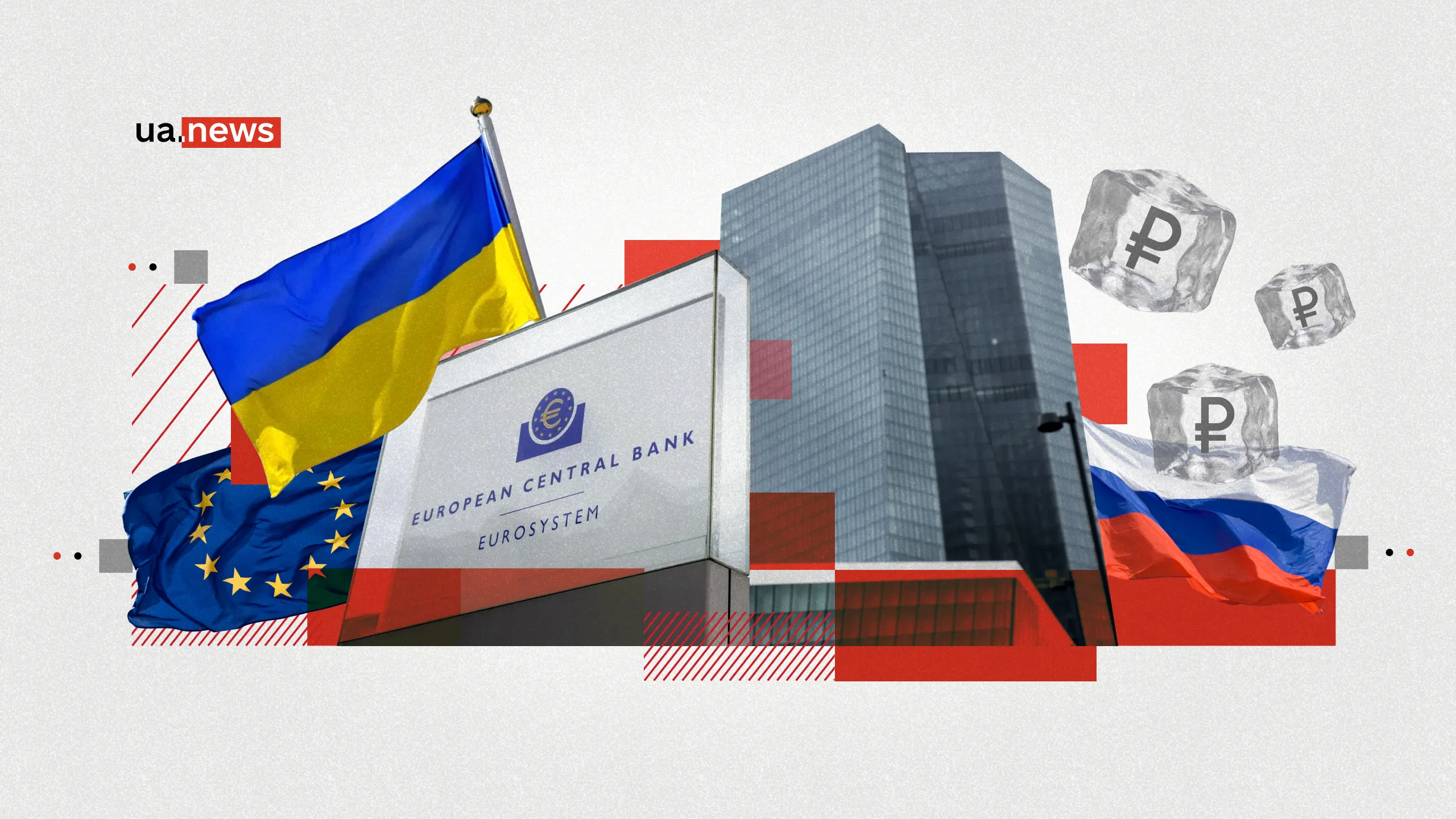
The issue of Ukraine's long-term financial stability is one of the most critical today. Kyiv is highly dependent on external financial assistance, so without predictable and long-term injections, the state risks facing financial collapse as early as the beginning of 2026 — if the Verkhovna Rada is simply unable to pass the budget due to a lack of funds. According to EU estimates, Ukraine needs approximately €135-140 billion in total military and financial support over the next two years to ensure the viability of the Ukrainian state and cover the acute budget deficit. Kyiv clearly does not have this kind of money.
Against the backdrop of growing donor fatigue and general macroeconomic uncertainty, the frozen assets of the Russian Federation remain almost the only realistic source of such a significant amount that is available here and now. That is why the European Commission is promoting the idea of a ‘reparation loan’ in the amount of €140 billion, secured by these reserves.
However, despite Kyiv's acute need and the moral justification for using the aggressor's funds for the benefit of its victim, key European financial players — notably Belgium, where most of the assets are held, and the European Central Bank (ECB) — are resolutely blocking the direct confiscation of this capital.
What is the reason for their resistance and why is Europe so reluctant to give Ukraine Russian money? Are there really ‘Kremlin agents’ in EU financial circles? Political observer UA.News Mykita Trachuk , together with experts , looked into the issue.
Where did the EU freeze Russian funds?
The freezing of the Russian Federation's sovereign assets was one of the fastest, most extensive and most devastating steps taken by the West in response to the full-scale military invasion of Ukraine in February 2022. As part of the sanctions packages imposed by the G7 countries, the EU and their partners, a ban was introduced on any transactions related to the management of the reserves and assets of the Russian central bank, effectively ‘freezing’ them. The total amount of the Russian Central Bank's sovereign reserves frozen worldwide is estimated at approximately €270 billion, which is about half of all the foreign exchange and gold reserves Moscow had before the aggression began.
The vast majority of assets — about €200 billion — are under the jurisdiction of EU member states. This financial concentration is not uniform, as 90% of these funds are located in Belgium. This is where the international central depository Euroclear, which is the main custodian of these funds, is located. Due to the concentration of assets, Belgium has become the epicentre of political disputes and has gained critical leverage over the EU decision-making process.
However, there is a huge legal gap between freezing and confiscating money, which Europe has not yet dared to cross.
The uncertain future of reparations loans
Recognising the impossibility of direct confiscation due to high legal and reputational risks, the European Commission has developed a complex mechanism known as a ‘reparations loan’. Its purpose is to provide Ukraine with a large amount of funds immediately, but to maintain the formal appearance of respect for the principle of sovereign immunity, which protects state assets. The EC's proposal involves complex financial engineering, which relies heavily on the voluntary participation of Euroclear (which is currently not the case).
The essence of the mechanism is as follows: the European Union must enter into a ‘specialised debt contract’ or debt obligation (IOU) with Euroclear. This IOU, which is collectively guaranteed by all EU member states, will be provided to Euroclear in exchange for the release of cash balances generated by the assets of the Central Bank of the Russian Federation.
Of the total amount received as a result of this financial transaction, approximately €140 billion was to be provided to Ukraine in the form of an interest-free loan. A key element of the scheme is the repayment condition: this loan will be repayable by Kyiv to Brussels only if the Russian Federation ceases its aggression and pays reparations to Ukraine for the damage caused. But since the European elites are well aware that the likelihood of Moscow paying reparations is extremely low, these interest-free loans are, in a sense, turning into grants for Ukraine.
The reparations loan is a complex legal manoeuvre designed to provide Ukraine with predictable and significant financial support while avoiding direct confiscation of capital. However, in reality, this is already a scheme that is on the very edge of legality and could have significant legal consequences if Russia were to sue for its money. That is why the ECB has finally refused to support the ‘reparation loan’, arguing that the European Commission's proposal exceeds the powers of the European central bank.
Why is Europe unwilling to return Russian funds?
This is a complex and multi-layered issue that lies in the realm of Europe's strategic security and the status of the euro as a global currency. Although seizing hundreds of billions of euros, which would significantly help Ukraine, would be absolutely morally justified, the EU's decisive refusal to directly confiscate the money is a form of political self-defence.
This issue is only partly about legal matters. Of course, the inviolability of the principle of sovereign immunity of money is a significant legal obstacle for Europe. However, even this point pales in comparison to the key reason.
The main thing that European elites fear is a catastrophic collapse of the euro and a systemic crisis after this money is confiscated. Trust in European financial centres and the euro is based on a fundamental rule: assets remain safe regardless of the political situation. Setting a precedent where state reserves can be confiscated for political or ideological reasons is a shot in the foot for the financial system itself. Even if, we repeat, from a moral and ethical point of view, there are no questions about such actions and there cannot be any.
However, such a step will inevitably lead to all the world's elites who keep their reserves and savings in Europe quickly withdrawing them. This applies to representatives of many Asian countries (including China), the ‘oil monarchies’ of the Middle East, certain Latin American elites, as well as all major global players who use European jurisdiction as a reliable and time-tested financial haven.
A rapid and massive outflow of capital will inevitably trigger panic in the markets. ECB President Christine Lagarde has already issued a direct and specific warning that the confiscation of frozen assets could jeopardise the financial stability of the Eurozone and severely weaken the position of the euro. The potential negative consequences for the EU will far exceed the amount that will be given to Ukraine.
The consequences of a rapid devaluation of the euro, which some economists estimate at up to 50% (if not more!), will be catastrophic. Europe is already on the verge of another eurozone crisis. Such a devaluation would instantly drive inflation to uncontrollable levels, causing prices for all imported goods to rise, which would result in significant social unrest and even greater popularity for right-wing populists.
As a result, most European governments would simply be swept away by political change. It would be an unprecedented economic and political crisis since 2008. This is the key reason for the refusal to take decisive action on Russian assets: European politicians are simply afraid for themselves, for the stability of their own currency and for their political future.
Expert opinion
Economist and director of the Economic Discussion Club Oleg Pendzin acknowledges that the situation surrounding Ukraine's financing for next year is very difficult. The EU has been unable to reach an agreement on a ‘reparation loan’.
"Today, the Financial Times published information that the ECB has finally refused to grant a reparation loan. Europe will now look for a “plan B” to find mechanisms for financing Ukraine, at least partially, for several months, in order to prepare some kind of legal basis during this time. To give you an idea: what are the traditional sources of aid today? Funds from EU taxpayers. But it is no longer possible for European politicians to use this instrument.
What remains is either borrowing through a reparations loan or the loan itself. No European politician can use their taxpayers' money because voters will simply throw them out in the next election. Therefore, the issue is extremely important and very acute. It is not yet clear how this will play out. An official summit is scheduled for 18 December, and the European Commission will submit a proposal to the European Council on financing for next year. But as of today, there is no understanding of the finances for Ukraine. Where will this money come from? There is no answer yet," said Oleg Pendzin.
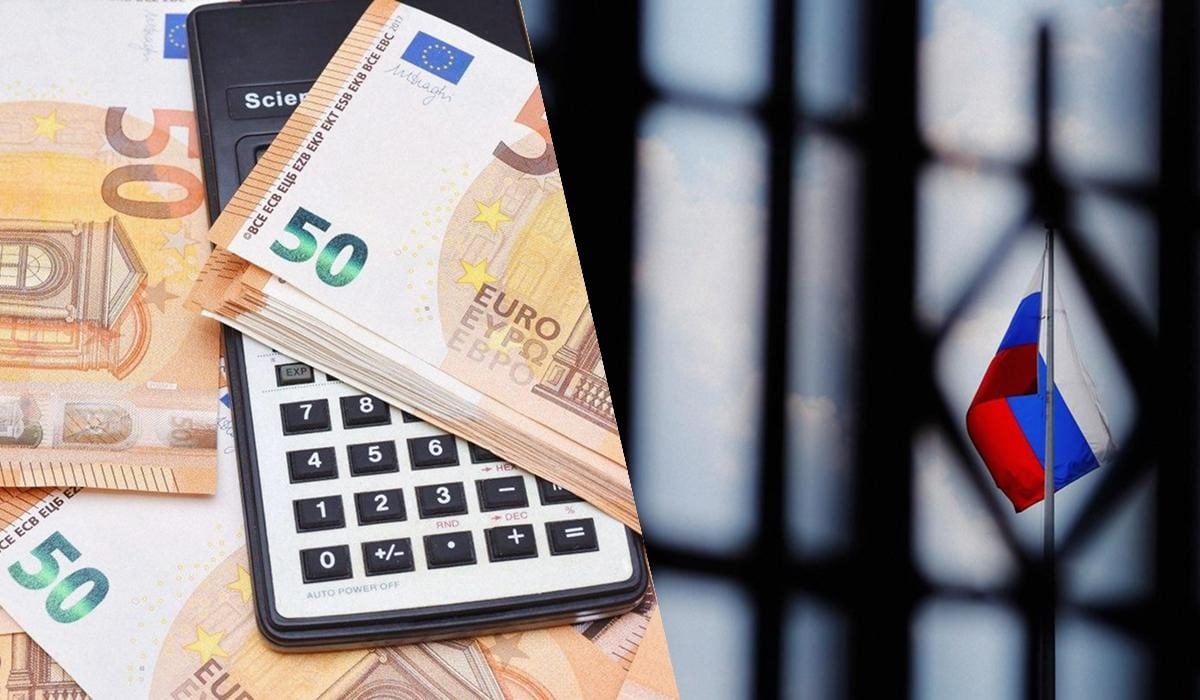
In summary, the EU is currently walking a fine line between moral justice and the instinct for political and financial self-preservation. Although Europe wants to support Ukraine, it is not prepared to pay the price of undermining international law and the status of the euro as a reserve currency. Even a complex legal manoeuvre in the form of a ‘reparations loan’ failed to gain full approval from the Union's political and financial institutions.
Therefore, the issue of financing the Ukrainian state for the next year remains unresolved and is in a state of limbo. This issue must be resolved as soon as possible. However, there is currently no answer as to how this can be done.




