
Marine heatwave likely caused a 37% decline in Hawaii’s whale population — Mongabay
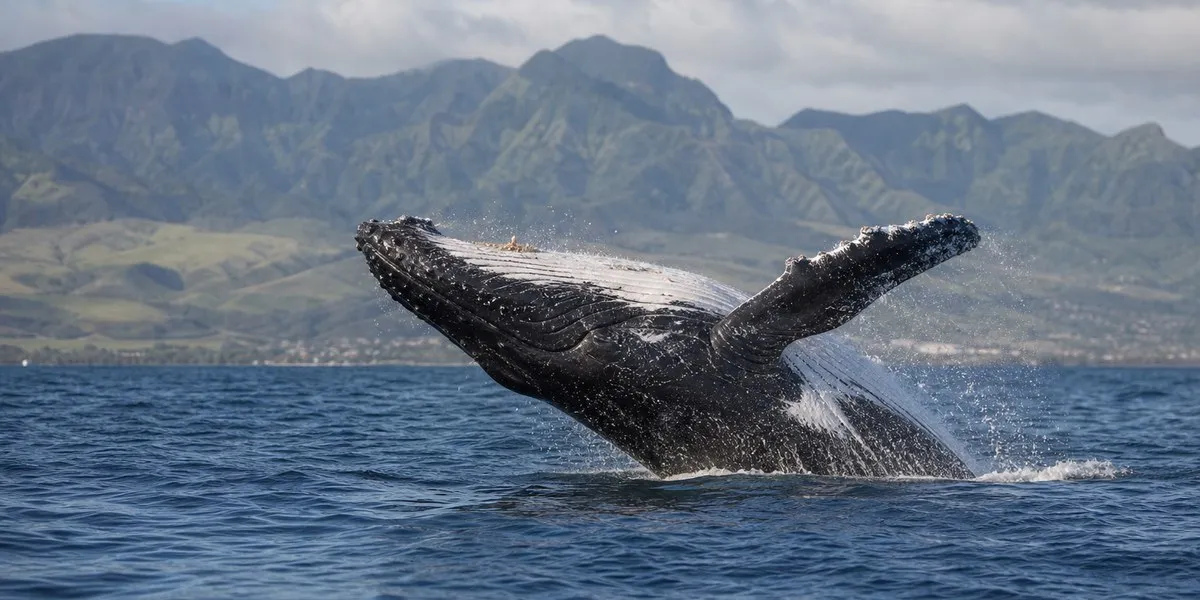
In Hawaii, United States, the population of humpback whales declined by 37% between the 2014–2015 and 2021–2022 breeding seasons. A study indicates that this decline was likely caused by a marine heatwave in the northeastern Pacific Ocean in 2013–2016, Mongabay reports.
Analysis of more than 27,000 photographs
Scientists analyzed more than 27,000 photographs of whale sightings collected from 2002 to 2023 across the main Hawaiian Islands. The images were uploaded to the Happywhale citizen science platform, where users can post pictures of whale tail flukes. Using these photographs, researchers identified individual animals.
North Pacific humpback whales feed in summer in cold waters near Alaska and Canada, and in winter travel about 4,800 kilometers to Hawaii, where they breed and give birth. They feed on krill and small fish. During the heatwave, the numbers of forage fish and krill—the foundation of the marine food chain—dropped sharply.
More current news is available on the UA.News Telegram channel Telegram.
Decline in adult whale survival
Before the heatwave, the annual survival rate of adult whales was about 99%, while during the event it was estimated at 68%. Study co-author Shannon Barber-Mayer said such a sharp decline is not typical of long-lived mammals.
During the period of abnormal warming, unusual humpback whale mortality was recorded in Alaska and British Columbia, including animals that starved and died. According to the final estimate, the population was approximately 5,000 individuals smaller after the marine heatwave. Researchers allow that some whales may have migrated to other areas, but believe that many animals likely died.
Hawaii’s humpback whale population has still not recovered from the 2013–2016 warming. A marine heatwave with abnormally high surface water temperatures is again being observed in the northern Pacific Ocean.


