
North Queensland fishers seek review of gillnet ban
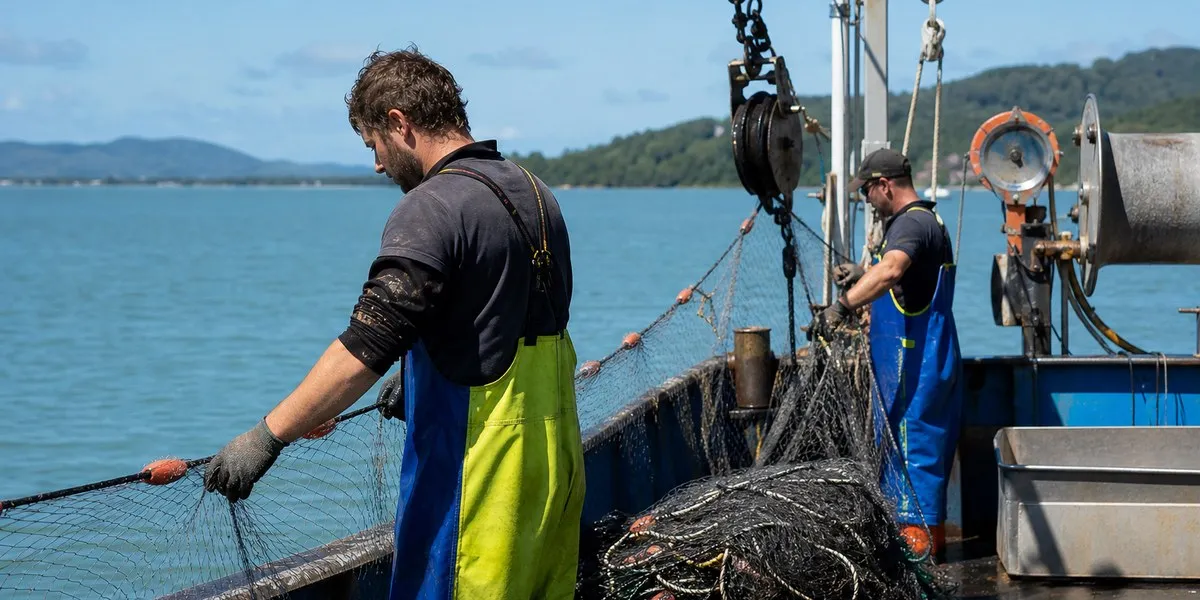
Commercial fishers in North Queensland, Australia, have commissioned an independent assessment of fishing methods, hoping to persuade the state and national governments to review the gillnet ban planned for 2027 in the Great Barrier Reef area. This was reported by ABC News Australia.
Temporary licences introduced in 2024 allow commercial fishers to continue using such nets until their planned phased withdrawal from use. The Queensland Seafood Industry Association, jointly with fishery operators, commissioned a report from sustainable seafood harvesting consultants FishListic.
Preliminary fishery assessment
The association did not provide the full document to ABC News Australia, citing commercial confidentiality. However, it released a summary of the findings, the accuracy of which was confirmed by the report’s authors at FishListic.
According to the released part of the assessment, the fishery could meet half of the Marine Stewardship Council (MSC) standards without additional conditions, and the others after further consultations. Experts assessed the environmental risk to four species that interacted with large-mesh nets: great and scalloped hammerhead sharks, green sawfish and the hawksbill turtle. The risk for each was determined to be medium, while the current Queensland government assessment classified it as high.
At the same time, the report did not cover several dolphin, sea turtle and shark species classified as high risk in a 2021 study. FishListic did not conduct on-site inspections, instead using open data, camera records and logbooks provided by fishers.
More current news is available on the UA.News Telegram channel Telegram.
Certification and animal deaths
Queensland Seafood Industry Association representative David Bobberman said that the east coast inshore fishery produces between 200 and 300 tonnes of seafood annually. According to him, obtaining MSC labelling and sustainable fishery certification would likely require additional consultations and research projects. The fishery currently does not have MSC certification — it has only undergone a preliminary assessment.
After a preliminary assessment, the MSC conducts in-person inspections involving independent auditors. The criteria include the condition of fish stocks, protection of marine species and their habitats, as well as the fishery management strategy.
Since February 2024, east coast inshore fishery operators have been required to use onboard cameras and record interactions with threatened species. According to the Queensland government, 188 fatal interactions with endangered scalloped hammerhead sharks and seven deaths of narrow sawfish have been recorded since then. No deaths of other threatened species were reported.
The office of Queensland Minister for Primary Industries Tony Perrett said it was ready to carefully consider the report after receiving the full document. It also stated that the minister was examining state action options that would comply with federal bans.


