
In Cyprus, 3,400-year-old gold diadems were found in Bronze Age tombs
Archaeologists have studied a collection of gold diadems discovered in elite burials in Cyprus. The finds are estimated to be approximately 3,400 years old.
One of the most valuable finds was a diadem that archaeologists discovered on the head of a child between the ages of four and five. The results of the study were published in the Oxford Journal of Archaeology.
The jewelry was discovered at the Gala Sultan Tekke cemetery near modern-day Larnaca. They date to the 15th–13th centuries BCE and combine artistic traditions from Ancient Egypt, Minoan Crete, Mycenaean Greece, and the Near East. At the same time, researchers concluded that the diadems were most likely crafted by Cypriot artisans who developed their own regional style.
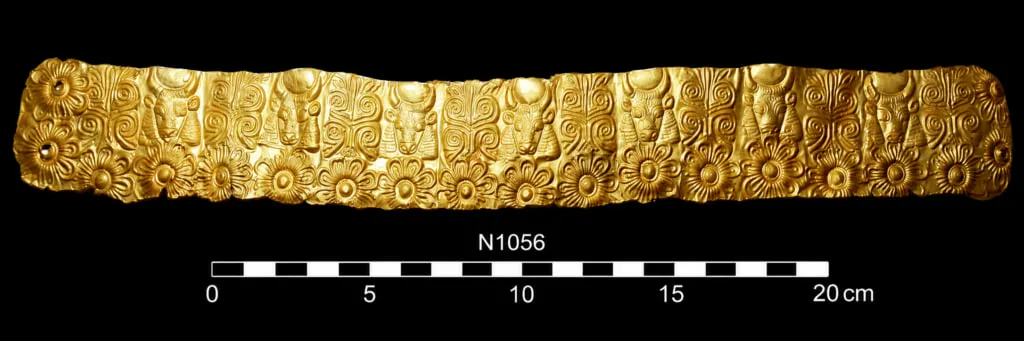
The largest diadem in the collection is 34.2 centimeters long. It was found in the burial of a woman between the ages of 35 and 40. The piece is adorned with seven bull’s heads, between whose horns are symbols resembling a sun disk. It also features palm-leaf motifs and eight-petaled rosettes characteristic of Mycenaean art.
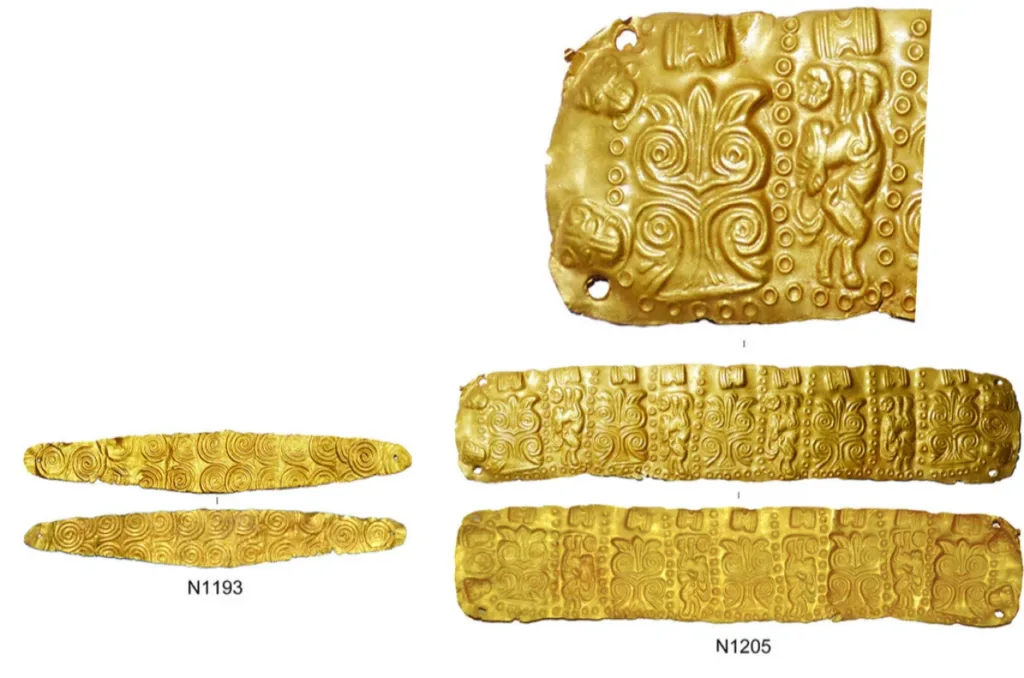
Another “diadem with a capricorn and feline heads” is the heaviest in the collection—it weighs 23.14 grams. The ornament depicts four mountain goats, plant motifs, rosettes, hourglass-shaped symbols, and the heads of predatory cats, presumably lions. Since lions were not native to Cyprus, their appearance on the diadem indicates the influence of artistic traditions from Egypt, Greece, and the Near East.
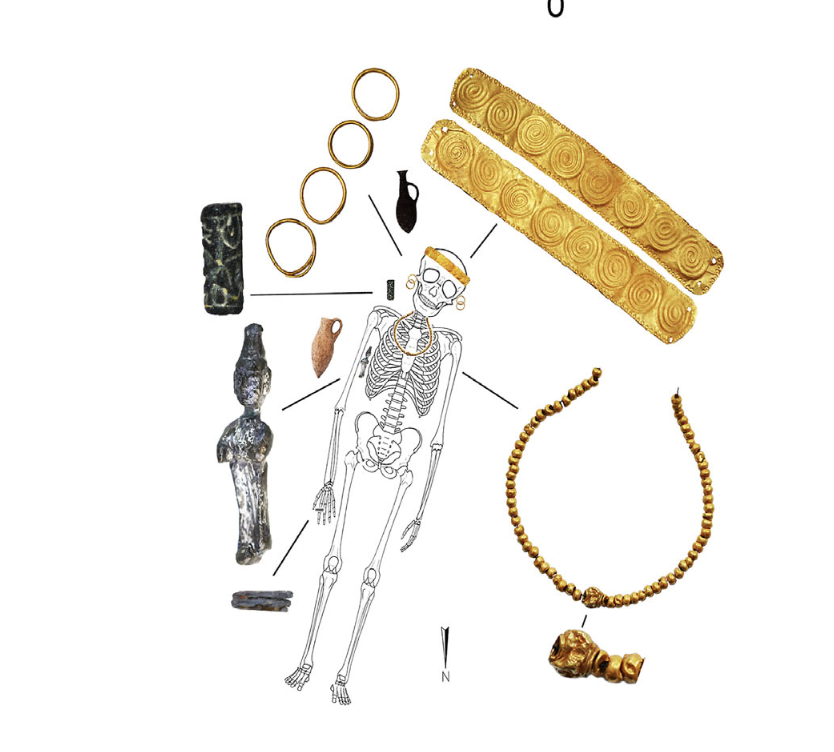
What caught the archaeologists’ attention most was a burial in a chamber tomb, where the remains of at least 34 people were discovered. In the oldest layer, dated to approximately 1350 BCE, researchers found the skeleton of a child aged four to five years. The gold diadem remained on the child’s forehead exactly as it had been placed during the burial.
Buried alongside the child were a necklace of 68 gold beads, four gold earrings, a silver pendant depicting an Anatolian deity, a silver ring, and a carved cylindrical seal.
According to researchers, such a rich burial indicates that high social status could be inherited and was not a privilege reserved solely for adults. Furthermore, this discovery provides direct archaeological confirmation that long gold diadems were worn on the forehead and not used as burial mouth covers.
Scientists also determined that some of the diadems show signs of wear. This indicates that they were worn during the individuals’ lifetimes, likely during ceremonial occasions, and were placed in the graves after death. In contrast, two smaller gold plates found alongside the diadems were likely made specifically for funeral rites—they were placed over the mouths of the deceased.
The origin of the gold remains unknown for now. According to the researchers, it could have come from Nubia, modern-day Bulgaria, or been obtained by remelting older artifacts. Further analysis of its composition will help definitively determine the source of the metal.
Source: Arkeonews.
A tomb of a Celtic ruler containing gold treasures has been discovered in Germany.
Archaeologists have discovered unique medieval artifacts near Halych.
As a reminder, the sunken ship “Delta I,” discovered off the coast of Cádiz in Spain, continues to reveal new secrets. Archaeologists have determined that the ship was carrying Swedish cannons and silver ingots from the territory of modern-day Bolivia, which may indicate large-scale smuggling in the Atlantic more than 300 years ago.


