
In southern Norway, water levels have dropped to their lowest point in 30 years — NRK
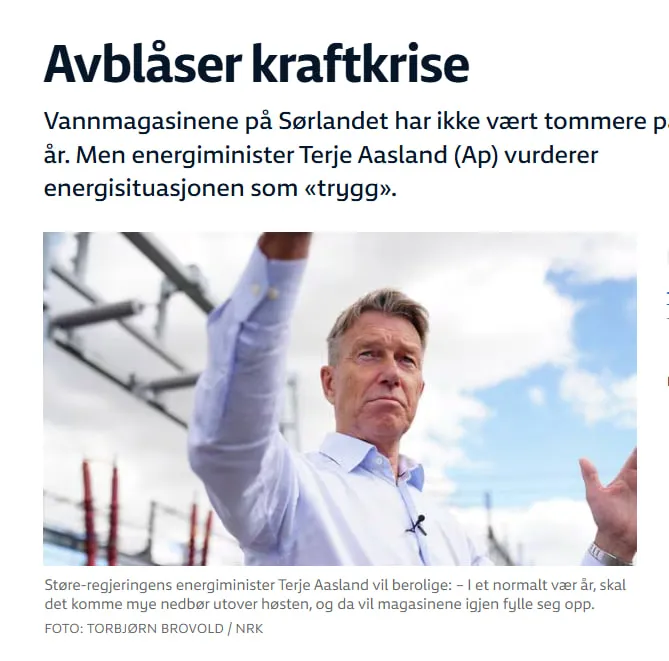
Water levels in natural reservoirs in southern Norway have fallen to their lowest point in 30 years due to a prolonged drought.
According to NRK, the fill level of natural reservoirs has dropped to just over 53%. This is the lowest level in the past three decades.
The dry summer is cited as the main cause of the situation. At the same time, water levels in the reservoirs are critical for the operation of hydroelectric power plants, which account for the majority of the country’s electricity production.
Norwegian Energy Minister Terje Aasland stated that he currently sees no cause for concern regarding the situation with the reservoirs and does not expect an electricity shortage this winter.
However, as the publication notes, the operation of nuclear power plants in Romania and Hungary is at risk due to the critically low water levels in the Danube.
This was reported by NRK.
As a reminder, on August 4, Moldova imposed restrictions on water use due to drought and falling water levels in the region. The National Commission for Crisis Management banned the use of water for non-essential purposes, including recreational activities.
June’s heatwave in Europe led to significant losses in agriculture. The cost of the destroyed grain harvest is estimated at more than 2 billion euros, with farmers in France and Hungary suffering the most.
An abnormal heatwave in South Korea claimed the lives of 16 people.


