$ 44.52 € 50.95 zł 11.88
+20° Kyiv +21° Warsaw +38° Washington

NATO is preparing for a possible war without U.S. support
UA.NEWS 03 July 2026 16:25
NATO is preparing for a possible war without U.S. support

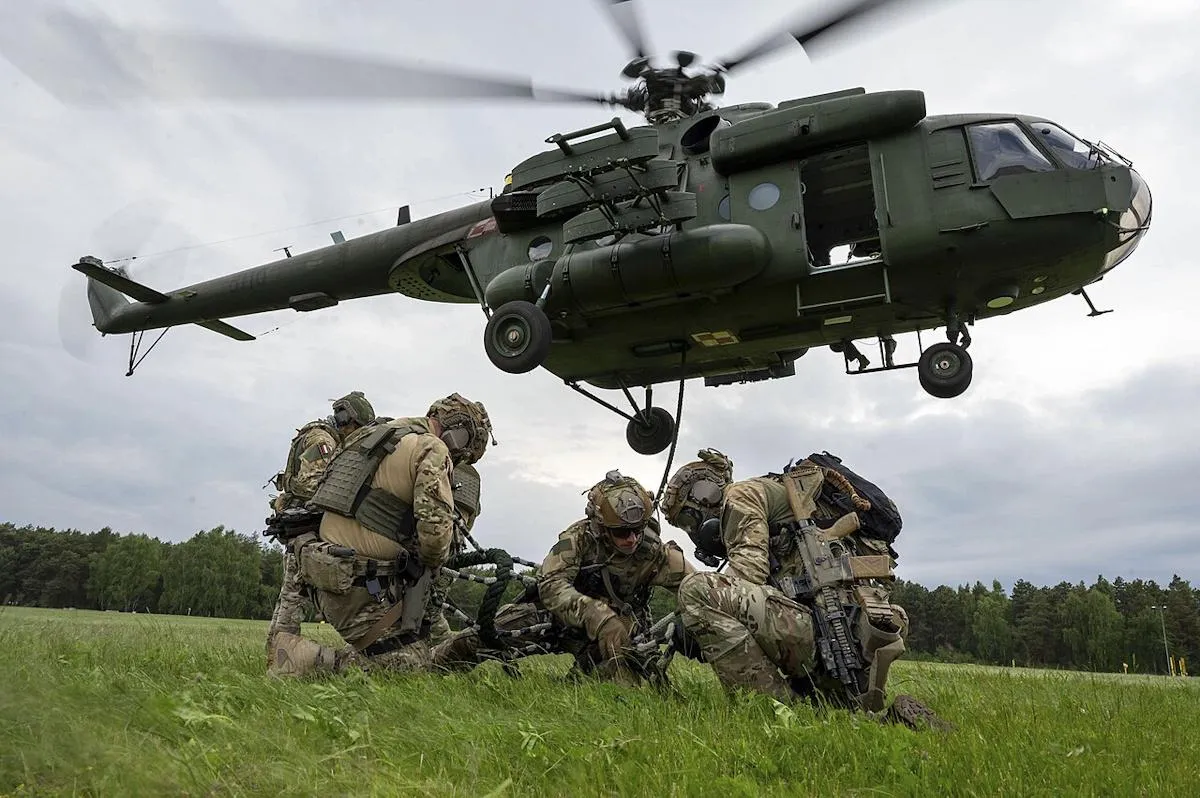
NATO is stepping up its preparations for a possible conflict with Russia while simultaneously considering scenarios in which Europe would have to rely more on its own resources. The Economist reports on this, noting that Germany is already changing its military policy, while Alliance countries are reevaluating their approaches to defending the eastern flank.


 

European NATO countries are taking increasingly serious steps to prepare for potential threats from Russia. According to The Economist, the Alliance is not only strengthening its eastern flank but also considering how to respond if U.S. support diminishes or becomes limited.

One example of these changes is the deployment of Germany’s 45th Tank Brigade in Lithuania. For a month, the troops conducted exercises near the border with Belarus. Their mission is to be ready to respond immediately to a potential threat, protect Vilnius, and prevent the loss of the Suwalki Corridor, which connects the Baltic states with Poland.

The publication notes that this is the first time since the Cold War that Germany has stationed its troops abroad on a permanent basis. By the end of 2027, the strength of the 45th Tank Brigade is planned to increase from approximately 1,600 to 5,000 troops. The unit will be equipped with modern tanks, artillery, drones, and air defense systems.

At the same time, the U.S. military presence in the region is shrinking. In June, the 1st Battalion of the U.S. 12th Cavalry Regiment was withdrawn from NATO’s eastern flank, along with the rest of the brigade that had been stationed in Poland. It is not yet known whether a new U.S. unit will be deployed. As a result, European countries are paying increasing attention to their own defense. According to The Economist, NATO is already discussing a model tentatively called “NATO 3.0.” The essence of this model is that European allies would assume primary responsibility for conventional forces, while the U.S. would remain the guarantor of nuclear deterrence.

Germany is set to play a special role in this system. The country plans to spend 3.5% of its GDP on defense by 2029—well ahead of NATO’s overall targets. The publication notes that by the end of the decade, Germany’s defense budget could exceed the combined military spending of the United Kingdom and France.

At the same time, experts emphasize that even with increased funding, European allies remain strategically dependent on the U.S. in many areas—from logistics to intelligence and the management of military operations. NATO pays particular attention to the Baltic states, which are considered the most vulnerable. Lithuania, Latvia, and Estonia regularly face cyberattacks, disinformation campaigns, airspace violations, and other hybrid actions by Russia.

The Suwalki Corridor—a narrow strip of land between Poland and Lithuania—is of particular importance. If Russia attempts to block it, the Baltic states could find themselves cut off from the Alliance’s main forces. That is precisely why NATO is changing its approach to defense. Whereas a previous scenario might have involved a retreat followed by a counteroffensive, the military is now preparing to hold territory for as long as possible from the very first minutes of a conflict.

Journalists also note that the war in Ukraine has significantly influenced the training of NATO armies. The experience of the Ukrainian military has demonstrated just how important a role drones play on the modern battlefield. According to the publication, during one exercise, Ukrainian drone operator units “destroyed” entire NATO battalions in a simulated scenario. Following this, the Alliance began more actively integrating unmanned systems into its own exercises.

At the same time, military officials emphasize that tanks remain important. “Tanks are still necessary for capturing and holding territory,” said Lieutenant Colonel Sebastian Hagen, commander of a multinational battle group.

He also explained why Germany is now strengthening the Alliance’s eastern flank. “What we are doing now is what all allies did for Germany throughout the Cold War. The eastern flank has shifted even further east, and now it is Germany’s turn to return the favor,” Hagen said.

The Economist emphasizes that NATO countries are closely monitoring the progress of the war in Ukraine. According to the authors of the article, support for Ukraine remains one of the key factors in the security of all of Europe. “The longer Ukraine can resist Russia, the more time European countries will have to strengthen their own defenses and prepare for possible future challenges,” the publication concludes. This is reported by The Economist.

Polish Prime Minister Donald Tusk urged members of the Polish delegation to refrain from making statements about new financial commitments to Ukraine ahead of the NATO summit in Ankara.


Read us on Telegram and Sends

Download our app