
UAE scientists to study landslide and glacial flood risks in Nepal
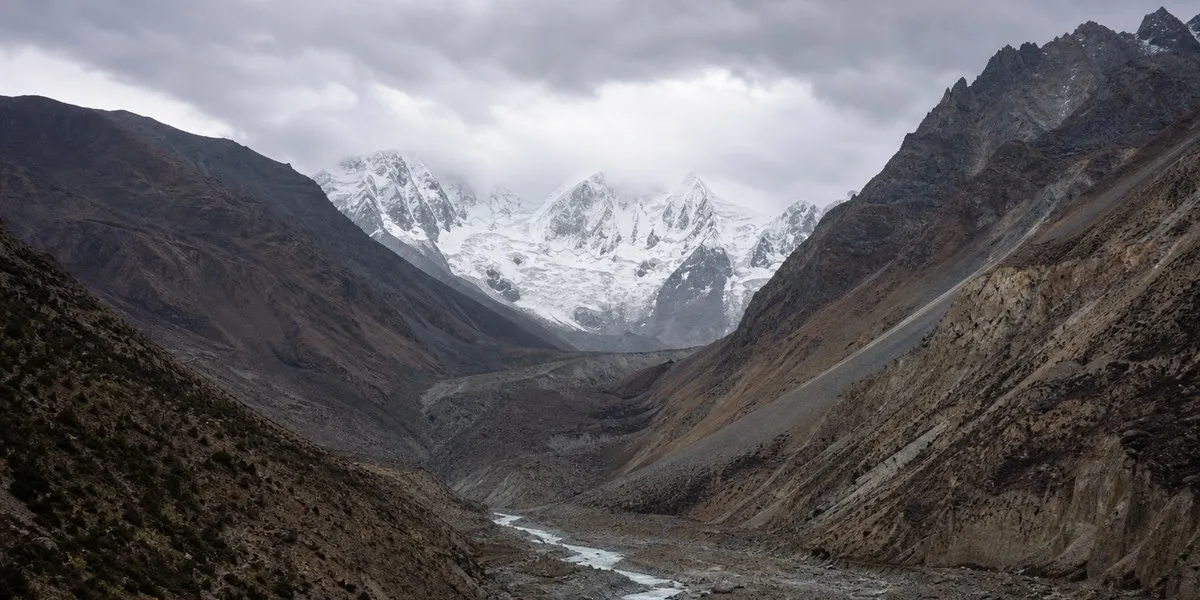
Scientists from Khalifa University in Abu Dhabi are organizing a multi-year study in Nepal that is intended to help identify threats of landslides and glacier collapse and provide early warnings to communities downstream along rivers. This was reported by The National (UAE).
The project is being organized by Professor Mohammed Ali and Dr Aisha Al Suwaidi from Khalifa University’s Department of Earth Sciences, together with University of Oxford researcher Professor Mike Searle. Preparations for it began before the recent tragedy in Nepal. According to the latest report by Nepal’s National Disaster Risk Reduction and Management Authority, floods killed at least 1,385 people, another 5,130 people went missing, and 13,600 people were rescued.
Monitoring glaciers and rivers
The study is part of the Emirates Polar Programme, which examines the impact of climate change on polar regions. The Himalayas are also referred to as the third pole. Scientists will study the climate, changes in the cryosphere — ice, snow and permafrost — glacial lake outburst floods, as well as tectonic processes.
At the first stage, the team will analyze historical satellite observations to trace landscape changes. Repeated field visits, laboratory research and long-term monitoring of individual glaciers, slopes, lakes and rivers are planned later. Optical and radar satellite data will be used to assess changes in glacier area, elevation and movement speed, as well as the emergence and growth of lakes, the formation of landslides and ice dams.
More current news is available on the UA.News Telegram channel Telegram.
Priority for the most dangerous glaciers
Together with partners in Nepal, the researchers will identify glaciers that require the most detailed monitoring. Continuously monitoring every glacier is impossible both technically and financially. Among the signs of danger, scientists will track accelerating ice movement, the appearance of cracks, changes in lake levels, meltwater formation and river discharge.
Particular attention is planned for the Kathmandu and Pokhara valleys. In the Pokhara area, a severe flood occurred in 2012 after an avalanche formed a temporary dam on the Seti River, which later burst. Analysis of lake sediments and traces of ancient floods and debris flows is expected to provide data on former lakes, floods, landslides and earthquakes.
The scientists also noted that dust from arid areas of the Middle East, including the Arabian Peninsula, may settle on Himalayan snow, reduce its reflectivity and increase the absorption of solar energy, contributing to melting.


