
German prosecutors are investigating a large-scale cyberattack on politicians via Signal
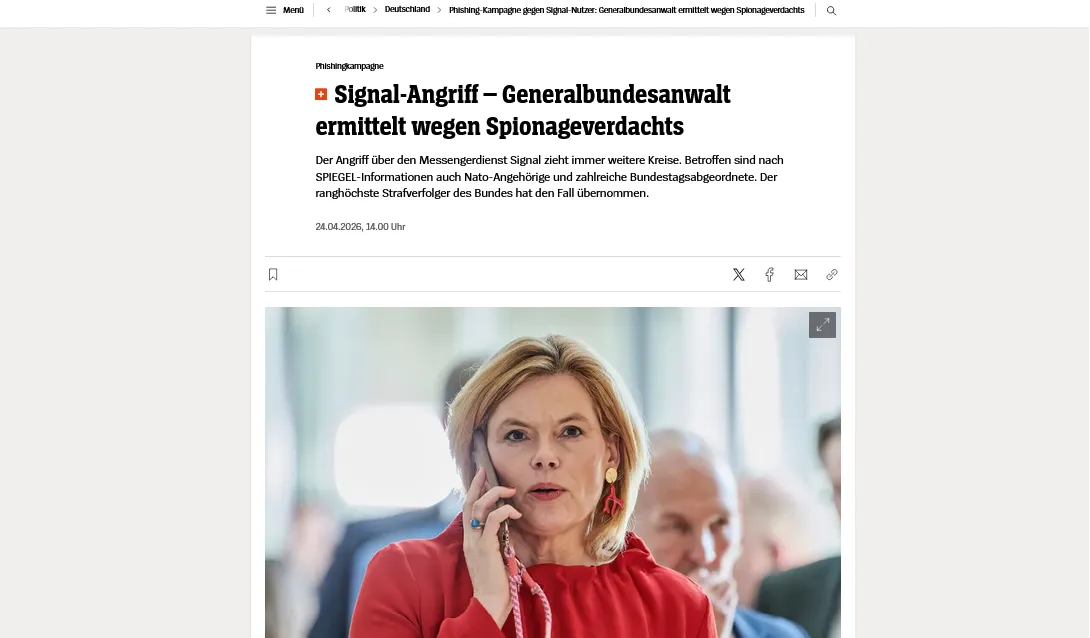
The Public Prosecutor’s Office in Karlsruhe has launched an official investigation into suspected espionage following a massive hack of Signal messenger accounts, which affected more than 300 people. Among those affected is Bundestag President Julia Klöckner, whose account was compromised via a phishing message in a fake CDU chat.
Spiegel reports on the details of the incident, which threatens the confidential communications of the country’s top leadership.
The attackers used social engineering techniques, sending messages on behalf of support services or trusted contacts to obtain authorization codes. Of particular concern to intelligence agencies is the fact that by hacking Klöckner’s account, the hackers could have gained access to group chats that include Federal Chancellor Friedrich Merz. Currently, German intelligence links this campaign to Russian hybrid attacks aimed at destabilizing the political system and gathering intelligence.
The attacks affected lawmakers from nearly all parliamentary factions, including representatives of the SPD and The Left. Cybersecurity experts note that the wave of phishing has been ongoing since February 2026, and hackers’ methods are becoming increasingly sophisticated. German authorities have urged politicians and government officials to immediately check the security settings in their messaging apps and enable additional layers of protection. Signal emphasized that it never requests PIN codes via messages and is cooperating with investigators to minimize the impact of the breach.
Russian hackers have launched a large-scale cyber operation aimed at hijacking user profiles on the popular messaging apps Signal and WhatsApp.
German Parliament President Julia Klöckner fell victim to a large-scale phishing attack, as a result of which the attackers gained access to her Signal account.


