
German adviser calls for developing chip ecosystem in Jeonnam–Gwangju
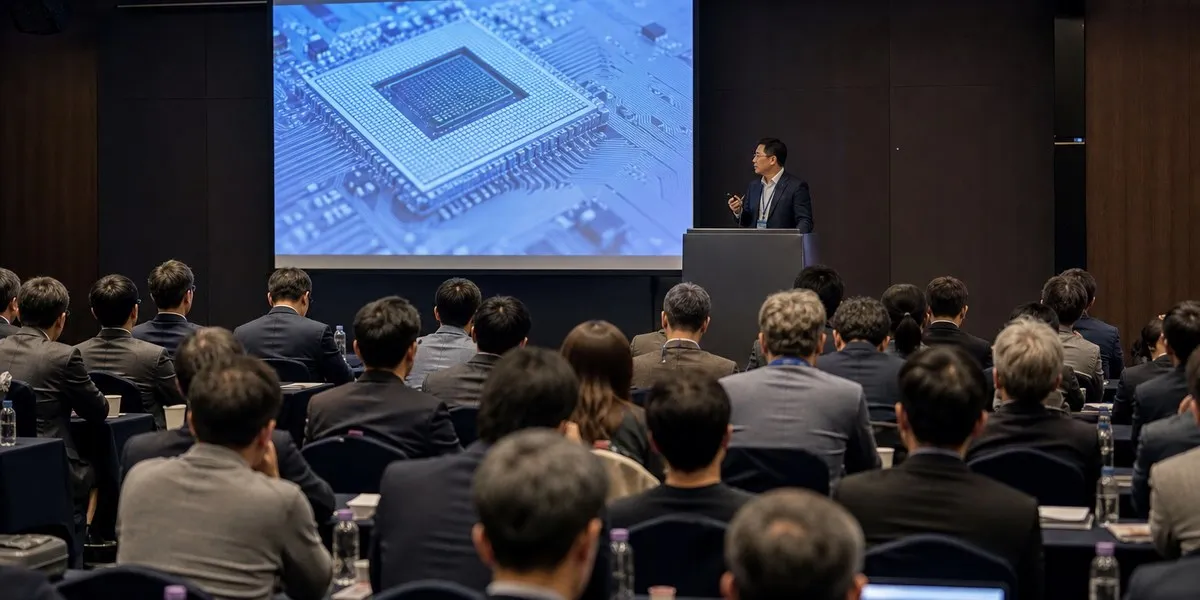
Dennis Bloch, economic affairs counselor at the German Embassy in Seoul, called for developing research institutions, supplier networks and workforce training in parallel with the creation of the planned semiconductor cluster in South Korea’s Jeonnam–Gwangju region. He made the remarks at a forum on semiconductors and AI-driven transformation in Gwangju, The Korea Herald reports.
Bloch stressed that semiconductor clusters are built over decades. According to him, changes in governments and political leadership can be balanced by stable research institutions, industry organizations and shared infrastructure.
Silicon Saxony experience
As an example, the adviser cited Silicon Saxony, Europe’s largest microelectronics and ICT cluster, centered around Dresden. The region’s microelectronics industry dates back to 1961. The cluster now includes about 3,650 companies employing more than 82,000 people, while approximately one-third of chips produced in Europe come from this region, according to Bloch’s presentation.
More current news is available on the UA.News Telegram channel Telegram.
According to forum materials, investments by Infineon and European Semiconductor Manufacturing Co., a TSMC-led joint venture in Dresden, are expected to provide around €20 billion in new investment and create approximately 5,500 jobs. Bloch noted that not only major manufacturers matter, but also specialized suppliers, universities and applied research institutes, including the Fraunhofer network.
Areas of cooperation
According to Bloch, South Korea has strong positions in the production of memory chips, HBM, large-scale manufacturing and advanced packaging. Germany, in turn, has expertise in automotive and power semiconductors, sensors, industrial applications and specialized equipment.
Among the existing cooperation mechanisms, he named the Korea–EU Digital Partnership, the bilateral digital dialogue and the K-Fast hub, which connects Korean companies with the Fraunhofer applied research network. According to forum materials, nine joint R&D projects approved in 2024 and 2025 account for about 35 billion won, or $25.9 million, in research. Bloch named chips for AI, advanced packaging, future mobility technologies and data centers as promising areas. For the Honam cluster, he advised building links from the outset between research and industrial demand around manufacturing enterprises.


