
U.S. intelligence does not rule out the possibility that Russia could launch a limited attack on one of the NATO countries as early as this fall. This contradicts all previous predictions that such an attack would not occur until after 2029 or until after the war in Ukraine ends.
Until now, NATO countries had viewed such a scenario as unlikely. Law enforcement agencies had reported only isolated cases of sabotage. These included reconnaissance drones flying over airports, arson attacks on warehouses or energy facilities, and cyberattacks on critical infrastructure. The perpetrators who were apprehended usually turned out to be amateur mercenaries or environmental activists. No official statements were made directly implicating Russian intelligence services.
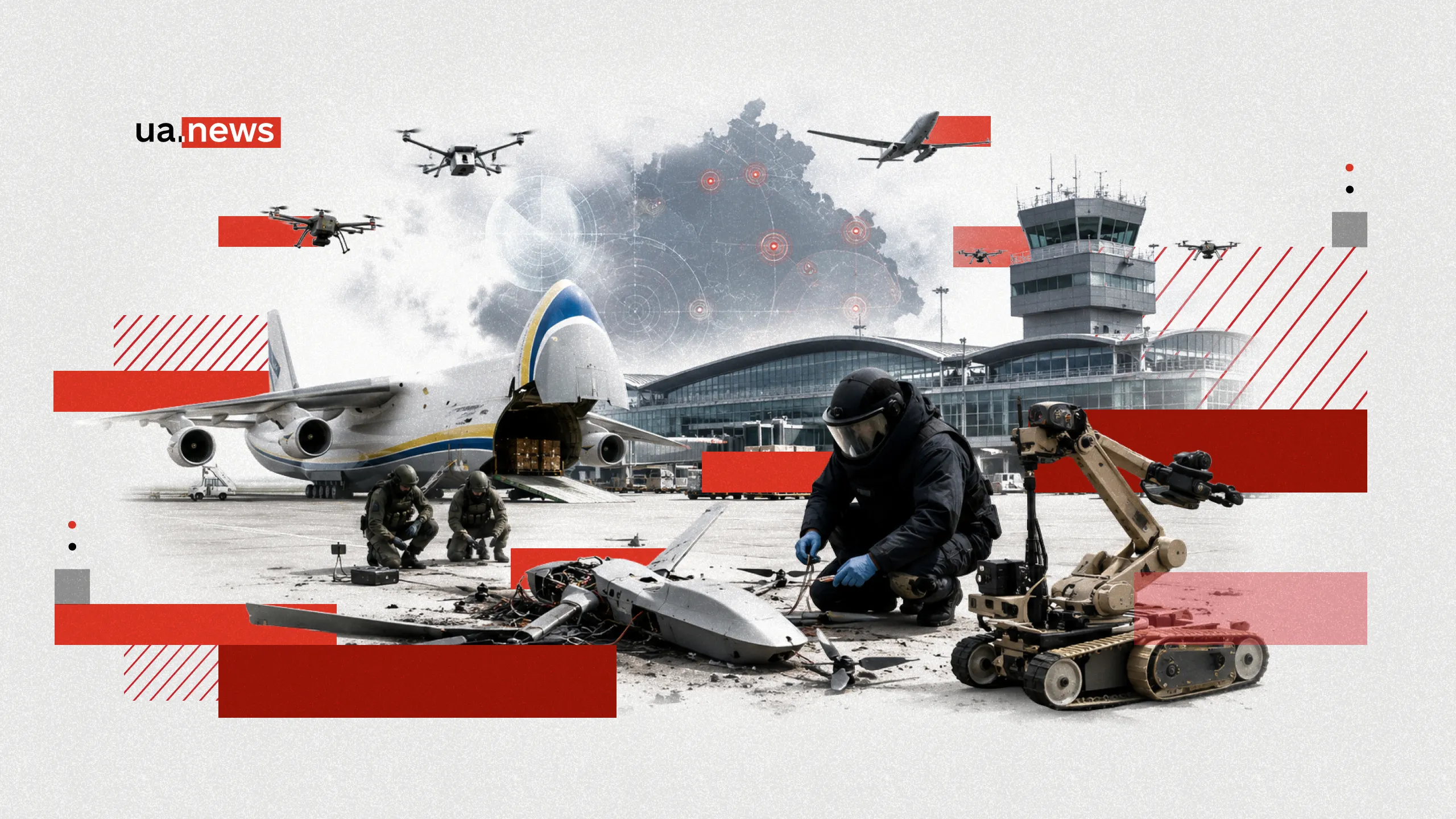
However, in recent months, Europe has begun to recognize signs of an intensifying hybrid war. As early as August, the situation took a new turn. At Leipzig Airport in Germany—a transit point for arms shipments to Ukraine—a drone carrying explosives was discovered; its detonation could have had far-reaching consequences. German security agencies acknowledged—perhaps for the first time—that this could have been a professionally planned act of sabotage, signaling a new level of security threats. The police also did not rule out the possibility of Russian involvement.
Read the UA.News article for insights on the accelerating escalation of the war and its spillover into NATO territory, as well as Ukrainian experts’ views on the most vulnerable points along NATO’s eastern borders.
A New Level of Sabotage
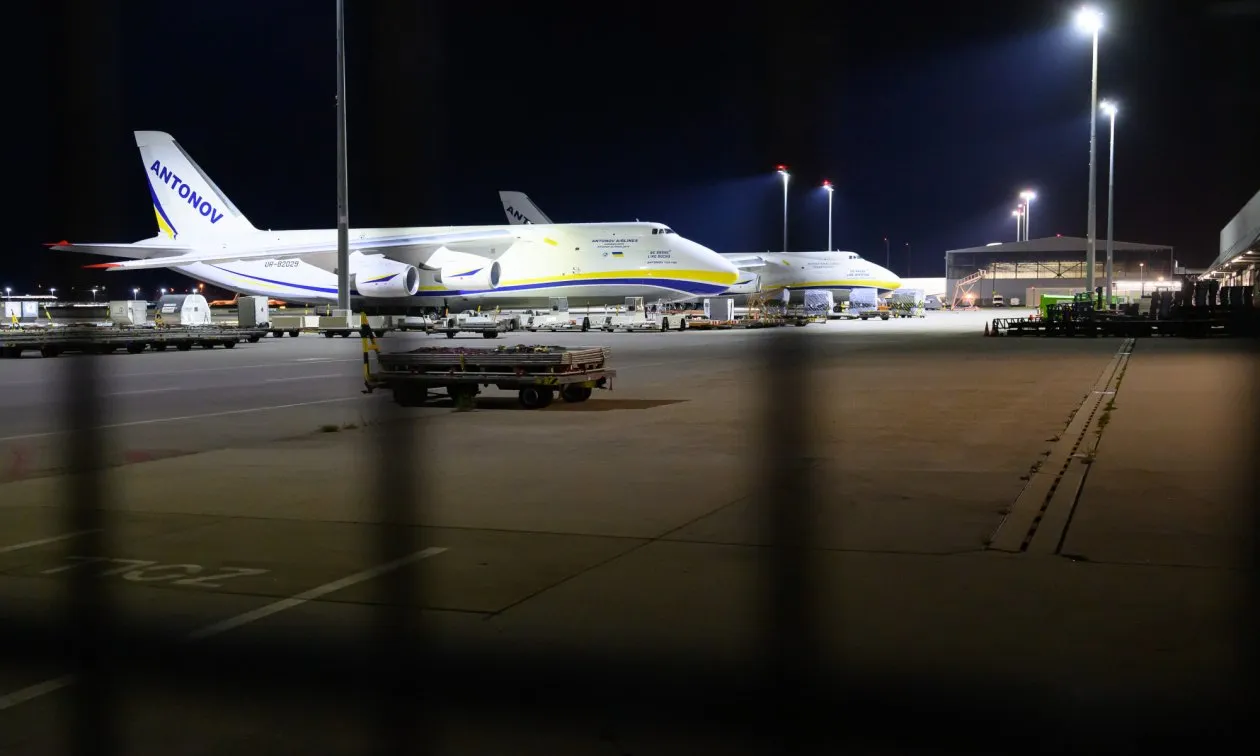
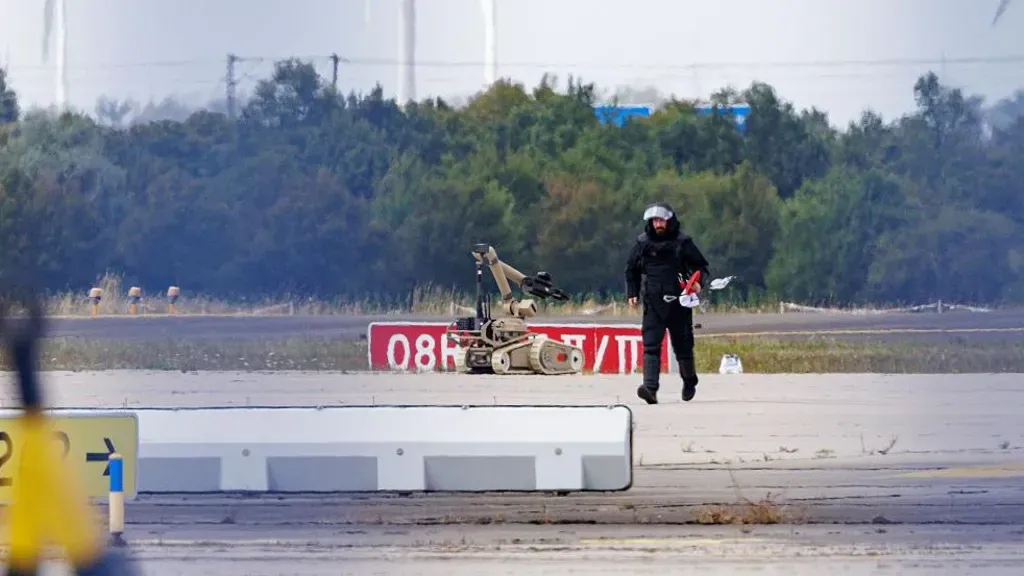
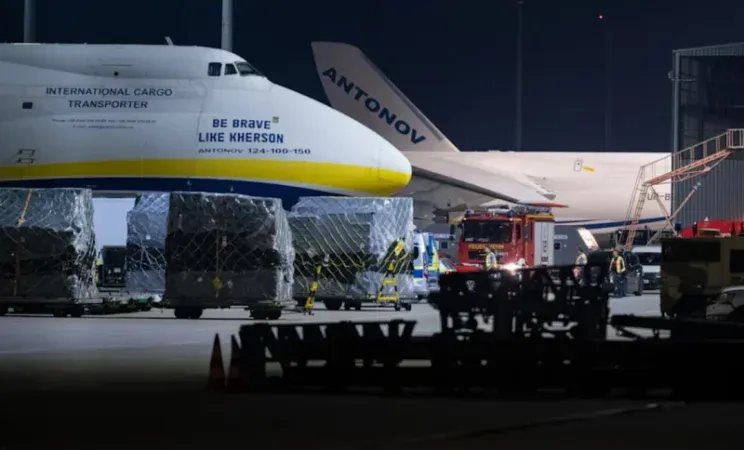
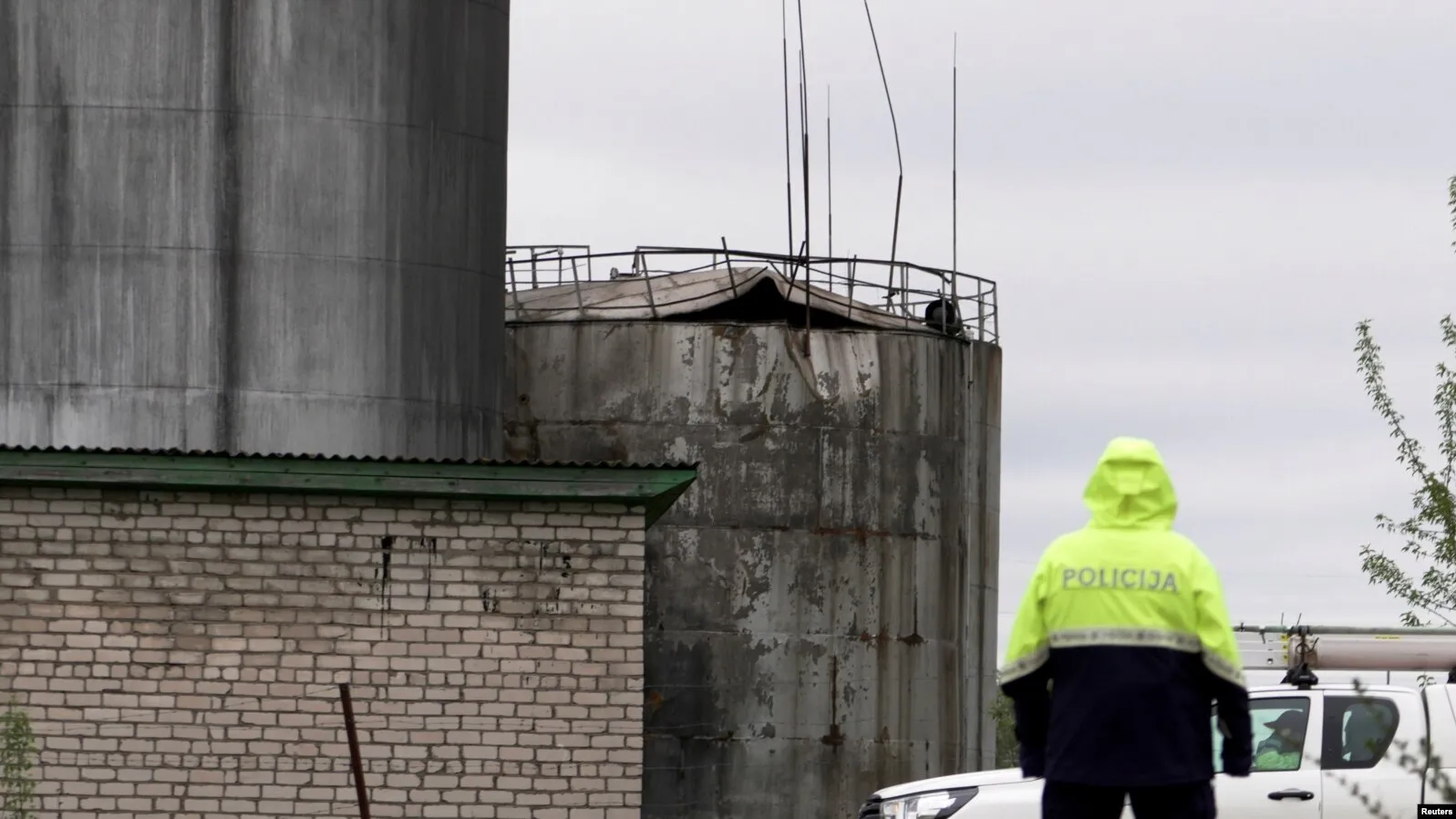
On the night of August 5, two security-related incidents occurred simultaneously at Leipzig-Halle Airport in Germany. First, a quadcopter was discovered near a Ukrainian Antonov aircraft on the grounds of the cargo terminal. Security forces were dispatched to the scene and examined the object using a bomb-disposal robot. The examination revealed that the small drone was equipped with explosives and a detonator.
As a result, the airport’s southern runway was immediately closed, forcing a DHL cargo plane to abort its landing and circle back. While in the air above the airport, the plane collided with another unidentified drone. As a result of the collision with the drone, the cargo plane sustained damage but managed to land in Hanover. Both incidents in Germany are being investigated by the anti-terrorism prosecutor’s office. Law enforcement officials are examining the possibility of a planned act of sabotage.
Leipzig-Halle
Airport is considered one of the key logistics hubs for the supply of Western weapons to Ukraine. One of the German company DHL’s hubs is also located on its grounds.
German Interior
Minister Alexander Dobrindt urgently convened a meeting with the heads of several law enforcement agencies to discuss the dangerous incidents at the airport. Following the meeting, the minister publicly announced a “new level of threat” and did not rule out the possibility that foreign states could have orchestrated the events. He also acknowledged that the incident was not the work of “amateurs,” but rather of individuals who “acted with the utmost professionalism.”
Over the past few months, Germany has already recorded activity by unidentified drones over military bases, airports, logistics hubs, seaports, and energy facilities. Following these incidents, German airports have been placed on high alert.
Updated U.S. Intelligence
Data
Just recently, U.S. intelligence warned Western allies that Russia might launch a limited attack on one of the NATO countries even before the war against Ukraine ends. In this way, the Kremlin aims to test the Alliance’s resolve to defend its borders. Unlike previous forecasts of the Kremlin’s next moves, the current updated report suggests that any aggression by Russia could occur from this fall through 2029.
According to U.S. intelligence, the Kremlin leader may attempt to expand hostilities further into European territory to break the deadlock in the war against Ukraine. The report also outlines various possible attack scenarios: ranging from a cyberattack to a small-scale ground invasion.
These
new threat assessments, released by U.S. intelligence, come amid a shortage of certain critical munitions needed by the military to confront Russia or China in a potential future war. In particular, officials in Washington stated that the U.S. has significantly reduced its stockpiles of these weapons due to shipments to Ukraine following the Russian invasion, as well as due to the conflict with Iran. According to other officials, at risk are stockpiles of high-precision long-range missiles and the Army’s tactical missile systems, as well as short-range Stinger anti-aircraft missiles.
At the same time, the likelihood of the most dangerous scenario—namely, a limited ground invasion—is still considered low. However, reports indicate that this threat is growing over time.
How Ukrainian experts
assess Russia’s possible actions
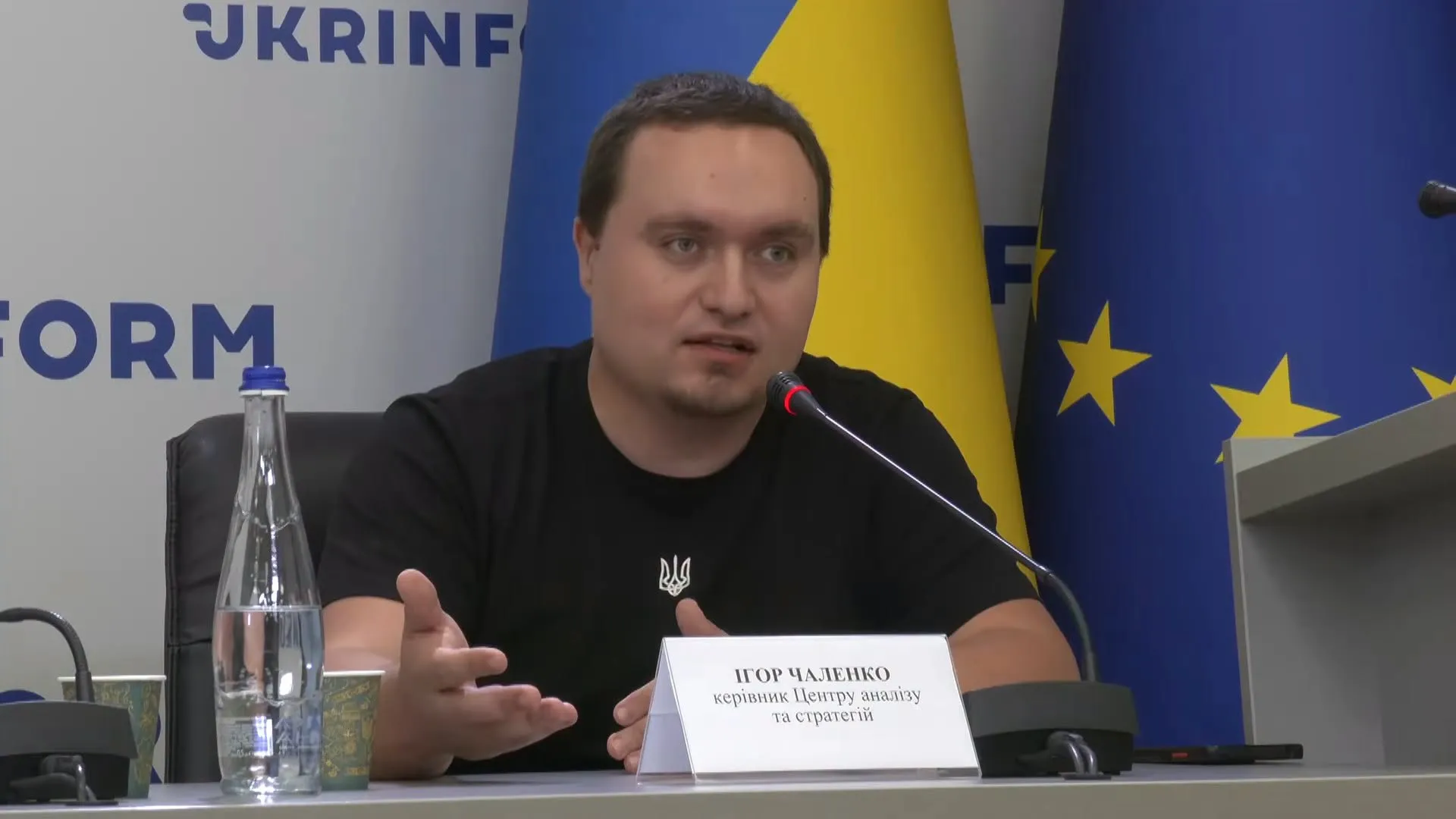
Ihor Chalenko: Russia will not wait for Europe to prepare its defenses
There are several time-frame scenarios for a Russian attack on NATO countries that are being analyzed by European and American intelligence agencies. The conservative estimate—still the 2029–2030s—was noted by Ihor Chalenko, a political scientist and head of the Center for Analysis and Strategies, in a comment to UA.News. This approach is very convenient for the European bureaucracy in terms of plans to increase arms production and conduct numerous exercises within NATO or smaller military-political organizations. But another scenario may be more likely.
“Indeed, this could happen much sooner—in 2026–2027. I consider this more likely. Russia will not wait until Europe is prepared to defend itself. It would be strange to wait if you want to exert influence and carry out a localized military operation that would have strategic consequences down the line. Obviously, this must be carried out when the opponent is at its weakest,” asserts Ihor Chalenko.
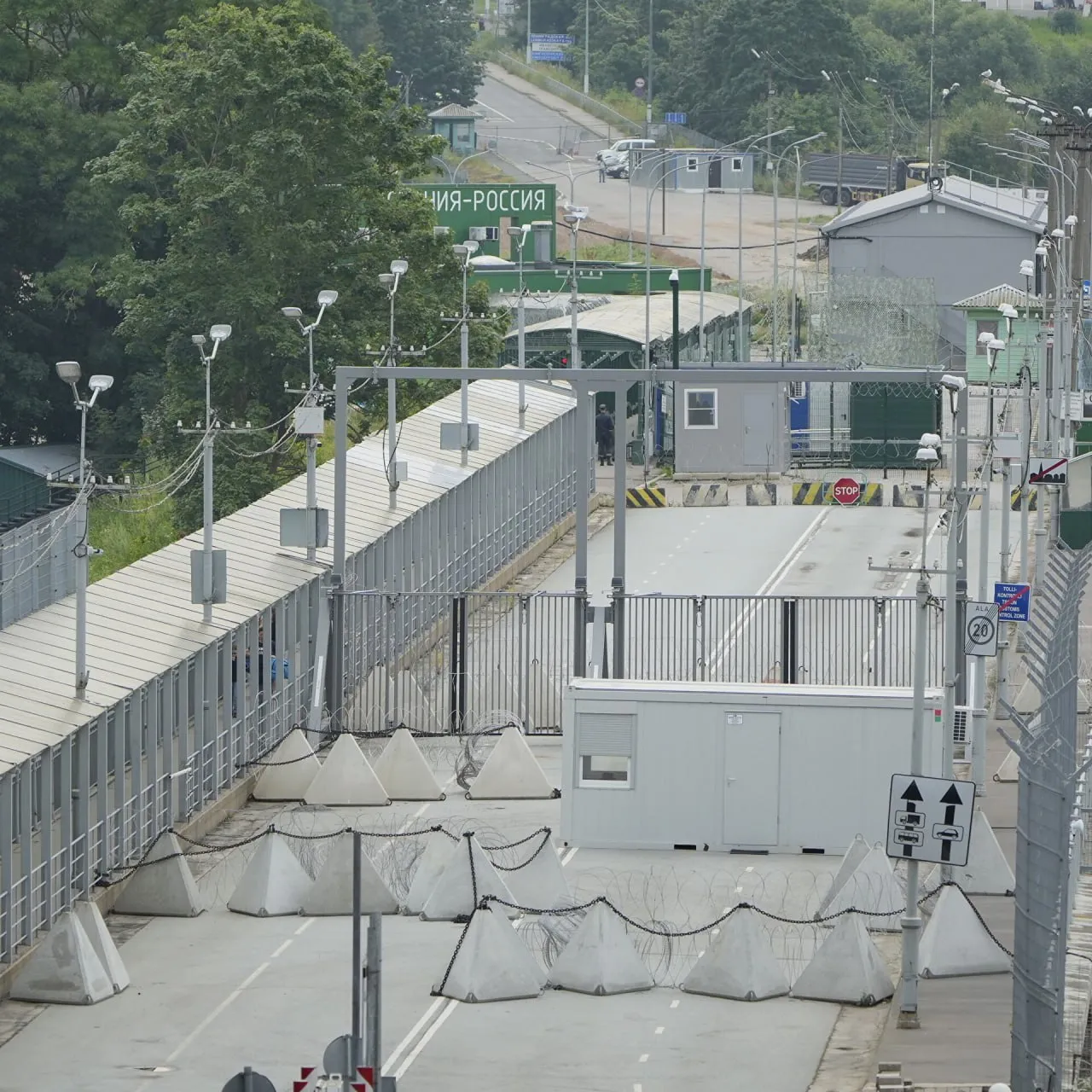
The political analyst points out that reports of a potential threat to NATO countries from Russia appear constantly. Various scenarios of Russian aggression have already been considered, particularly regarding the Baltic states, the seizure of the Swedish island of Gotland, or the Finnish islands, whose territories are demilitarized. The Russian Federation could very well take such a step, and not just as a continuation of the Russian-Ukrainian war.
“Putin is in a ‘stalemate,’ a dead end from which he must find a way out. It is precisely the opening of a hypothetical second front that will help him impose his demands on Western countries. In this situation, Putin wants to secure new security guarantees involving the division of spheres of influence and the restoration of the positions once held by the Soviet Union. I’m not talking about a literal approach, but rather in terms of the Russian Federation’s status in this regard. Therefore, there are still risks of an attack by the Russian Federation,” says the head of the Center for Analysis and Strategies.
At the same time, Ihor Chalenko doubts that the Russian Federation will carry out a large-scale military operation involving a large number of personnel. Instead, there may be other options.
“Note that the Russian Federation is using its classic ‘Gerani-2’ drones against Ukraine less and less. Yet they are still being produced. They continue to stockpile them on the territory of the Russian Federation. Why is all this being done? This is one possibility. Another is ballistics. The ‘Oreshnik’ and tactical nuclear weapons, which the Russians are using to intimidate Europe, are deployed on Belarusian territory. All of this, in essence, are pieces of the same puzzle,” says Ihor Chalenko.
The fact that European countries—in particular the United Kingdom, Germany, and France—have attempted to open a separate track of negotiations with the Russians indicates that Europe is currently trying to understand where there is a realistic path that Putin could take toward de-escalation, according to the head of the Center for Analysis and Strategies. At the same time, peace negotiations and the escalation of the war are not mutually exclusive.
“Events are currently unfolding according to the ‘escalation ladder’ model developed by strategists Thomas Schelling and Herman Kahn. The concept—escalation for the sake of de-escalation—has been known since the 1960s, when the Cuban Missile Crisis arose. “In essence, we’ve already heard about this approach from Kyrylo Budanov. U.S. Secretary of State Marco Rubio also mentioned it,” recalls Ihor Chalenko. “The difference is that Ukraine is escalating for the sake of de-escalation. Russia, on the other hand, is escalating to force Ukraine to comply with its ultimatum. And that is the biggest problem. Because there is no shared understanding of the need to end this war as quickly as possible. And a war of attrition has no winners under any circumstances. Therefore, a ceasefire along the line of contact is the most reasonable course of action under the current circumstances.”

Oleksandr Kraiev: Putin’s only option is to expand the war
Putin’s problems are mounting, while his options for solving them are dwindling. The Russian economy is not improving. Ukrainian strikes are cutting off access to the technology needed by the Russian military, which is supplied via Wildberries and other similar services from other countries. In addition, the oil situation in Russia is deteriorating, notes Oleksandr Kraev, director of the “North America” program at the “Ukrainian Prism” Foreign Policy Council.
“The fact that Donald Trump decided to impose additional tariffs and duties on India because of its purchases of Russian oil is a good first step. It shows what awaits Russia’s partners once the Graham-Blumenthal Act—which imposes additional sanctions and tariffs on countries that assist Russia—is implemented.
Putin is facing more and more problems, and he needs some kind of ‘victory’ or, at the very least, needs to explain why and where these problems came from. Of course, the Muscovite regime cannot admit that Ukraine alone is to blame for everything. The only option is to expand this war. That way, Putin can reinforce the narrative that Russia is at war with all of NATO. To do this, he doesn’t necessarily have to attack NATO with tank columns, march on Šiauliai (Lithuania), lay siege to Narva (Estonia), or bomb Berlin. It would be enough to create a “Crimea 2.0” scenario right there in Narva: “protecting Russian speakers,” “little green men,” and so on. Such scenarios have long been rehearsed. NATO itself is well aware of these risks.
Russia could indeed carry out something like this: a short-term, provocative, yet utterly destabilizing move. This could ultimately confirm that Article 5 of the North Atlantic Treaty on collective security simply does not work.
In this context, Russia could very well provoke and take such a step against the Alliance. And in this way, explain to its population where their problems stem from, while at the same time demonstrating the West’s weakness. At the same time, Putin is counting on gaining even greater support from China, India, and all other anti-Western countries,” explains Oleksandr Kraiev.
If Russia carries out such a scenario, the further course of events and their impact on the war in Ukraine will depend on NATO’s reaction, the expert emphasizes.
“If NATO responds fully, if NATO truly contains and draws Russia’s attention away from us, that will be a major plus for us,” Kraev believes. “First, our partners will be in the same boat as us, and therefore can improve their assistance to Ukraine. I won’t say they’ll increase it, because they’ll be spending most of it on themselves, but they can improve it. And second, and this is very important, Russia will be spending additional resources not on Ukraine, but on other areas.”


