
NPR: Students Describe Changes in Boys' Education Under Taliban Rule
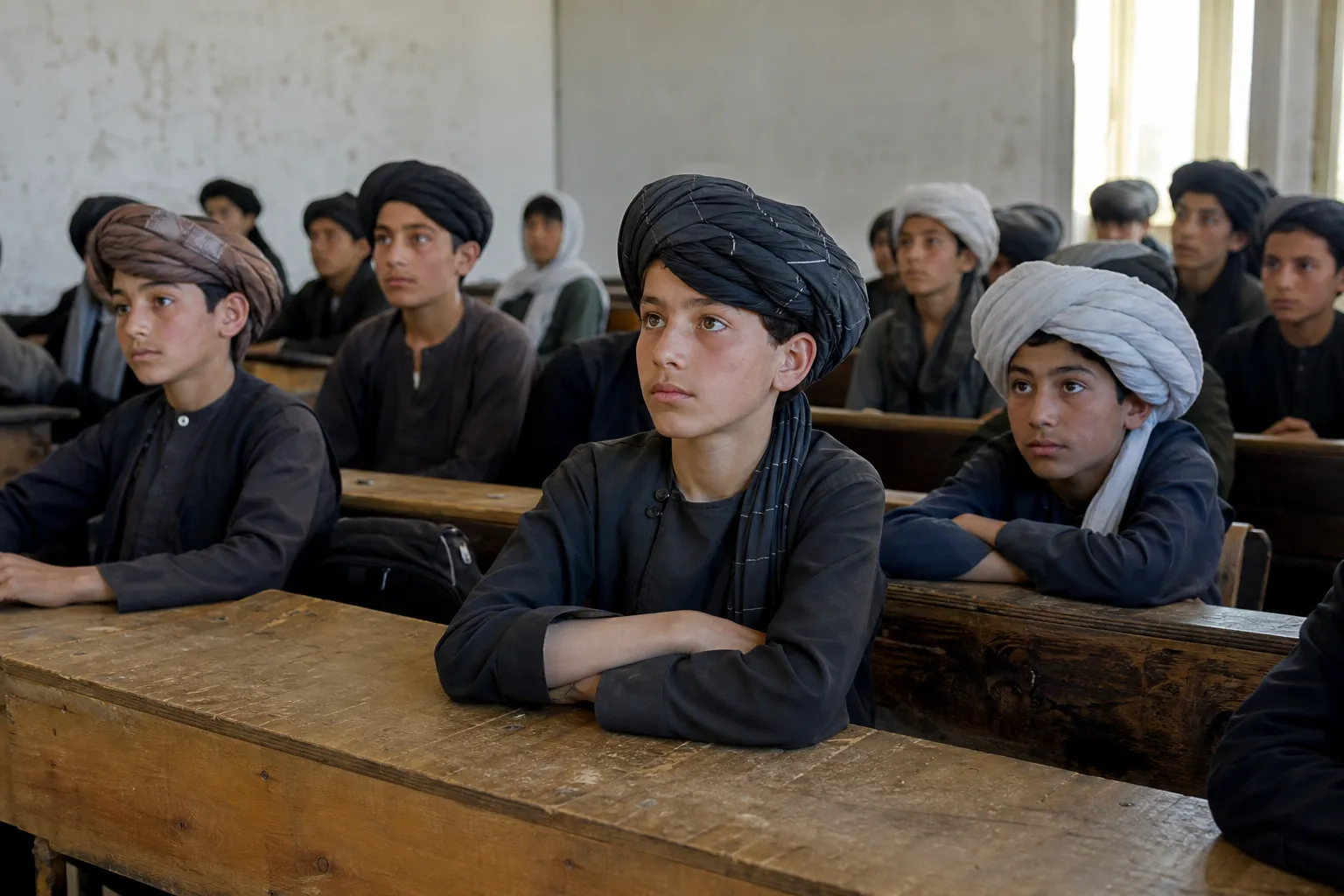
In Afghanistan, boys can still attend school, but students and their families told NPR about significant changes in education following the Taliban’s return to power on August 15, 2021. Students reported less emphasis on science, English, and Persian, as well as civics, while religious studies have become a more prominent part of the curriculum.
NPR spoke with 15 middle and high school students in Kabul, Herat, Helmand, Ghazni, Ghor, Mazar-i-Sharif, and Bamiyan. They described stricter dress codes, an increased emphasis on religion in the classroom, and fears that a secular education might not lead to future career opportunities. According to 19-year-old Khashmat Mubariz, after the change in government, teachers of science, math, and English were required to incorporate verses from the Quran, sayings, and other religious teachings into their lessons.
The Taliban-controlled Ministry of Education states that it currently oversees 22,972 religious education centers, compared to approximately 5,000 such institutions registered under the previous government. The Afghan Center for Human Rights noted that only 316 of these centers are newly established, while many others already existed and were incorporated into the Taliban’s education system. During the same period, according to the ministry, 269 new modern schools were established. The ministry did not respond to NPR’s requests for comment.
For more breaking news, follow the UA.News Telegram channel.
Students also reported restrictions on open discussions in classrooms, the absence of some teachers, and the replacement of experienced educators with people who, according to them, were not always properly trained. One 18-year-old student from Ghazni Province reported that at the start of the current school year, boys in grades 7–12 at public schools were ordered to wear white clothing and a turban. Because of this requirement, he transferred to a private school, but even there, he said, less attention was paid to topics such as parliament, the Loya Jirga, the previous government’s constitution, and other political institutions.
Shabana Basij-Rasikh, an Afghan educator and co-founder of the School of Leadership Afghanistan, told NPR that restrictions on women’s ability to work increase the burden of supporting families for men and boys, causing some of them to drop out of school. Girls are barred from attending secondary school after sixth grade, and women are barred from attending universities. Some female students are studying online, but they face high costs and unstable internet connections.


