
Holiday on August 23, 2026 — Internet User Day: How the World Wide Web Came to Be

August 23 marks Internet Explorers Day, or Internaut Day. This unofficial holiday is dedicated to people who use the World Wide Web and to the history of its development. The holiday is linked to events in August 1991, when the World Wide Web project began to extend beyond the scientific community.
Internaut Day falls on August 23 every year. In 2026, it will fall on a Sunday. The term “internaut” is a portmanteau of “Internet” and “astronaut.” The idea is simple: just as astronauts explore space, so do internauts explore the vast digital space.
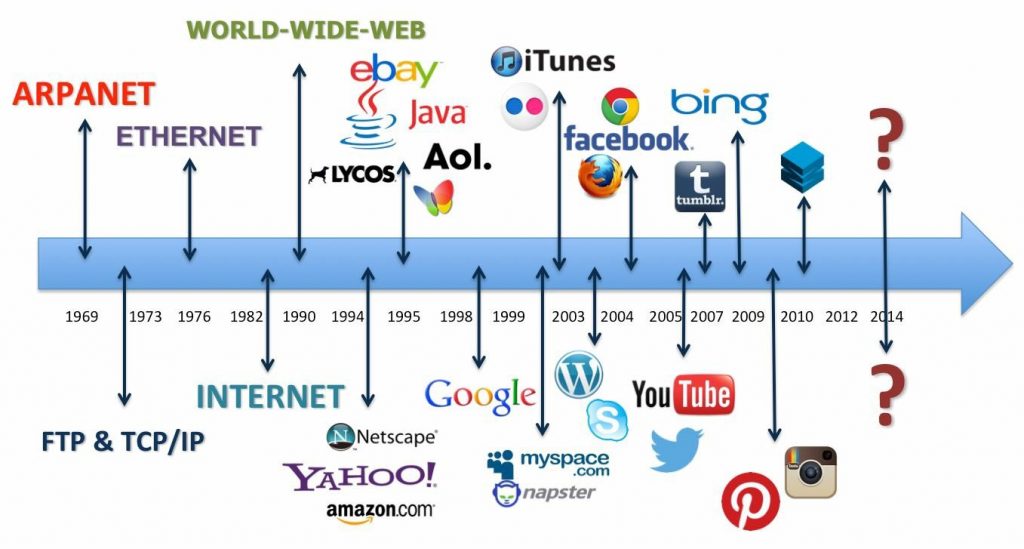
It is not an official national or international holiday. It is celebrated primarily online, commemorating the history of the World Wide Web and the people who made it a part of everyday life. At the same time, Internaut Day is often referred to as the birthday of the World Wide Web. But there’s an important caveat: August 23 is not the exact date the World Wide Web was created. CERN explicitly states that this date is not the precise anniversary of the Web’s creation.
How It All Began
The history of the World Wide Web began at CERN—the European Organization for Nuclear Research in Switzerland. It was there that British programmer and scientist Tim Berners-Lee proposed, in 1989, creating a system that would help scientists easily exchange information. Back then, it wasn’t about social media, videos, online stores, or memes at all. Berners-Lee wanted to solve a practical problem: CERN had a lot of information, but it was stored on different computers, making it inconvenient to work with.
To address this, he proposed a system of interconnected documents that could be accessed via hyperlinks. This is how the core technologies—without which the modern web would be hard to imagine—gradually emerged. In 1990, Berners-Lee created the first web server, browser, and web page. The first website was dedicated to the World Wide Web project itself and ran on a NeXT computer at CERN.
Why August 23?
The story here is a bit more complicated than it might seem. On August 6, 1991, Berners-Lee published information about the World Wide Web project on the Internet. Many sources cite this date as the moment when the Web became accessible outside of CERN. August 23 became the symbolic date for “Internet Day,” which is associated with the expansion of access to the new Web for people outside of CERN.

At the same time, the claim that the World Wide Web first became accessible to the entire world on August 23, 1991, is not entirely accurate. CERN specifically notes in its materials that August 23 is not the exact anniversary of the Web’s creation.

This is important to note, as the history of the Internet consists of several key dates. In March 1989, Berners-Lee made his first proposal; in 1990, the first server and website went live; in August 1991, the project began to spread beyond CERN; and in April 1993, CERN made the World Wide Web software available in the public domain.
What Is the World Wide Web
The terms “Internet” and “Web” are often used interchangeably, although they are not exactly the same thing. The Internet is a global network that connects computers and other devices. The World Wide Web, on the other hand, is one of the systems that operate on top of this network. It was the Web that allowed people to open websites via links, navigate from page to page, and access information through a browser.

At first, this technology was needed mainly by scientists. But gradually, it spread far beyond the confines of laboratories. In 1991, the first web server in the U.S. was launched at the Stanford Linear Accelerator Center. This marked another step toward the spread of the Web worldwide. But the real turning point came in 1993, when CERN released the World Wide Web software for free use. This is what helped the technology spread rapidly and become the foundation of the modern Web.
Why This Day Is Important
Internet Day is not so much an occasion to celebrate a specific technology as it is an opportunity to reflect on just how much the internet has changed our lives. Today, people use the internet to work, study, communicate with loved ones, watch movies, listen to music, shop, and get news. For many, the internet has become so commonplace that it’s hard to imagine what life was like without it.

The web has also completely transformed the way we handle information. Whereas in the past, finding the information you needed often meant going to a library or searching for the right book, now you can find the answer in a matter of seconds. But along with these opportunities have come new problems. Fake news, scams, manipulation, and dangerous content are spreading online. That’s why it’s important for today’s internet users not only to know how to use the web, but also to verify information and protect their data.
How Internet User Day Is Celebrated
Since this is an unofficial holiday, there are no set traditions associated with it. It’s most often celebrated online. On this day, you can reflect on the history of the World Wide Web, see what the first websites looked like, or try to open a recreated version of the first web page. CERN has restored the first website dedicated to the World Wide Web, and today it can be viewed online.

Another option is to learn more about how the internet works. For example, you can find out what a URL, DNS, HTTP, browser, and server are. For someone who uses a smartphone every day, this can be an interesting opportunity to take a peek “under the hood” of the technologies we take for granted. You can also dedicate August 23 to digital security. Checking your passwords, enabling two-factor authentication, reviewing app permissions, or deleting old accounts—all of this is very much in the spirit of the day.

You can also simply thank the people who made the internet what it is today. After all, today’s digital world grew out of a rather modest idea—to make it easier for people to share information.
Interesting Facts About the World Wide Web
The first website was very simple. It explained what the World Wide Web was, how to work with the project, and where to find additional information. Of course, there was nothing there like today’s news sites or social media platforms.
Tim Berners-Lee did not invent the Internet itself. The Internet existed before the World Wide Web was created. His invention consisted specifically of creating a system of web pages, links, a browser, and server infrastructure that made working with information much more convenient.
The first web server ran on a NeXT computer. It was on this computer that Berners-Lee hosted the first website at CERN.
In 1993, the Web effectively got the chance to go global. CERN released the World Wide Web software into the public domain and later made an open-source license available. This allowed developers around the world to use the technology and further develop it.
The term “Internet user” does not refer to a profession. It describes a person who uses and explores the Internet. In a broad sense, almost anyone who regularly uses the Internet today can be called an Internet user.
An Important Note About Internet User Day
The history of this holiday should be viewed specifically as an unofficial commemorative date, rather than as the “birthday of the Internet” established by an international organization. In 2016, a broad discussion arose around August 23. Some media outlets referred to this day as the 25th anniversary of the World Wide Web, but researchers of web history pointed out inaccuracies in this interpretation. Berners-Lee himself publicly questioned the choice of August 23 as the Web’s birthday.

Therefore, it is more accurate to say that August 23 is “Internaut Day,” associated with the early history of the World Wide Web, rather than the exact date of its creation. Nevertheless, the symbolic significance of this day remains. Over the course of several decades, the Web has evolved from a tool for sharing scientific documents into a global space where billions of people now work, study, communicate, and create new technologies.


