
The ocean has warmed to a critical point and is losing its ability to mitigate global warming — The Guardian
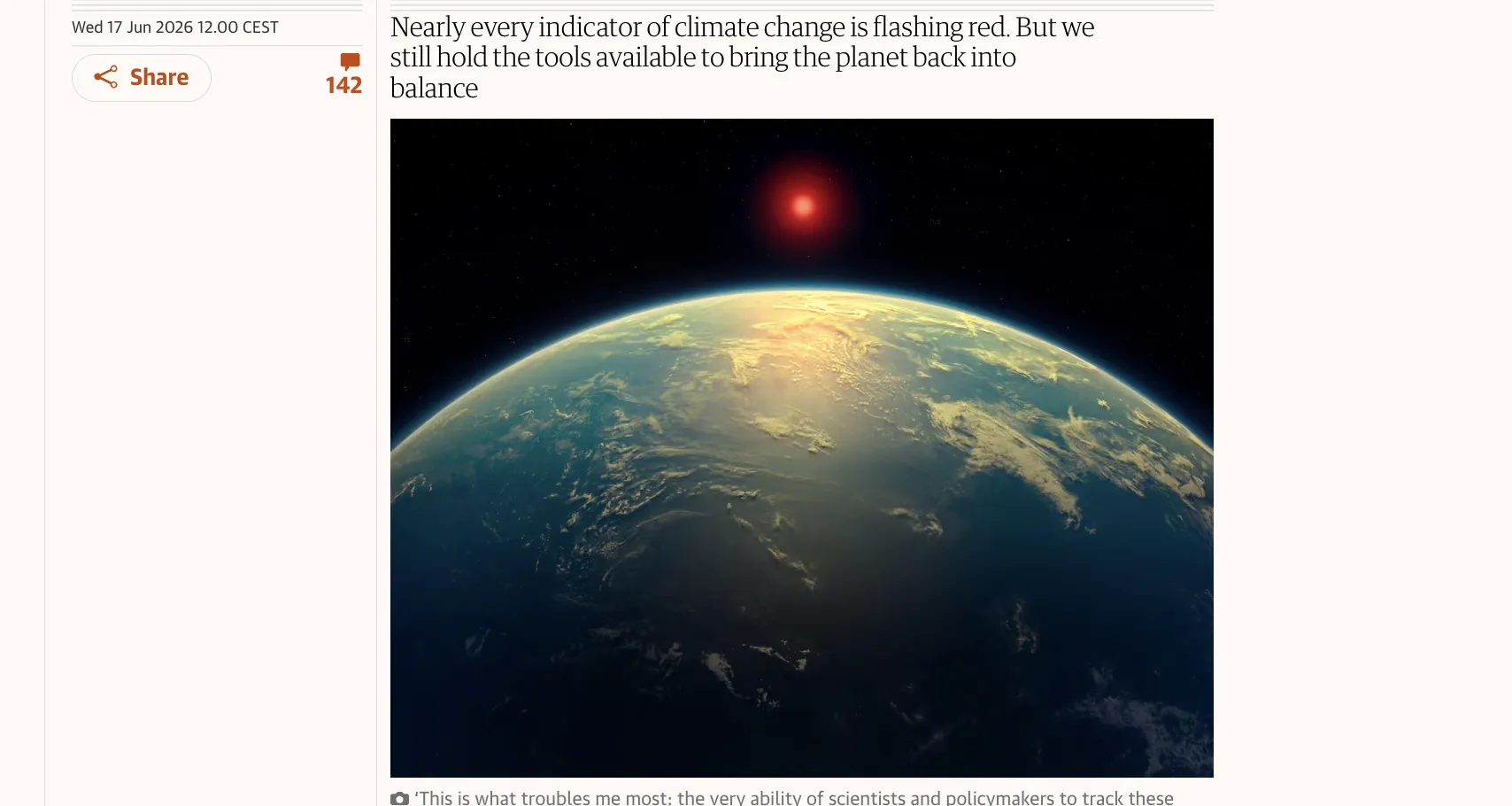
The ocean continues to warm at an alarming rate, and, according to the climatologist, its ability to mitigate global warming is significantly declining. In 2025, the number of marine heatwaves—periods of abnormally high water temperatures—was more than three times higher than in the early 1990s, indicating a sharp acceleration in climate change.
Oceanographer and climatologist Karina von Schuckmann wrote about the consequences of these thermal anomalies in a column for The Guardian. According to her, a severe marine heatwave bleaches coral reefs, destroys seaweed beds that serve as shelters for fish, and devastates fishing grounds. And if this happens frequently, entire ecosystems risk becoming unable to recover.
Constant warming also disrupts the ocean’s chemical composition, its acidity, oxygen content, and carbon exchange with the atmosphere. Furthermore, it can contribute to more extreme weather conditions on land.
She says that the ocean absorbs all the heat that humanity emits into the atmosphere. The ocean has already absorbed more than 90% of the excess heat, quietly protecting us, the inhabitants of the land, from the full impact of global warming. “Ocean warming and more frequent and intense heat waves are signs that this protective barrier is being depleted. The heat we’ve poured into the ocean is beginning to return,” she says.
She explained a phenomenon known as the Earth’s energy imbalance. This is the difference between the solar energy that reaches Earth and the energy the planet radiates back into space. In a stable climate, these two figures are roughly equal. However, greenhouse gases are now trapping heat, and the planet’s warming is further exacerbating global warming: “Bright, light-reflecting ice is giving way to a dark ocean that absorbs heat; cloud cover is changing, causing the Earth to absorb more energy than before, and the warming of soil and water leads to greenhouse gas emissions.”
According to her, far less energy is leaving the environment than is entering it. This imbalance has more than doubled since the end of the 20th century:
“The Earth has, quite literally, lost its balance, accumulating heat at an ever-faster rate. This is the driving force behind rising temperatures, melting ice, more extreme weather events, and the intensification of marine heatwaves.”
The author believes that the growing energy imbalance is exacerbating the consequences for people around the world. The rate of sea-level rise has more than doubled over the past few decades and continues to accelerate. In 2025, we set a new record—a 23-centimeter rise in sea level since 1901. This is leading to further flooding of low-lying coastal areas and higher tides and storm surges.
She noted that scientists are concerned about the scaling back of research on global warming in the oceans. In particular, due to a lack of funding, four out of five monitoring stations in the Pacific and Atlantic Oceans are scheduled to close, and equipment is already being removed from the water. Other researchers are facing similar pressures, even though they are the ones who could provide insights into how humanity might try to halt global warming.
You might find this interesting:
Heavy rain, thunderstorms, and strong winds caused widespread power outages in the Kyiv region.
Kyiv and the Kyiv region were hit by severe weather, including heavy rain and hail. Due to the intense rainfall, roads in the capital were flooded, and in some areas, cars were partially submerged in water. Fallen trees have also been reported. Emergency services are working to address the aftermath of the storm.


