
Pali Lehohla criticizes South Africa’s 2008 scenario document — TimesLIVE
In South Africa, author Pali Lehohla criticized the government’s TimesLIVE article South Africa Scenarios 2025: The future we chose?, published in 2008. In his column, he stated that the document failed to account for local socioeconomic dynamics and the extraction of value from peripheral regions. Lehohla presented his own approach to assessing public policy — Fisher-Bayes-Gauss-Kriging, or FBGK.
Criticism of the 2008 scenarios
The author analyzed the document’s 24 determining variables and argues that its compilers viewed South Africa as a homogeneous macroeconomic field. In his assessment, they relied on nationwide indicators without paying sufficient attention to the microdynamics of individual territories.
Lehohla believes that the scenarios did not use census tract data from 1996–2022, which could have shown the systematic extraction of value from the periphery. He also disputes the assumption that economic growth and broad assessment systems would automatically lead to shared prosperity.
More current news is available on the UA.News Telegram channel Telegram.
Spatial inequality and proposals
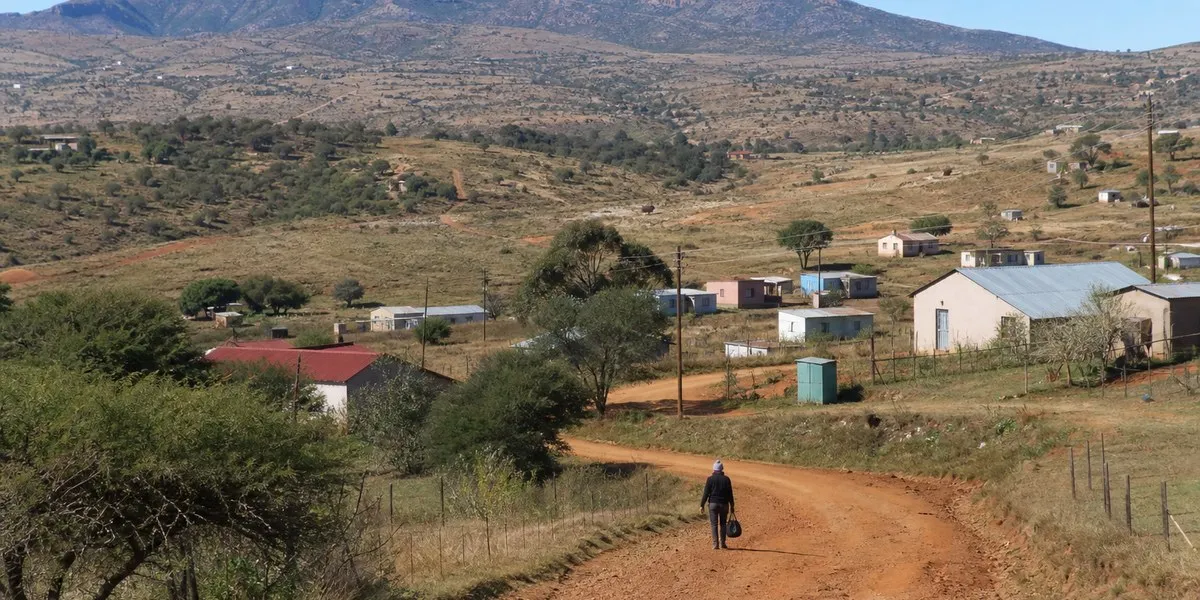
According to the author, spatial statistical modeling shows not an even spread of prosperity, but pockets of considerable wealth surrounded by areas of decline. He stated that in rural areas of former homeland territories and peripheral nodes, P-Asset depreciation is estimated at 3.5 trillion rand and creates so-called zero-yield nodes.
As a guide for future policy, Lehohla proposes combining culture, geography, and economics in district planning. He refers to the philosophy of Morena Mohlomi and the state-building approach of Morena Moshoeshoe I, emphasizing the need to take into account the living conditions of local communities, protect vulnerable territories, and develop local economies. In the author’s view, the new Public Service Act alone will not change the situation if public policy does not move away from an approach focused solely on cash flows.


