
The Bulgarian Parliament did not support the termination of the agreement with Ukraine
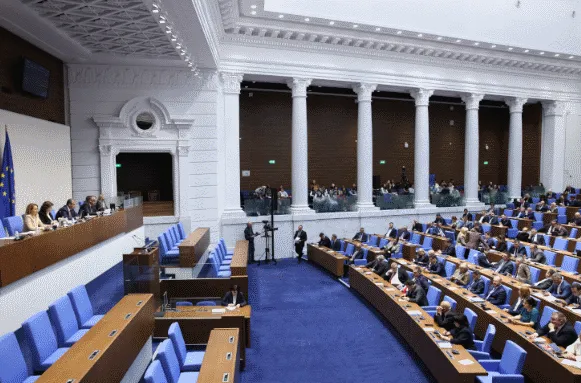
The Bulgarian Parliament did not support a bill to terminate the security agreement with Ukraine. The initiative was introduced by the pro-Russian “Revival” party, but a majority of lawmakers voted against it.
The authors of the bill argued that the interim government had no right to sign such an agreement on its own. At the same time, other parliamentary factions stated that there were no grounds for its cancellation and that Parliament should not interfere with the government’s authority.
The Bulgarian Parliament rejected a bill that would have terminated the security agreement with Ukraine. The bill did not receive the support of a majority of lawmakers. Only 10 lawmakers voted in favor of terminating the agreement. A total of 160 lawmakers voted against it, while 14 abstained. The bill was initiated by the pro-Russian “Revival” party. Its representatives insisted that decisions regarding the signing of such international documents should be made by parliament, not by the interim government.
Angel Georgiev, a lawmaker from “Revival,” stated that the signing of the agreement allegedly took place without properly informing the public. “This step was kept hidden from the Bulgarian public. The National Assembly was not informed in advance of the interim government’s intentions,” he said. According to Georgiev, the agreement, in his opinion, “brings no benefit to Bulgaria.”
At the same time, most parliamentary factions did not support this position. MP Silvia Hristova stated that her political party would vote against the bill, since the Constitutional Court had already defined the limits of Parliament’s authority in such matters. “We will not support this bill because the Constitutional Court’s ruling prohibits the National Assembly from interfering with the government’s powers,” she noted.
A political dispute then broke out among the deputies. Representatives of “Vidrodzhennia” accused their opponents of allegedly reneging on their own campaign promises. “You haven’t withdrawn Bulgaria’s signature because Brussels won’t let you. To us, you’re like an open book,” said MP Tsontcho Ganev. He also added that voters had expected politicians to take different actions after the election.
As a reminder, the security agreement between Ukraine and Bulgaria was signed on March 30 in Kyiv. The document was signed by Bulgaria’s then-interim prime minister. It provides for cooperation between the two countries in the field of security and support for Ukraine. Following the vote in parliament, this agreement remains in force.
Bulgaria has officially announced its refusal to support the European Union’s new, 21st package of sanctions against Russia due to the intention to include Patriarch Kirill, the head of the Russian Orthodox Church, on the sanctions list. The Bulgarian side views such restrictions as direct interference in religious affairs, as diplomatic representatives noted during discussions of the draft.


