
An important date passed almost unnoticed in Ukraine: Saturday, August 8, marked the 18th anniversary of the start of the war between Russia and Georgia. There was almost no mention of this in the Ukrainian media, which is surprising, given that the 2008 war in Georgia is commonly referred to here as the “first warning sign” and a “dress rehearsal” for what later happened to Ukraine.
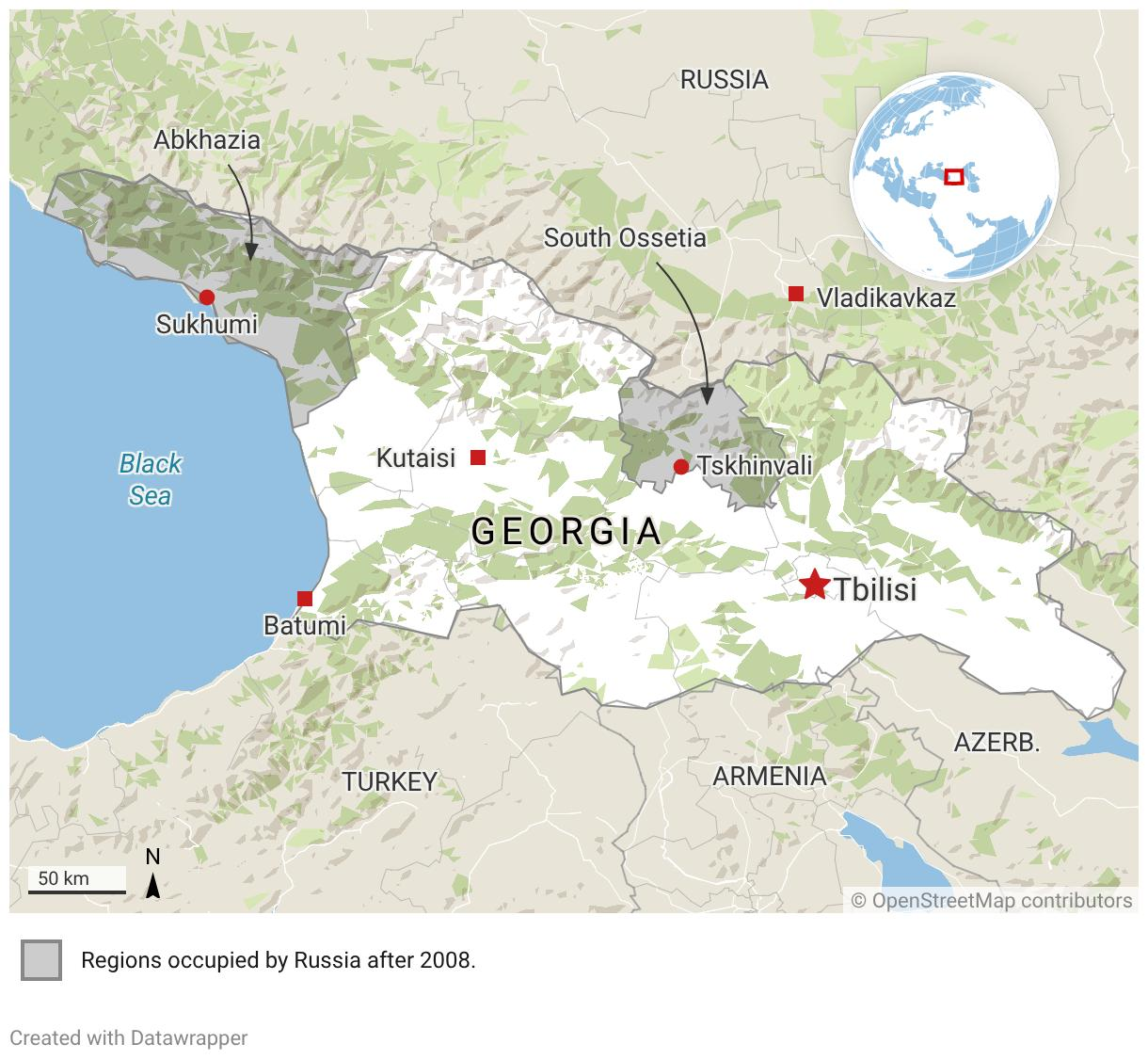
The war was fought over the region of South Ossetia and, in part, over Abkhazia. These are separatist entities on Georgian territory that did not emerge, as many mistakenly believe, in August 2008. They had existed since the early 1990s as a result of internal conflicts between Georgian ethnic groups following the collapse of the Soviet Union. In 2008, Russia simply “legitimized” these territories once and for all through military intervention and its own political recognition.
From a contemporary Ukrainian perspective, the situation is quite clear: Russia, just as it did against Ukraine on February 24, 2022, treacherously attacked Georgia 18 years ago, occupied 20% of its territory, and recognized those territories as “independent” states. This analogy is convenient, understandable, and, at first glance, entirely logical. But the problem is that it is so oversimplified that it borders on historical inaccuracy.
While in Ukraine’s case the situation is indeed quite clear-cut—Russia resorted to unprovoked aggression out of the blue—in the case of Georgia, things were, to put it mildly, not quite that simple. So what really happened, and what lessons can we draw from it today? Why did that war end so quickly? Why are relations between Tbilisi and Moscow now quite normal (though not entirely smooth), while the war in Ukraine has been going on for five years with no hope of a quick end in sight? UA.News political analyst Mykyta Trachuk examined the issue.
A Chronicle of the Catastrophe, or “Who Started It?”
To understand exactly what happened in August 2008, we need to mentally rewind the tape of history at least three decades. After the collapse of the Soviet Union, Georgia, like many other former Soviet republics, faced outbreaks of separatism. South Ossetia and Abkhazia—regions with complex ethnic structures and their own political ambitions—entered into armed conflict with the Georgian central government as early as the beginning of the 1990s. The conflicts resulted in the self-alienation of these territories: they were not controlled by Tbilisi, had their own “governments,” security forces, and support from Russia. Russia, in particular, had been issuing Russian passports to the local population since the 1990s.
Yet despite these facts, there was no overarching “Russian footprint” in those events. At the time, Russia itself lay in economic, social, and political “ruins” following the collapse of the USSR, grappling with separatism in the Caucasus and rampant crime on city streets. In some parts of the country, there was literally no food; wages at factories were paid in flour and grains, and ordinary Russians stood in line for American humanitarian aid—the famous “Bush legs.” Under such conditions, Moscow simply had other priorities than supporting separatism in neighboring countries.

By the mid-2000s, the situation remained simmering. But in early 2008, tensions began to rise. The “Kosovo precedent”—the West’s recognition of Kosovo’s independence in February 2008—became a justification for Russia: if a territory could be separated from Serbia, why couldn’t the independence of South Ossetia and Abkhazia be recognized? So Moscow began to demonstratively build up its military presence along the borders of the unrecognized republics, and its rhetoric regarding the “protection of Russian citizens” grew increasingly aggressive. The situation was extremely tense, and any spark could have set off an explosion.
And that spark, of course, did appear. On the night of August 8, 2008, following yet another round of border skirmishes and mutual accusations, then-Georgian President Mikheil Saakashvili ordered a massive artillery barrage and an assault on Tskhinvali—the “capital” of South Ossetia. It was the Georgian army that was the first to launch full-scale military operations against the separatist enclave. And this, for the record, is not just another piece of Kremlin propaganda, but the conclusion of a special EU International Commission led by Swiss diplomat Heidi Tagliavini.
To be honest, Russia was just waiting for a pretext. Moscow deliberately provoked Tbilisi, amassed troops near the borders, handed out passports, and prepared a foothold for a potential invasion. But the key point is that it was Saakashvili himself who provided the casus belli for this invasion by giving the order to commence hostilities.
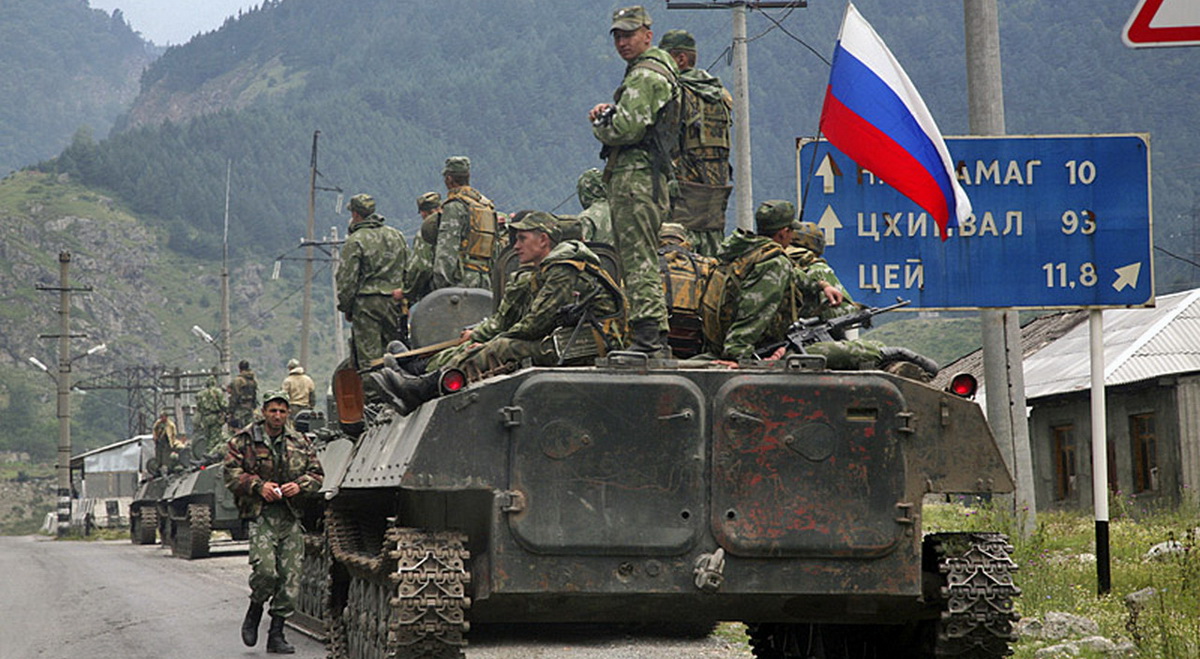
Moscow did not delay its response. The Russian invasion, which began on August 8, was a direct violation of international law. The deployment of regular troops into the internationally recognized territory of a sovereign state without the authorization of the UN Security Council constitutes aggression. However, since Russia did not start the war first, and its actions formally appeared to be a response to the Georgian offensive, the sanctions and condemnation were very, very mild. No serious economic restrictions or international isolation occurred at that time. The West limited itself to restrained statements and the freezing of certain contacts, which were restored fairly quickly within a year and a half—and that was it.
Five Bloody Days: Why the War Ended Before It Even Began
The active phase of the Russian-Georgian war lasted only five (!) days. It is one of the shortest interstate armed conflicts of modern times. There are several reasons for this lightning-fast conclusion, and all of them are important for understanding why the Ukrainian scenario took a completely different path.
As of 2008, the Georgian army was frankly weak. Yes, Saakashvili had tried to reform the armed forces, brought in Western instructors, increased the defense budget, and so on. But the scale of the forces was incomparable. In a matter of days, Russian troops not only drove the Georgians out of Tskhinvali and its suburbs but also advanced into government-controlled territory in Georgia, capturing the cities of Gori, Poti, and Zugdidi, cutting off major transportation routes and pointedly stopping just 35 km (!) from the capital—Tbilisi.
It was at this
very moment that a well-known incident occurred, which later became a rather sad meme. When Saakashvili was informed that Russian tanks were just a few dozen kilometers from Tbilisi, the Georgian president—while on the phone and likely in a state of extreme nervous tension—began chewing on his own tie. BBC cameramen captured this moment, and within a few hours, the video had gone viral around the world. “Saakashvili’s tie” became a symbol of panic, confusion, and Georgia’s complete military fiasco.
There was no point in resisting any further. So it was at that very moment, with the mediation of France—which then held the EU presidency—that urgent negotiations began. President Nicolas Sarkozy flew to Moscow and Tbilisi, and by August 12, the parties had agreed on a ceasefire plan. Georgia complied with some of Russia’s demands, withdrew its troops, and de facto accepted the new reality. Russia, in turn, officially recognized Abkhazia and South Ossetia as “independent states.”
The international community, incidentally, was rather restrained in its assessment of this conflict. Yes, Russia’s actions were rightly called a violation of international law. Yes, the occupation of 20% of Georgian territory was condemned. But at the same time, there was nowhere near as much condemnation as there was in Ukraine in 2014, let alone in 2022. The Georgian side was the first to attack Tskhinvali—a city that Russia considered a zone of vital interest, and whose population was 90% Russian citizens. So Moscow responded with an invasion—excessive, disproportionate, and unlawful—but still a response, not a first strike. This is precisely what was ultimately stated in the report of the EU Special Commission, and this is why the West’s reaction turned out to be rather lackluster.
In fact, the war ended before it had truly begun. Everyone quickly reached an agreement, given the ambiguity of the situation. There are three key reasons for this outcome: Georgia quickly laid down its arms, international support for Tbilisi was extremely limited, and Russia itself was a very different country back then. It was a country far less prepared for a protracted war, far more open, with an independent media, politicians who publicly opposed the war, street protests, and so on. It’s impossible to imagine anti-war rallies in Moscow today—but back then, they were a reality.
The Ukrainian case, however, took a fundamentally different path. Tbilisi signed a peace plan within five days—while Ukraine has not laid down its arms even after five years. Western support turned out to be not just massive, but unprecedented: hundreds of billions of dollars, modern weapons, intelligence, sanctions against Russia, etc. And the Russia of 2022–2026 is by no means the “peaceful” Russia of 2008. Today, it is a typical personality-based autocracy: militarized, ideologized, mobilized, with a massive repressive apparatus that has crushed all opposition — unlike the Russia of 18 years ago, which at that time could quite reasonably be called a relatively free and more or less sane country (especially in contrast to the present).
Ultimately, back then all sides quickly found a new balance—but now no one is even looking for one. That is why the war there ended in five days, while here it has been going on for five years with no end in sight.
How August 2008 Is Viewed Today
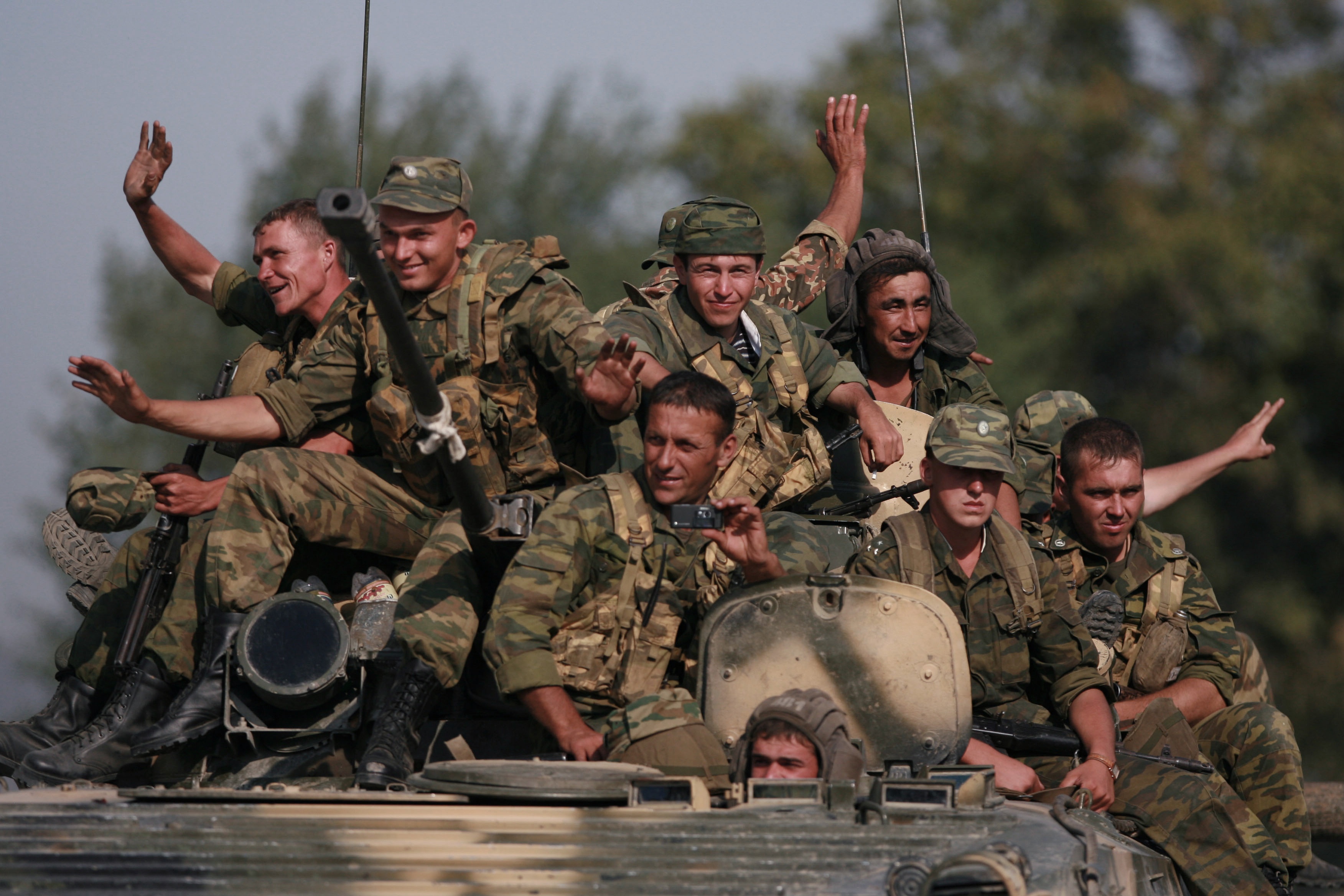
Assessments of what actually happened in August 2008 vary dramatically depending on who is making them. In Russia, it is interpreted as the first serious demonstration that Moscow will not tolerate the trampling of its “rights” in the post-Soviet space, even under pressure from the West, and that those who “trample on these rights” will be severely punished. This war marked the first major turning point in Russia’s rift with the West—the moment when, for the first time since the collapse of the USSR, the Kremlin deployed its military beyond its borders.
In the West and in Ukraine, the events of August 2008 are interpreted as the Russian Federation’s first act of aggression, which went unpunished and was therefore later repeated in Ukraine. This thesis has become widely accepted. There is a significant grain of truth to it, but, as noted above, it deliberately omits the inconvenient fact of who fired the first shot.
In Georgia itself, however, the assessment of those events has undergone perhaps the most dramatic changes over the past 18 years. During Saakashvili’s time, they were interpreted unequivocally—as “unprovoked Russian aggression,” in response to which Georgian troops “were forced” to attack Tskhinvali. Georgia’s current government, led by the “Georgian Dream” party, has completely changed the narrative and directly accused Saakashvili of “starting the war”—allegedly “on the orders of foreign powers.”
“We accuse Saakashvili’s bloody regime of starting the war. At that time, this country officially had a traitorous commander-in-chief. Our heroes sacrificed themselves because the so-called commander-in-chief was a traitor, a foreign agent acting on the orders of foreign powers,” stated Georgian Prime Minister Irakli Kobakhidze on the eve of the war’s anniversary.

Memory and Revenge vs. Pragmatism: Russia–Georgia Relations Today
Today, 18 years after “Bloody August,” a thoroughly pragmatic relationship has developed between Russia and Georgia. There is no friendship, no “brotherhood”—and, of course, there never will be. Instead, there is definitely a cold, mutually beneficial pragmatism: business is thriving, investments are flowing in, planes are flying, borders are open, and so on. Incidentally, in 2022, Georgia took in nearly 1.5 million anti-war Russians who emigrated from the country after the start of the full-scale invasion of Ukraine—and this despite the fact that the country’s total population is about 3.9 million people. Although 90% of these migrants eventually left Georgia, about 100,000 Russians still remained to live in Tbilisi, Batumi, and other cities. This is an objective reality that causes surprise—and sometimes even outrage—in Ukraine.
But Georgia’s logic, whether we like it or not, has its own internal consistency. Geography is unforgiving: with nearly 900 km of shared border with Russia, and without any security guarantees from NATO or anyone else, Georgia simply cannot afford to remain in a state of permanent confrontation with its northern neighbor. Simply closing itself off is also not an option—at least, that is the view of the current Georgian government. And a significant portion of society supports this pragmatism.

At the same time,
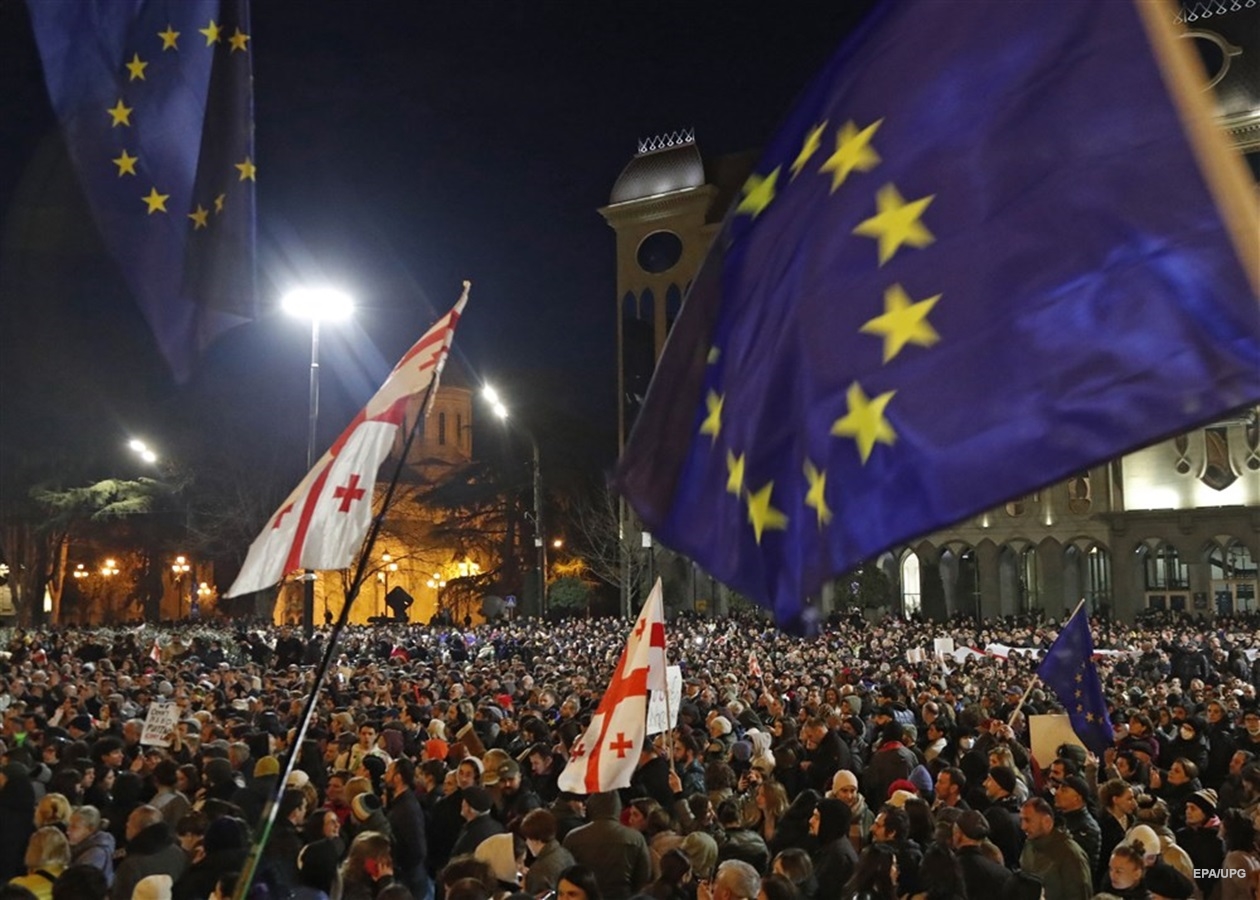
however, it cannot be overlooked that Georgia remains a divided society. Similarly, about half of the citizens do not support the policies of “Georgian Dream,” regularly protest against them, and—just as they did 18 years ago—consider Russia an enemy and an aggressor from whom they must protect themselves. They take to the streets waving Ukrainian and European flags, and they remember August 2008 not as “Saakashvili’s mistake,” but as the day Russia trampled on the sovereignty of their homeland. This internal conflict within Georgian society has not disappeared and is unlikely to do so for a long time to come.
Official Kyiv, meanwhile, views Georgia today with mixed feelings: ranging from disappointment to incomprehension. But perhaps it is precisely the Georgian experience—with its dramatic mistakes, swift conclusion, and subsequent pragmatic coexistence with the enemy—that serves as the mirror we should examine more closely. Not to copy someone else’s experience—that won’t work, because the situations are too different—but to understand that history isn’t black and white, and the future may be completely different from what it seems today.


