
The head of the NBU noted that foreign exchange restrictions have been eased for non-residents
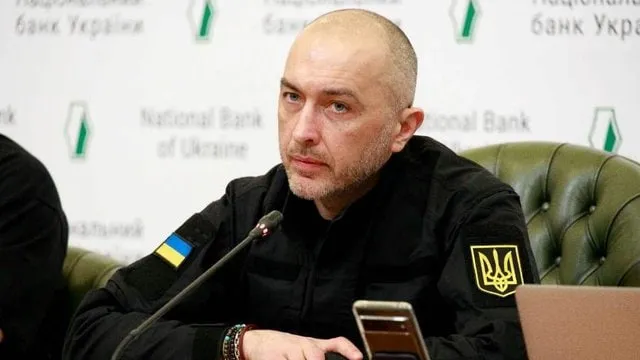
The easing of certain currency restrictions applies exclusively to non-residents—individuals who permanently reside abroad and provide services to Ukrainian companies, particularly in the defense sector.
This was stated by Andriy Pyshnyy, Governor of the National Bank of Ukraine (NBU), during a speech in the Verkhovna Rada on Thursday.
According to the NBU head, the regulator has allowed Ukrainian companies to make payments to the foreign accounts of non-residents who are members of supervisory boards, directors, or executive bodies, specifically for payments accrued as of May 1, 2026. This relaxation has resolved a key problem—the difficulty Ukrainian companies face in attracting highly qualified non-residents, including for the restructuring of supervisory boards at state-owned enterprises and banks.
"We have not given non-residents the ability to transfer money unchecked. We have simplified the conditions for purchasing and transferring currency for non-residents, as existing restrictions significantly complicated the recruitment of highly qualified non-resident specialists to Ukrainian companies. They are only allowed to transfer the money they receive as wages or equivalent payments in accordance with their salaries,” Pyshnyy said, explaining the logic behind the NBU’s decision.
He emphasized that this applies not only to bank supervisory boards but also to the management of other companies, including those in the defense sector.
The NBU Governor noted that over the course of more than four years of war, the regulator has already amended currency restrictions 80 times to provide the Ukrainian economy and entrepreneurs with additional resources for recovery. The NBU has responded to requests from the government and business associations, as well as to issues of defense capability, which are the basis for the latest package of measures.
Pyshnyy noted that on April 25, the National Bank adopted four decisions: it simplified currency purchases for defense enterprises, expanded the ability for non-resident military personnel to purchase and transfer currency abroad to attract foreign legionnaires to the defense forces, created conditions for implementing the government’s program to support Ukrainians abroad, and simplified certain conditions for purchasing foreign currency for remittance to attract highly qualified non-resident specialists to Ukrainian companies. All these measures underwent mandatory consultations with the International Monetary Fund (IMF), which deemed them appropriate, and received support from the European Business Association (EBA).
As reported, effective April 25, 2026, the NBU eased certain currency restrictions to attract highly qualified non-resident specialists, allowing Ukrainian legal entities to purchase and transfer foreign currency abroad to the accounts of non-resident individuals—members of supervisory boards, boards of directors, and executive bodies—opened outside Ukraine—in the amount of payments accrued as of May 1, 2026, under civil law contracts.
Pyshnyy stated that the amount of cash in circulation in Ukraine has decreased.
Andriy Pyshnyy’s academicbiography has become the subject of anti-corruption investigations.
Bitcoin jumped to its highest level since February — Bloomberg.
Peter Schiff called Bitcoin “Shitcoin” and challenged Michael Saylor to a debate
Bitcoin mining and artificial intelligence are moving in opposite directions


