
Former Chinese Premier Zhu Rongji Has Died
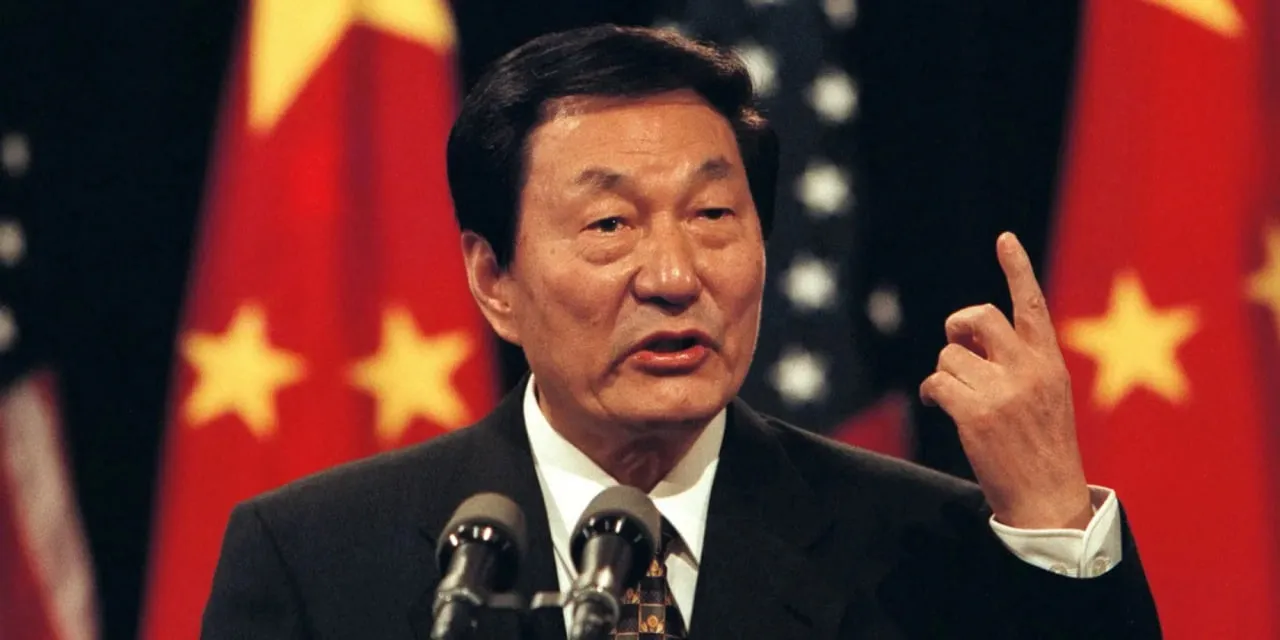
Former Chinese Premier Zhu Rongji died in Beijing on the morning of August 12 at the age of 97. According to preliminary reports, the cause of death was illness.
Zhu Rongji led the Chinese government from 1998 to 2003 and was considered one of the key reformers of the Chinese economy.
Known as China’s “economic czar,” Zhu spearheaded the process of market liberalization and globalization, steering the country toward a transition from a backward, centrally planned economy to a more open and market-oriented one.
In a sense, his death marks the end of a more economically optimistic era for many Chinese who witnessed the country’s sweeping transformations during the reform years. These reforms led to a significant reduction in poverty, the rapid growth of the middle class, and a rush by foreign companies to gain access to the lucrative Chinese market.
Now, the world’s second-largest economy is losing momentum after decades of unprecedented development led by figures such as Zhu, who fearlessly implemented Supreme Leader Deng Xiaoping’s vision of “reform and opening up”.
In an official obituary issued by the ruling Communist Party, Zhu’s role was highly praised during a “crucial phase” when the country was “transitioning from a planned economy to a socialist market economy.” It also noted Zhu’s “deep devotion” to the people.
“He emphasized that public servants must always remember that they are public servants; they must have the courage to speak the truth without fear of offending others, and avoid special privileges… making every effort to achieve tangible results for the people,” the document states.
Zhu Rongji led China’s economic policy for more than a decade, beginning in the early 1990s, first as vice premier and then as premier during the tenure of the late leader Jiang Zemin, who died in late 2022.
Zhu, a tenacious technocrat, carried out a series of painful but necessary reforms in China aimed at liberalizing the economy—from a substantial overhaul of the fiscal and tax systems to a radical reorganization of the bloated public sector.
On the international stage, he is best remembered for leading China’s accession to the World Trade Organization in 2001, which paved the way for double-digit economic growth that helped transform China into a major world power.
Zhu’s uncompromising approach, tough pragmatism, and firm stance in the fight against corruption earned him both supporters and enemies within the party, as well as the nickname “the iron-fisted premier.” His blunt speaking style also made him popular among the people, who were accustomed to the scripted speeches of Chinese officials.
“It doesn’t matter whether there’s a minefield or an abyss ahead of me, I will move forward without hesitation and do everything possible until my very death,” he declared at a famous press conference in 1998, upon becoming prime minister and the country’s second-most powerful leader.
Who Is Zhu Rongji—What Is Known About China’s “Economic Tsar”
Zhu was born in the southern province of Hunan, graduated from the prestigious Tsinghua University in China with a degree in electrical engineering, and took a job at the state planning agency. However, he came from a wealthy family of landowners and traces his lineage back to the rulers of the Ming Dynasty, which “tarnished” his biography.


