
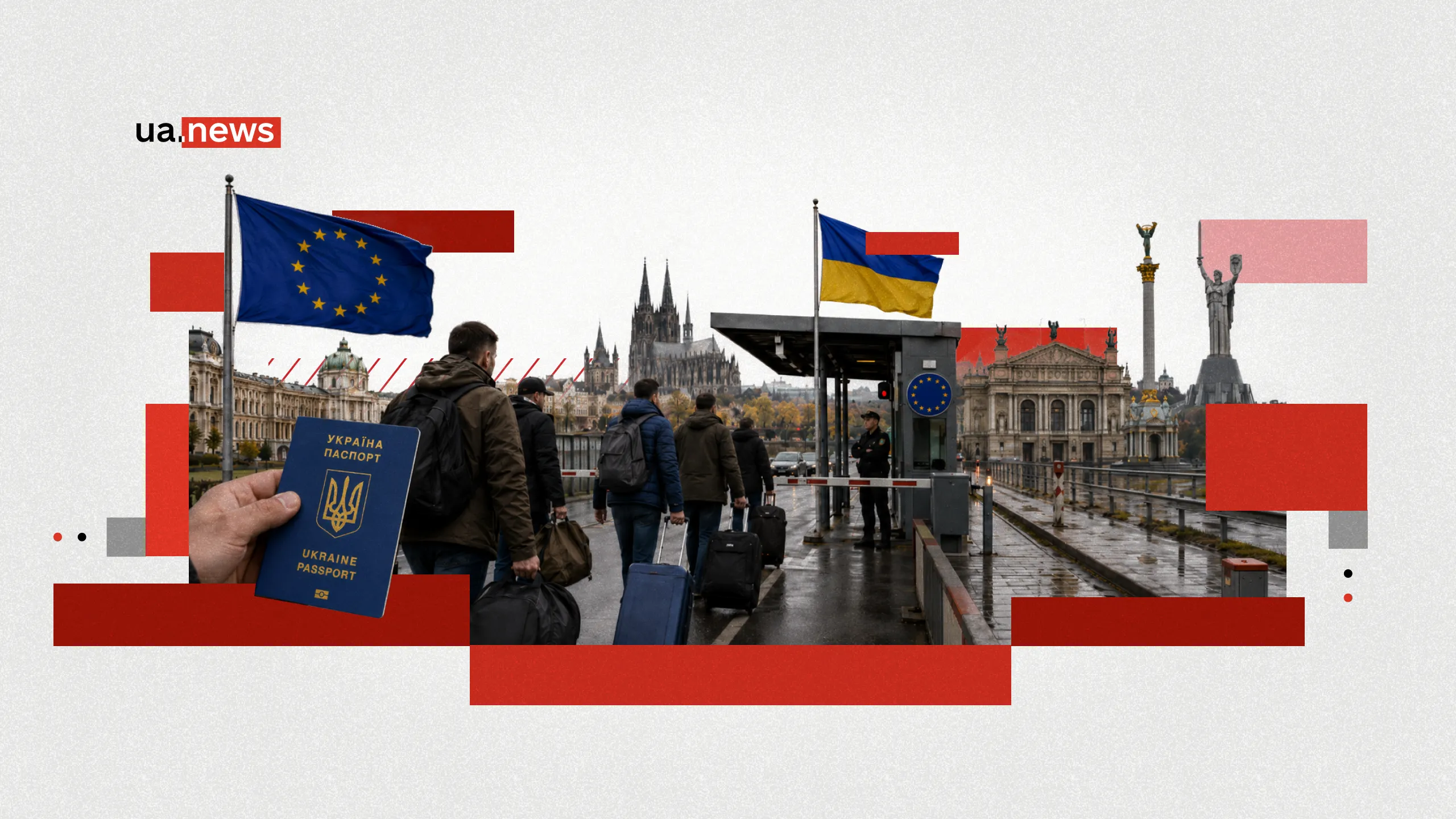
Ukraine’s problem—a shortage of people for both the labor market and the front lines—is becoming a serious issue for the European Union itself. In the fifth year of the war, Brussels can no longer ignore the fact that Ukraine needs more than just financial or military aid. Without human resources, the country has no chance of surviving the fight against the aggressor. Therefore, the EU and national governments are urgently seeking a balance between supporting refugees, their own migration policies, and Ukraine’s needs.
One possible solution could be to exclude Ukrainian men of draft age from the extended temporary protection mechanism introduced after Russia’s full-scale invasion. Could this mean the mass deportation of Ukrainian men to Ukraine? UA.News sought to find out.
The EU Wants to Limit Protection
A campaign is unfolding in the capitals of EU countries to establish stricter rules for migrants and refugees. Against this backdrop, the future of the EU Temporary Protection Directive is being discussed; this directive allows Ukrainians to live and work in Europe without having to apply to local asylum systems. This legal mechanism is in effect until March 2027. EU countries want to extend it for another year while preparing for the phased termination of this program.
Recently, Euractiv shared insights into possible changes to this Directive. According to media reports, Europeans plan to maintain temporary protection for Ukrainians but may deny this status to men of conscription age or individuals who left Ukraine illegally. Such restrictions do not apply to those who have already arrived in Europe.
There are several reasons for the proposed revisions to the regulations. First and foremost, the European Union is concerned that Ukrainian men of draft age are increasingly seeking refuge. Ukraine cannot unilaterally prevent them from leaving through bans.
However, for European security, it is important that Ukraine has sufficient human resources for defense and future reconstruction. In the argumentation regarding the restriction of EU protection, it is noted that the country is already suffering from a labor shortage and problems with replenishing the army. As a result, in 2024, Ukraine had to lower the draft age from 27 to 25 and intensify mobilization.
The future of the updated framework program will be discussed at the level of migration ministers during a meeting of the Justice and Home Affairs Council. Officials are expected to adopt a joint political decision on the changes to be made to the Directive. The European Commission has not yet commented on this issue and continues to discuss it with national governments.
In any case, the new initiatives regarding Ukrainian men reflect the growing tension between the EU’s efforts to help Ukrainians fleeing the war and Ukraine’s need, in the fifth year of the war, to replenish its Armed Forces.

How many men of draft age have left
The scale of men leaving Ukraine is partially revealed by data from the border services of Ukraine and its neighboring European countries. According to data obtained by Ukrainian media, nearly 540,000 men of draft age have left the country since the start of the full-scale invasion. Of these, about 470,000 crossed the border legally. In 2025, after the government began issuing passports to young men aged 18–22, about 400,000 young people left for Europe. That is three times more than in previous years.
At the same time, the actual number of men who left Ukraine during the war may be higher. For example, Eurostat reports that approximately 1.1 million men who arrived from Ukraine received temporary protection in EU countries between 2022 and 2024. This is twice as many as the figures reported by the border services of neighboring European countries. However, these figures also include men who had left for EU countries earlier. They applied for temporary protection status after the full-scale Russian invasion.
If we count men as a percentage of the total number of our refugees in the European Union, it turns out that they make up 26.6% of the total, with women accounting for 43.3% and children for 30.1%. In total, as of March 2026, nearly 4.4 million Ukrainians with temporary protection status were living in the European Union. The largest numbers of our compatriots were in Germany, Poland, and the Czech Republic.
In 2024, the Ukrainian government attempted to register men abroad for military service. Official Kyiv began requiring the updating of documents for the Temporary Protection Certificate (TPC) if men of mobilization age, from 18 to 60, applied for consular services. At the time the changes were implemented, all consular services were temporarily suspended for them, except for processing documents for return to Ukraine.
Will the EU dare to send men back to Ukraine?
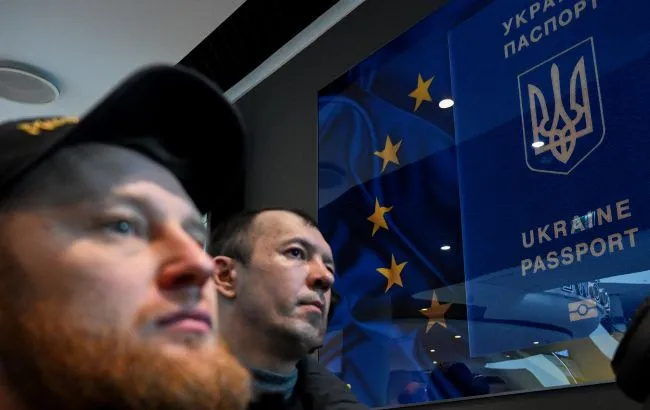
Political statements regarding the need to return Ukrainian men of draft age have been made in the capitals of many EU countries, particularly in Poland, Germany, and the Czech Republic, where the largest numbers of Ukrainians reside. In April 2026, German Chancellor Friedrich Merz emphasized that Berlin supports Ukraine’s efforts to restrict the departure of men of draft age to the European Union.
“We support Ukraine’s efforts to restrict the departure of men of draft age to the EU. This is absolutely necessary so that Ukraine can defend itself, to preserve the unity of Ukrainian society, and to enable the reconstruction of Ukraine. We see tangible progress here in terms of interest from both sides,” Merz said at a joint press conference with Volodymyr Zelenskyy.
The President of Ukraine confirmed that the relevant authorities in Ukraine and Germany must determine how to return Ukrainian men of draft age who have left the country in violation of Ukrainian law.
The Polish government and Prime Minister Donald Tusk personally have repeatedly stated their readiness to help Ukraine resolve this issue. In early June, Polish media reported that the country’s authorities support excluding Ukrainian men of draft age from the expanded EU temporary protection scheme currently being discussed by member states.
“In our view, there is no controversy over the fact that individuals who cannot legally leave Ukraine in the first place should not be granted temporary protection in the EU,” said an unnamed Polish diplomat.
However, in practice, this has so far amounted to nothing more than statements—no EU country has the right to deport Ukrainian men en masse without a corresponding international agreement. Furthermore, the forced return of people without legal grounds violates the European Convention on Human Rights, specifically the prohibition against inhuman treatment and the right to private and family life.
An EU country may deport a man only in the event of a violation of immigration law. For example, for repeated administrative or criminal offenses, or due to the lack of grounds for legal residence. If, however, a man has a residence permit, is learning the language, and is working in the host country, then forcibly returning him to Ukraine becomes legally impossible.
The proposal to deny temporary protection to newly arrived men from Ukraine under the EU Directive also does not seem realistic. This issue is politically complex and sensitive. European lawyers doubt that such changes will be adopted, as the EU established temporary protection as a collective response to Russian aggression, not as a tool for selective migration. Therefore, any narrowing of the circle of persons eligible for protection must be legally justified and politically agreed upon by member states. In any case, the EU will avoid creating uncertainty for Ukrainians who are already living under the protection of the European Union.




