
The revolutionary X-59 aircraft broke the sound barrier for the first time
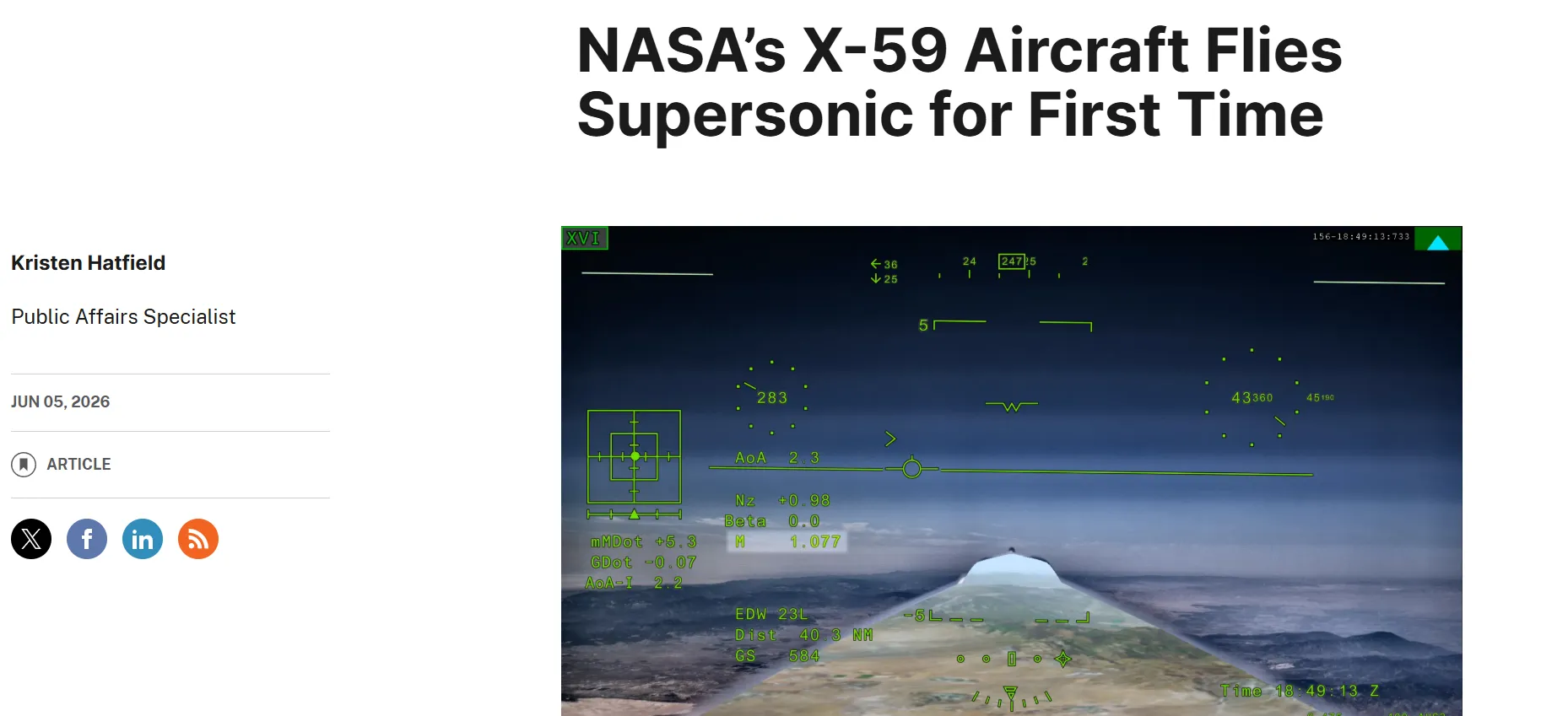
The X-59 QueSST experimental supersonic aircraft successfully completed its first flight at a speed exceeding the speed of sound.
The project, developed by experts from NASA and Lockheed Martin’s Skunk Works division, is designed to revolutionize the field of aviation.
The main goal of this test is to evaluate technology for “quiet” supersonic flight over land.
During the test flight over the Mojave Desert, the aircraft reached a speed of Mach 1.1, which is approximately 1,300 km/h.
The experimental aircraft successfully climbed to an altitude of 13 kilometers and remained airborne for 81 minutes. To ensure safety and record flight parameters, an F-15 fighter jet escorted the NASA aircraft throughout the entire flight.
“The X-59’s first supersonic flight is a testament to America’s enduring leadership in science, engineering, and aerospace innovation,” said Michael Kratsios, Director of the U.S. Office of Science and Technology Policy.
This event marked an important milestone, but more challenging tasks lie ahead for the team. Tests under conditions as close as possible to operational ones are planned in the near future.
The developers plan to bring the aircraft up to a cruising speed of Mach 1.4 (about 1,490 km/h) and raise it to an altitude of approximately 17 kilometers.
These specific speed and altitude parameters are fundamental to the next phase of the QueSST mission. NASA then plans a series of flights over several populated areas in the U.S. to collect unique data.
Researchers will carefully analyze how ordinary people on the ground react to the sound effects of the aircraft flying overhead.
The main goal of the QueSST program is to demonstrate the possibility of supersonic flights without creating a deafening sonic boom. A powerful sound wave always occurs when an object moves faster than the speed of sound.
This was reported by NASA.
Ukrainian An-124 Ruslan lands in Budapest
Recently, an unusual incident occurred at an airport in France: a plane took off without 150 passengers. The passengers were already heading to the gate but did not have time to go through passport control and remained in the terminal after the plane departed.
United Airlines turned the plane around due to a suspicious Bluetooth signal — The Independent.


