
Russia may have been transporting nuclear reactors to North Korea on a sunken ship — CNN
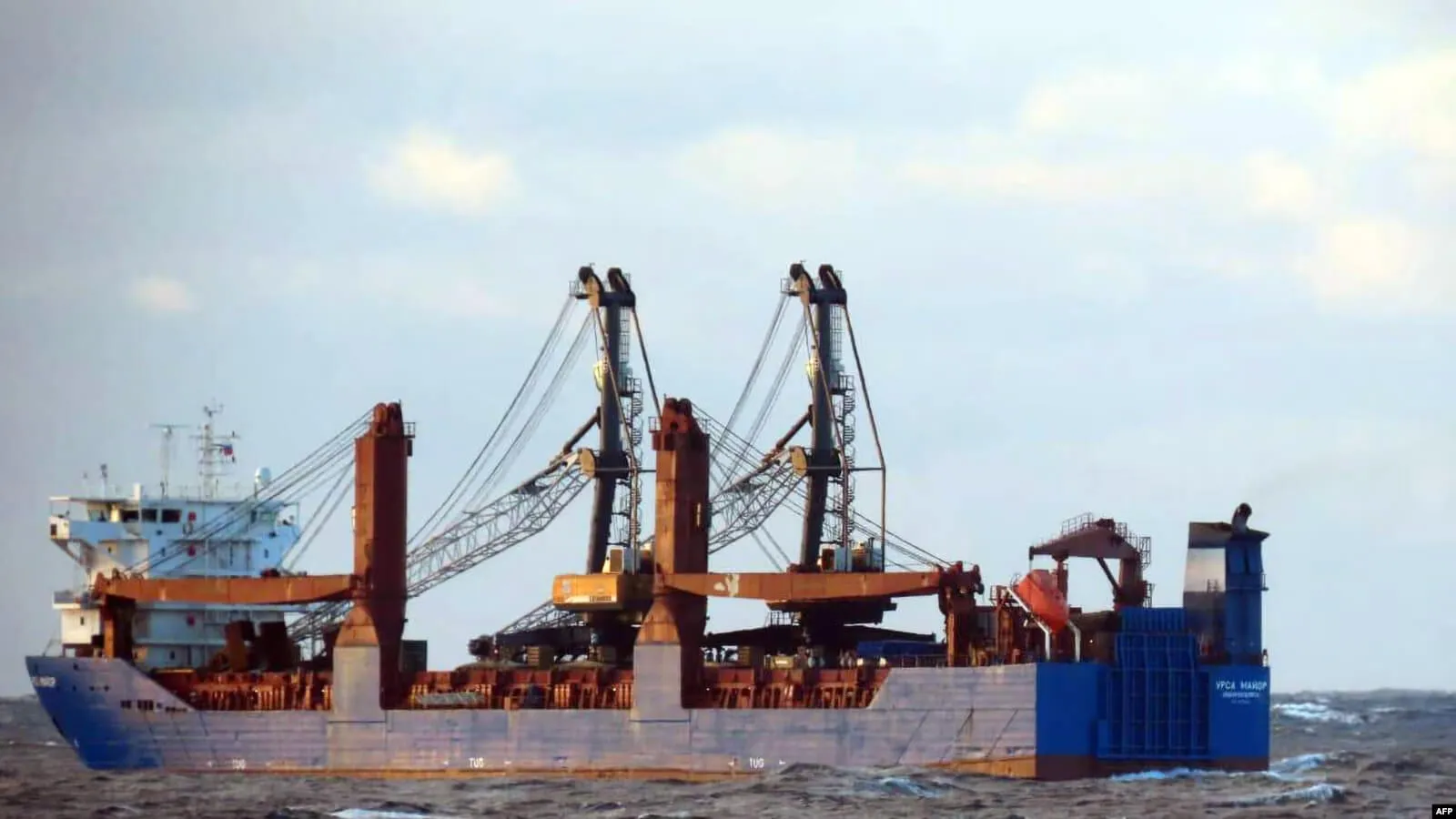
A CNN investigation has revealed sensational details about the sinking of the Russian vessel Ursa Major, which went down off the coast of Spain with nuclear reactor components on board.
The investigation suggests that this dangerous cargo was intended for the North Korean navy as part of expanding cooperation between Moscow and Pyongyang.
The Russian ship Ursa Major, formerly known as Sparta 3, was officially sailing from St. Petersburg to Vladivostok.
According to documents, the ship was carrying only port cranes and ordinary containers, but the reality turned out to be far more alarming.
During questioning by Spanish investigators, the ship’s captain, Igor Anisimov, provided testimony that radically alters the nature of the case.
He admitted: “There were components of two nuclear reactors on board, similar to those used on submarines.”
It remains unclear whether these units contained nuclear fuel, as the captain claimed he did not have that information.
However, it is known that the ship’s owner—the company Oboronlogistics—officially holds a license to transport nuclear materials.
The ship’s actual final destination was supposed to be the North Korean port of Rason, not the Russian Far East.
The voyage began shortly after Kim Jong-un sent his troops to support Russia in the war, suggesting that the services were likely paid for with technology.
The Ursa Major’s journey was under constant surveillance by the Portuguese Navy, which noted the crew’s strange behavior in Spanish waters.
After an unexpected slowdown and assurances that “everything was fine,” the vessel abruptly changed course and sent out an SOS signal.
A series of three powerful explosions on the starboard side led to the ship’s rapid sinking and the deaths of two crew members.
Seismologists recorded underwater tremors that, based on their characteristics, resemble the detonation of sea mines or a torpedo strike.
According to one theory put forward by Spanish experts, the hull could have been pierced by a Barracuda-type torpedo, which is in service with only a limited number of countries.
Specifically, such weapons are used by the United States, some NATO allies, as well as Russia and Iran.
Immediately after the disaster, American aircraft designed to detect radioactive emissions in the air began patrolling the area.
Subsequently, the Russian reconnaissance vessel Yantar, which specializes in deep-sea operations and underwater espionage, arrived at the scene of the tragedy.
After the Yantar was positioned over the wreckage, four more explosions were heard, indicating the deliberate destruction of the remains of the secret cargo.
The object now lies at a depth of 2,500 meters, making the recovery of the “black box” or reactors a technically complex and extremely costly task.
North Korea has removed references to reunification with South Korea from its Constitution
North Korea recently launched several unidentified ballistic missiles from the Sinpo area. South Korea’s Joint Chiefs of Staff recorded the launches around 6:10 a.m. local time.
North Korea has likely significantly expanded its nuclear arsenal capabilities by intensifying work at key strategic facilities.


