
Russia is expanding its military infrastructure near the borders of Finland and Norway
Journalists analyzed recent images from Planet Labs satellites and determined that between 2025 and 2026, Russia is building new military infrastructure along its northern and western borders—near Norway, Finland, the Baltic states, and the Kaliningrad region. The images show deforested areas, demolished old buildings, and hundreds of new barracks, closed warehouses, and columns of military equipment appearing in their place.
The analysis was conducted by former Finnish intelligence officer Marko Eklund, who previously served as deputy military attaché at the Finnish Embassy in Moscow. According to his assessment, if Russia completes all the planned infrastructure and deploys troops there after the war in Ukraine ends, the total number of troops along the border with Northern Europe could reach 115,000.
One of the key development sites is the Pechenga Valley (Petsamo) on the Kola Peninsula, located approximately 10 kilometers from the Norwegian border. This is a large military area that also covers the Russian Federation’s Northern Fleet and nuclear arsenals.
According to Eklund, new barracks are already being built here—the base’s capacity could increase from the current 7,000 to 17,000 soldiers. The largest brigade in the area has already been expanded to a division, and the second base in Pechenga will also be expanded to a division in the near future.
The commander of Finland’s ground forces, General Pasi Välimäki, stated that up to 80,000 troops could be concentrated in the Russian border region—compared to approximately 20,000 just a few years ago.
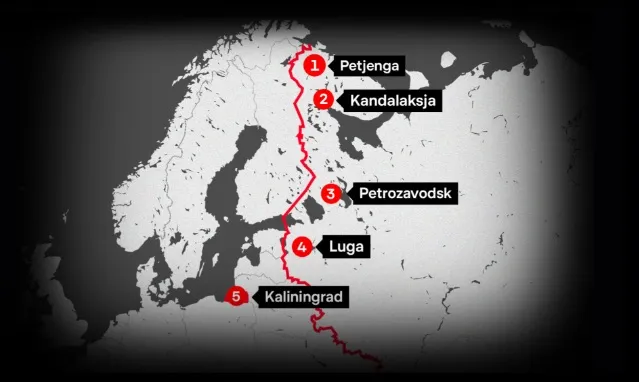
Active construction is also being observed along the Finnish border. In Petrozavodsk and Sapernoye, satellites have detected new barracks and equipment storage areas. Separately, journalists note expansion in Kirilovsk, approximately 70 kilometers from the Finnish border, and the modernization of a base in Kandalaksha on the coast of the White Sea.
In the southwestern direction, activity is being recorded in Luga near Pskov and in Baltiysk in the Kaliningrad Oblast. In total, Eklund is monitoring 19 sites along Russia’s entire 2,424-kilometer border with Northern Europe.
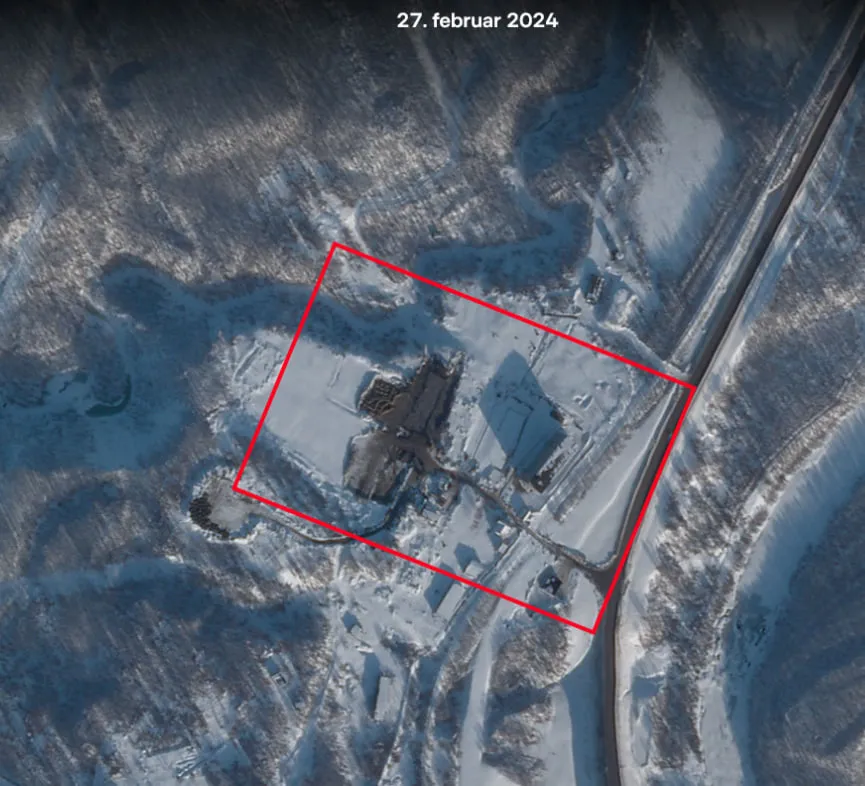
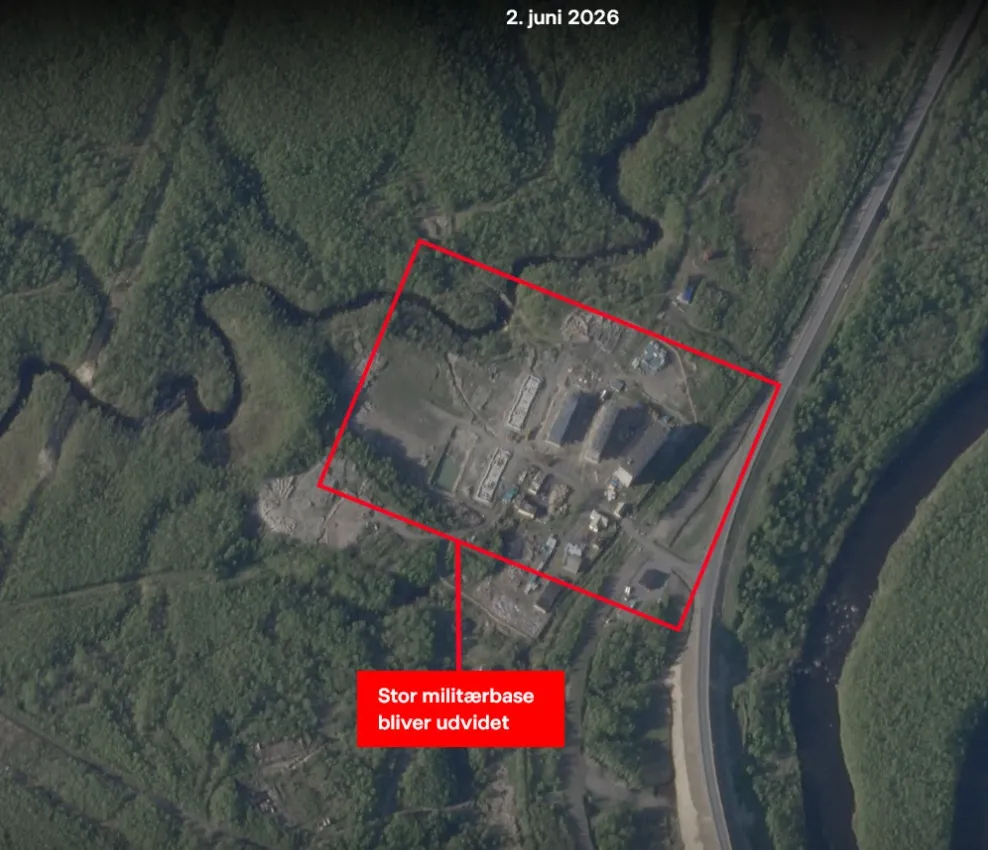
Swedish military intelligence agency Must estimates the total strength of Russia’s armed forces at 1.5 million personnel. Its director, Thomas Nilsson, leaves no doubt about the purpose of the construction:
“We do not believe this is being built merely for show. It is about preparing for a possible confrontation with NATO in a larger-scale conflict,” he stated.
Nilsson also noted that Russia has long been capable of rapidly deploying units and equipment over long distances.
Norway’s Chief of Defense, General Eirik Kristoffersen, confirmed to NRK: if Russia completes what it has started, the threat to Norway will increase significantly. “We expect that after the war in Ukraine, there will be a different Russia on our border,” he said.
NATO Major General Brian Niesen, who commands the alliance’s forces in the Baltics and Poland, warns: as long as Russia is at war in Ukraine, the direct threat to NATO remains low—but the situation could change very quickly following any ceasefire.
Kremlin adviser Sergei Karaganov spoke candidly in a comment to DR: “NATO must be thrown into the dustbin of history. Our patience is running out, and then we will escalate.”
The Russian Foreign Ministry, however, has assured that all military buildup is “defensive in nature.”
This is detailed in a joint investigation by Sweden’s SVT, Norway’s NRK, Denmark’s DR, and the Estonian edition of Delfi.
Earlier, Bulgarian President Rumen Radev stated that the European Union must take a leading role in negotiations with Russia to end the war against Ukraine.
The European Union is discussing the possible appointment of a special mediator for contacts with Russia, and Angela Merkel is among the leading candidates. Mario Draghi and Alexander Stubb are also being considered, but no final decision has been made yet due to disagreements among diplomats.
It should be noted that Merkel is being considered as a potential mediator in negotiations between the EU and Russia.
Berlin has called theRussian Federation’s proposal regarding Schröder’s mediation a fiction.


