
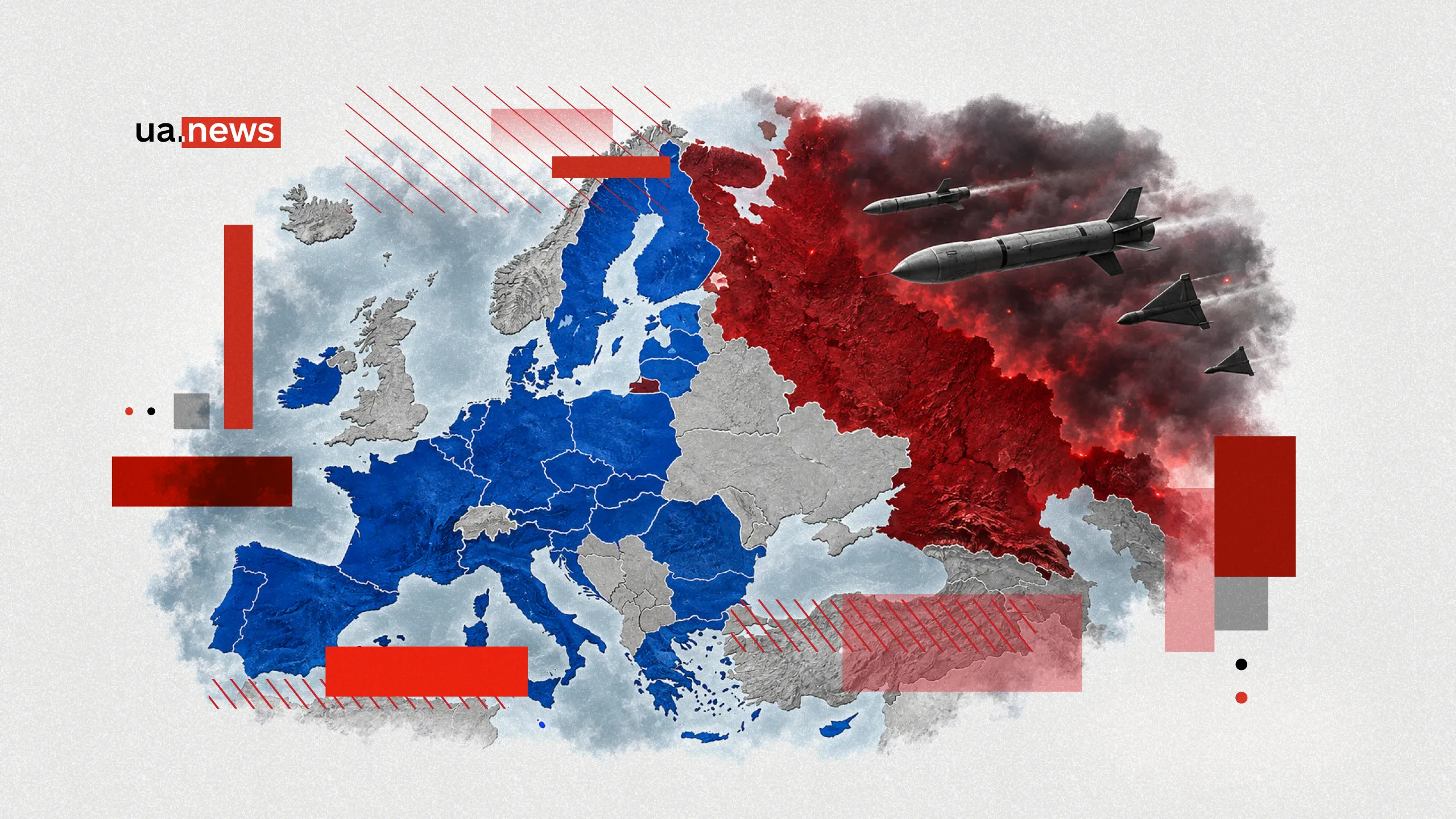
On September 24, Danish Defense Minister Jeppe Brøus made yet another alarming statement regarding the future of Europe. According to the official, the threat of a Russian attack on a NATO country is currently “more serious than at any time since the end of the Cold War.” He urged the public to remain vigilant and stay informed about events unfolding both in Denmark and across Europe.
The minister cited a report from the Danish Defense Intelligence Service. In its latest threat assessment, the agency warned of a growing risk that Russia could launch a limited attack on a neighboring NATO country. This includes potential strikes on infrastructure critical to supporting Ukraine, operations under false colors using Ukrainian-made UAVs, or the deployment of a certain number of Russian troops in neighboring NATO countries—possibly without identification marks. At the same time, the same Danish intelligence agency reported that so far… it sees no signs of preparations for such a scenario.
Is such an attack actually possible, and what is the paradox in the Danish intelligence reports? UA.News political analyst Mykyta Trachuk, together with experts, examined the issue.
The Intelligence Paradox and a Self-Contradictory Warning
The news from Copenhagen contains a paradox that immediately stands out. The Danish defense minister, citing military intelligence data, states that a limited Russian attack on a NATO country is possible in the coming months and urges the public to remain vigilant. However, the very same intelligence service he cites goes on to state explicitly that it sees no signs of preparations for such an attack. The risk of a limited military invasion is assessed as “low”; intelligence “sees no signs” that Moscow is preparing a direct invasion of a NATO member state—although it does state that such an attack “cannot be ruled out.”
In other words, this is not about specific intelligence regarding preparations for aggression, but rather a hypothetical possibility that cannot and should not be ruled out. Yet these are fundamentally different things.
It is important to understand what exactly lies behind these high-profile statements.
“The situation is serious. It is now more serious than at any time since the end of the Cold War. As citizens, we must remain vigilant and stay informed,” said Danish Defense Minister Jeppe Brøus.
However, he went on to clarify that Denmark, which does not share a border with Russia, is not considered a potential target. In other words, the call for vigilance is not because Denmark faces a direct threat, but because the overall situation in Europe is escalating. Thomas Arenkil, head of Danish military intelligence, stated bluntly:
“We consider it unlikely that Russia will invade a NATO country, but we… cannot rule it out.”
This is not a prediction, but a statement of fact: there are no absolute guarantees of security. Intelligence also notes that Moscow would need at least six months to prepare a large-scale military operation, and any major troop movements would be difficult to conceal. This means that even if Russia were preparing for such a move, it would do so conspicuously and well in advance. So far, nothing of the sort has been observed.
The paradox of the Danish intelligence report is not a unique case. It reflects a broader trend observed in European intelligence assessments in recent months. On the one hand, politicians and military leaders from various NATO countries are publicly warning of a growing threat. On the other hand, intelligence agencies—even those behind these statements—have not detected any concrete preparations for an attack, although they do not rule out the possibility in principle. Thus, Denmark’s warning can be viewed not as a specific alarm signal, but as part of a broader picture of pan-European unease.

How and Where Russia Might Attack: Scenarios and Reality
If we set aside general warnings and look at specific scenarios, the Baltic states appear to be the most likely direction for a potential escalation in the EU. The land border between NATO member states and Russia is approximately 2,500 km long, and Estonia, Latvia, and Lithuania constitute its most vulnerable section.
One of the most logical targets for an attack is considered to be the Estonian city of Narva, located near Russia and with a predominantly Russian-speaking population. The authors of the study cite Narva as the weakest link in the Baltics due to its proximity to Russia and its Russian-speaking community. At the same time, Estonian officials say they see no signs that the Kremlin is preparing an attack.
It is also important to note that when European intelligence agencies speak of a Russian threat, they most often do not mean tank divisions on the borders, but rather hybrid warfare. It is precisely these hybrid operations—sabotage, cyberattacks, influence operations, GPS signal jamming, raids by unidentified drones, and so on—that Russia is actively using right now. Kaliningrad, for example, has become a veritable laboratory for hybrid warfare: according to Lithuanian data, the number of GPS spoofing antennas in this Russian exclave rose from three in early 2025 to 36 by May 2026, and their range extends approximately 450 km, disrupting aviation and civilian systems throughout the region.
Overall, the scale of Russia’s hybrid operations against Europe is growing. Moscow is targeting Western countries that are most actively supporting Ukraine with such attacks. The Kremlin’s ultimate goal is well known: to undermine the unity of the EU and NATO from within. However—and this is the key point!—European governments are increasingly viewing the threat from Russia not as a conventional military attack, but as a campaign of covert operations, in which it will be very difficult to prove Moscow’s responsibility. This is where the key threat lies: when you’re being bombarded with missiles, everything is clear, but when some kind of sabotage occurs, Russia’s guilt may not be obvious.
If we are talking about a direct armed attack on a NATO country, however, the question of resources arises. The entire Russian army is currently bogged down in Ukraine. Opening a second front is not merely a limited military operation but a fundamental challenge to the Russian economy, demographics, and political system.
For a hypothetical attack on the Baltic states, for example, Moscow would most likely have to announce a new wave of mobilization, close its borders, set up facilities similar to Ukraine’s temporary detention centers to round up men, and so on. And this is no longer a matter of military expediency, but of domestic political stability. Whether Putin would go along with this, even given the election results—which were very favorable to him—is a big question. This possibility cannot be ruled out, but there are currently no direct signs of preparations for such an attack, although they could appear at any moment—as Western intelligence agencies regularly and somewhat paradoxically point out.
Expert
Opinions
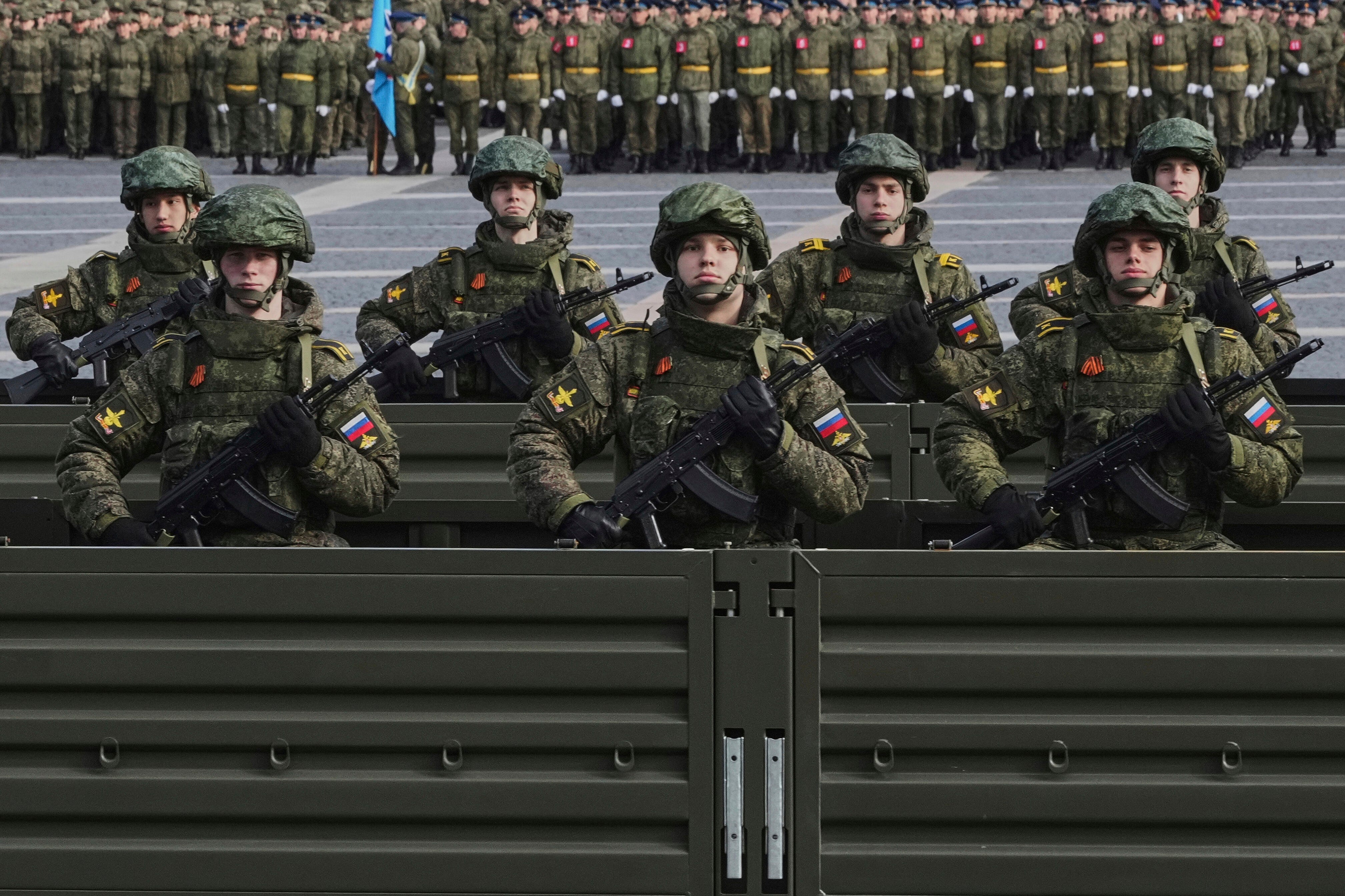
Military expert Oleg Zhdanov notes: the escalation continues. Russia is preparing logistical infrastructure to reinforce its troops along NATO’s borders. A striking example is the border with Finland.
“Russia is renaming the Leningrad Military District—which is an offensive-oriented structure. And along the Finnish border, preparations are underway to accommodate a force of at least half a million troops. When it will be ready is another question. But construction is in full swing: warehouses are being built to store ammunition and fuel, barracks to house personnel, and so on. Therefore, the escalation continues.
In addition, Russia is preparing and planning to increase its presence. Most likely, this refers to an operation under a foreign flag. Indeed, Russia currently lacks the forces and resources for a full-scale invasion of NATO countries or for opening a second front. But conducting an operation under a foreign flag, carrying out raids and sabotage, and then a rapid withdrawal—this is a highly probable scenario. And it is indeed possible within the next six months to a year. This is necessary to attempt to drive a wedge between NATO and the EU. After such an operation, they will be forced to invoke Article 4: to begin consultations. And here, Putin hopes that they will simply tear each other’s throats out during these discussions. The Kremlin is banking on this rift within NATO. This is most likely what the Danish defense minister is referring to when he states that a Russian attack is possible in the coming months,” noted Oleg Zhdanov.
Political analyst and military officer Ruslan Bizyaev points out that the foundation of any strategy is concentration and surprise. Do these two factors exist for a Russian invasion of the Baltic states or Finland to take place in the near future? No, the expert believes. Second, war is not an end in itself, but a means to an end. What would be Putin’s purpose in doing this? Why would he attack NATO countries?
“There is only one more or less logical explanation: that Trump is currently using Putin to scare Europe in order to pressure it into accepting his geopolitical terms. If he fails to do this by the new year, I wouldn’t rule out some provocations aimed at escalating the conflict. But to do that, he’d need to withdraw some of his combat-ready troops from Ukrainian territory. Because it’s one thing to capture a hypothetical Narva, but it’s quite another to get dragged into a serious conflict. You don’t fight a war on two fronts.
I have another question: why are the Europeans so eager to provoke this conflict themselves? What exactly are they aiming for? After all, they say they don’t want to fight themselves. And Putin is approaching Europe right now like Leopold the Cat—“let’s live in peace.” But we’re seeing signs of preparations for war: the deployment of field hospitals, the mining of infrastructure, and constant disinformation campaigns in the European press. Someone is very eager to escalate the conflict. On the one hand, this explains the increase in military spending at the expense of social welfare. On the other hand, it allows them to maintain the course toward militarization and the development of Europe’s military-industrial complex, and provides an opportunity to restructure European budgets,” notes Ruslan Bizyaev.
According to the political scientist, the main issue isn’t even this, but something else: once the Europeans finally ramp up their military-industrial complex by 2028—what happens next?
“Will they carry out demilitarization? But that’s already happened—that was the path of the USSR. If the European elites want to dismantle the European Union in this way, then good for them—they’re on the right track. And if they want to be complicit in the conflict, they need to understand that War 4.0 is different from what they imagine. So, to sum up, the answer to the question depends on whether Trump manages to push through his ‘shameful peace’ by the end of this year. If he succeeds, it will ease the tension a little. If not, then the Americans, acting through Putin, will constantly be using him to intimidate Europe. And they may even move on to more serious actions,” Ruslan Bizyaev is convinced.

In
summary, we must acknowledge that the likelihood of a Russian attack on one NATO country or another exists, and it is indeed increasing compared to previous years. Following the elections held in Russia and a possible mobilization—which experts are discussing—a situation could theoretically arise in which the Kremlin decides it has sufficient resources for a limited military provocation.
However, one cannot fail to see the obvious: fighting on two fronts is an extremely risky and, frankly speaking, very strange strategy—even for the Kremlin. Its entire army is currently in Ukraine. Opening a second front against NATO would be a display of either extreme overconfidence bordering on adventurism or outright idiocy. And it’s far from certain that Putin would go down that path. From a common-sense perspective, it seems completely illogical.
Therefore, most likely, Europe has nothing to fear for the time being in terms of a direct armed attack. Provocations, acts of sabotage, cyberoperations, or even terrorist attacks—perhaps. But a direct armed attack—hardly. This does not mean there is no danger at all: one can expect anything from Putin and Russia, and the spiral of escalation continues to wind relentlessly. War has a way of spiraling out of control, especially when leaders lose their last shreds of rationality. Therefore, European capitals should remain on high alert but not give in to panic.
The sooner Europe becomes the agent and guarantor of its own security, the less inclination Putin will have to test its resilience. Denmark, by warning of the threat, is doing exactly that—it is trying to ensure readiness rather than merely stating the inevitability of conflict. And in this sense, even paradoxical warnings that contradict intelligence data serve a purpose: they keep society and governments on their toes. But there is still a big difference between vigilance and panic. And as long as intelligence sees no signs of preparations for an attack, there is no reason to panic.




