
Russian elite pressures the Kremlin over internet shutdown — Reuters
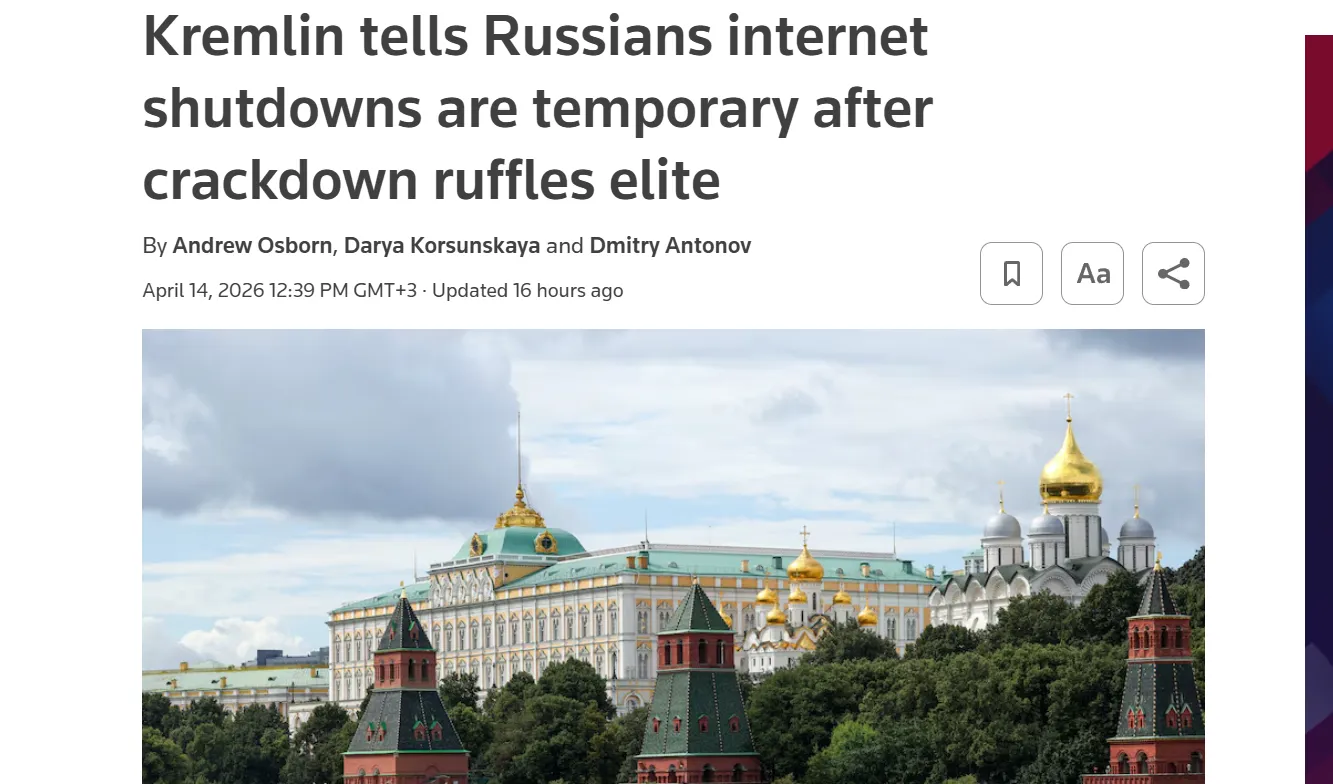
In Russia, dissatisfaction is growing rapidly among representatives of big business and the political establishment due to the prolonged restrictions on mobile internet access.
This is reported by Reuters.
According to sources close to the Kremlin, the “digital isolation” imposed by the authorities for security reasons has begun to cause serious financial losses even to the most loyal officials.
Widespread communication outages in Moscow, St. Petersburg, and a number of border regions have become part of the strategy to combat Ukrainian drones.
Russian intelligence agencies are convinced that shutting down mobile internet hinders the coordination of attacks and the operations of sabotage groups within the country.
“The situation is frustrating everyone, including loyalists,” Reuters quotes one of its sources as saying.
Officials and businesspeople complain that the lack of stable internet access has paralyzed logistics services, banking apps, and e-commerce systems.
The business community is particularly concerned about the introduction of so-called “whitelists” of websites.
During blackouts, only government resources and a few platforms approved by the authorities remain accessible, creating an uneven playing field and leading to billions in losses.
Kremlin spokesperson Dmitry Peskov attempted to ease tensions by stating that these measures are not a “return to the past” but are dictated solely by the current situation.
According to him, the restrictions will be lifted as soon as the threats to national security disappear.
“As soon as the need for these measures passes, internet access will be fully restored,” Peskov assured during his latest briefing.
He also added that most citizens allegedly view such government steps with understanding.
However, analysts point to another aspect of the issue—testing a system of complete control over the information space.
Alongside the network outages, the authorities are actively promoting the state-run messenger “Max,” attempting to force the population to abandon Telegram and WhatsApp.
According to experts, daily losses to the digital economy in Moscow alone amount to about 1 billion rubles.
The Kremlin stated that most Russians are not opposed to a digital concentration camp
In Rostov-on-Don, a local court found Sergei Korovainy guilty of so-called “discrediting” the Russian Armed Forces due to a reaction in a building chat on the Max messenger.
Over 1.2 million websites were blocked in Russia over the course of a year


