
SCO Summit in Bishkek Calls for a Multipolar World Order
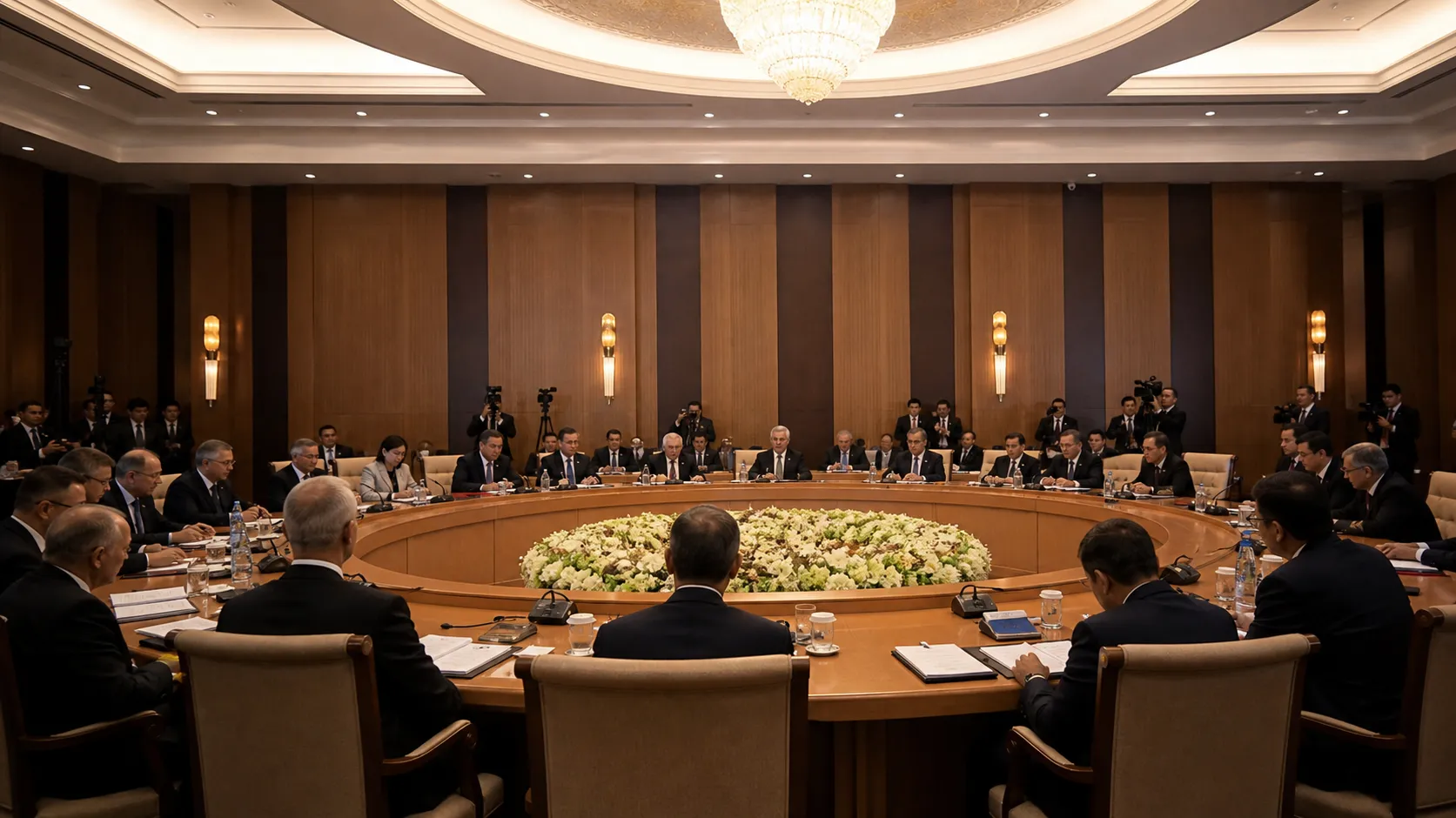
The Shanghai Cooperation Organisation summit in Bishkek concluded with a call for a more representative and fair multipolar world order. The meeting was attended by the leaders of ten SCO member states — China, India, Iran, Pakistan, Russia, the aggressor state, Belarus, Kazakhstan, Kyrgyzstan, Tajikistan and Uzbekistan — as well as dialogue partners from Central Asia, the Caspian region, the Middle East and other parts of Asia.
As Euronews reports, the main topics of the talks included the war in Iran, Russia’s full-scale aggression against Ukraine, disruptions to global supply chains and the development of alternative transport routes through Central Asia and the Caspian region. At the same time, the organisation’s participants have significant differences and divergent interests.
Modi’s statement on the war against Ukraine
During a public meeting, Indian Prime Minister Narendra Modi called on Russian President Vladimir Putin to end the war against Ukraine. According to Modi, every day of war sets humanity back, so it is necessary to move from endless war to a cessation of hostilities and resolve all issues peacefully as soon as possible.
Putin did not respond to this call, but later stated at the summit that any provocations of armed conflicts must not be allowed in global practice. Separately, he held a bilateral meeting with Chinese President Xi Jinping, but the sides made no progress on the Siberian gas pipeline sought by Moscow.
More current news is available on the UA.News Telegram channel Telegram.
Decisions and economic initiatives
The leaders signed the Bishkek Declaration and a protocol amending the SCO founding charter. The participants also approved operating rules for the Universal Centre for Countering Security Challenges and Threats in Tashkent and the anti-drug centre in Dushanbe. A unit to combat transnational organised crime is planned to open in Bishkek within this centre.
The member states agreed to complete consultations on establishing an SCO Development Bank as soon as possible, but no final agreement was concluded in Bishkek. The summit also adopted documents on artificial intelligence, climate, energy, information and nuclear security, as well as a decision to develop cooperation with the African Union.
Kazakh President Kassym-Jomart Tokayev stated that trade among SCO countries had reached $1 trillion. Uzbek President Shavkat Mirziyoyev proposed creating a bank for interregional projects, natural resource management, digital services and healthcare. The organisation’s chairmanship passes to Pakistan, and the next summit is due to take place in Islamabad.


