
Czech Senate discusses €90 billion EU loan for Ukraine
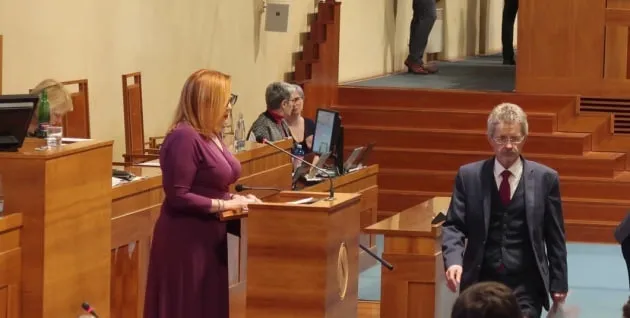
The Czech government has expressed full support for Ukraine and is seeking the swift unblocking of a €90 billion EU loan, while stopping short of providing financial guarantees.
This was stated by Deputy Prime Minister and Finance Minister Alena Schillerová during a Senate debate on European assistance to Ukraine, Ukrinform reports.
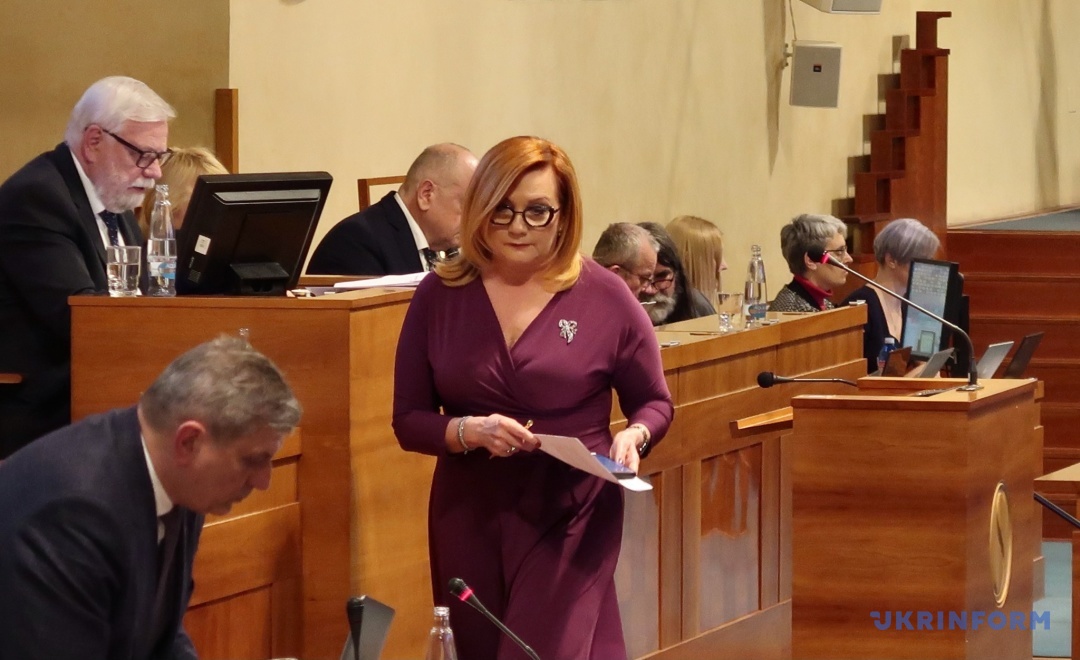
“There is no need for so much doubt about the position of Andrej Babiš’s government—it is clearly defined: we have a firm anti-Russian stance, and we strongly support Ukraine,” Schillerová emphasized.
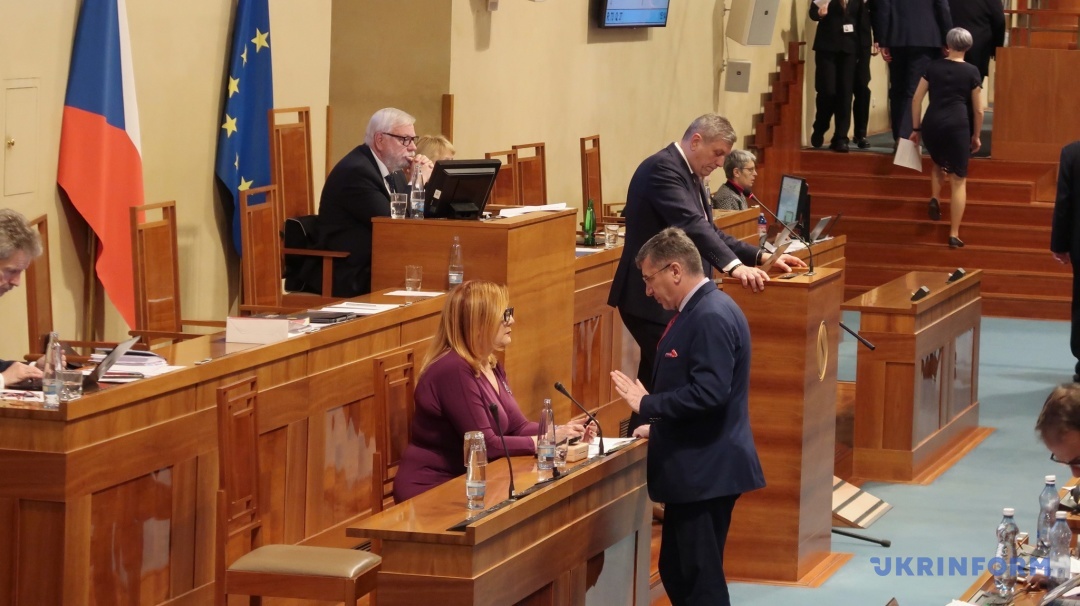
A representative of the ANO movement recalled that the party won last autumn’s parliamentary elections by a wide margin. Its campaign program clearly stated that the Czech Republic is an integral part of the EU and NATO and supports Ukraine, including backing most of the resolutions and laws adopted by the previous government of Petr Fiala.
Schillerová noted that the Czech authorities did not oppose the immobilization of Russian assets at the December summit in Brussels, where heated debates took place. Belgium, where most Russian assets are located, did not support the initiative.
As a result, discussions shifted to how to secure funding for Ukraine. At the time, Prime Minister Babiš advocated prioritizing a smaller amount for a shorter period.
The Czech Republic did not block the €90 billion EU loan but stated that it would not guarantee it, citing the scale of the sum for the national economy, the finance minister explained.
“This would amount to 92 billion Czech koruna (€3.68 billion) for the Czech Republic… I believe there is a significant risk of burdening future budgets, and we did not want to take that risk. You all know our economic situation. We did not block the loan in any way—we were fully supportive of its provision,” she said.
At the same time, she stressed: “The Czech Republic will bear no financial costs related to the loan, will not guarantee it, and will not participate in paying interest. At the same time, Czech companies are an integral part of European supply chains and will not be excluded from public procurement financed by this loan… The Czech Republic supported all legislative changes related to the implementation of the loan agreed by the European Council.”
Schillerová added that Hungary is currently blocking approval of amendments to the EU’s multiannual financial framework due to disruptions in supplies via the damaged Druzhba oil pipeline.
The European Commission and the EU presidency are working intensively to resolve the situation and enable the bloc to provide Ukraine with the promised loan as soon as possible. The Czech Republic supports these efforts.
During the hearings, opposition senators sharply criticized the government’s stance.
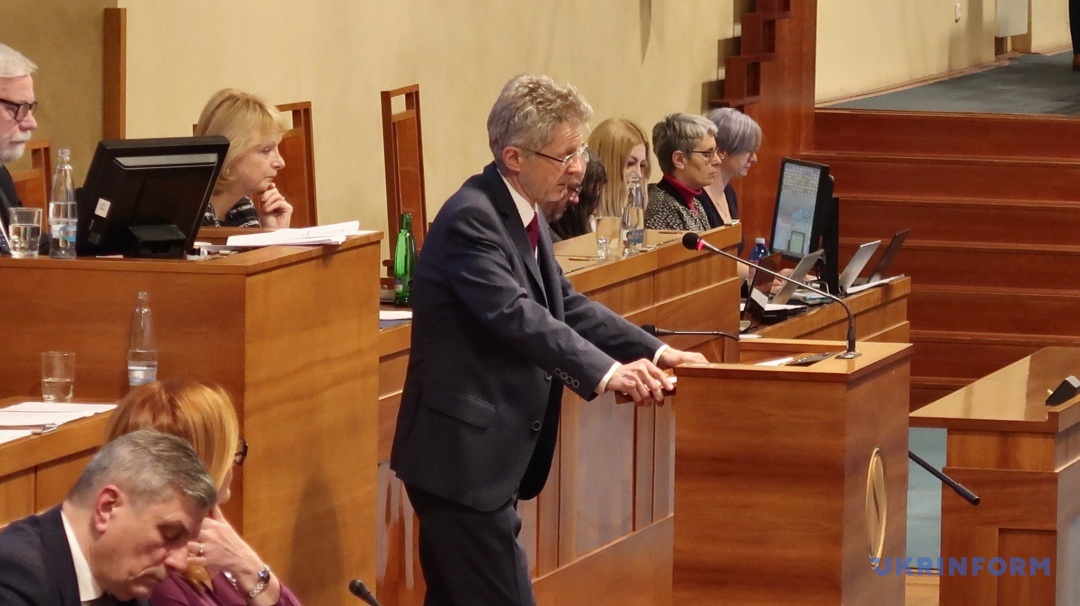
In particular, Senate Speaker Miloš Vystrčil warned that the Czech Republic is, in his view, “gradually losing respect and authority” at the European level and is increasingly perceived as a country that “waits opportunistically to see what happens and what is most advantageous.”
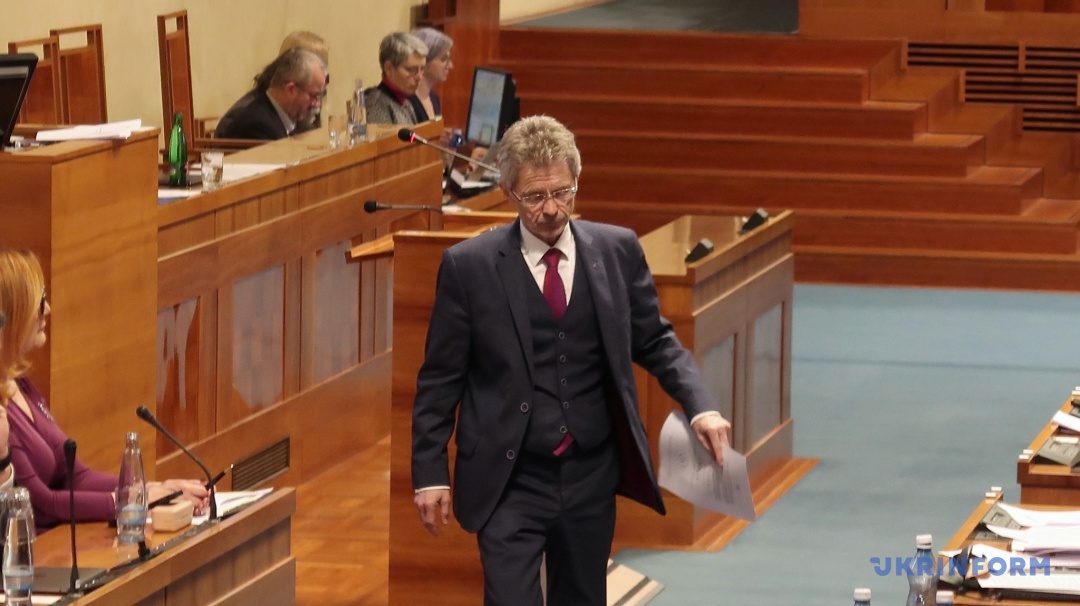
“This is not in the national interest if we care only about ourselves—only about our own nation. We can best take care of our nation when we take care of others. Then we have a chance that when we need it, they will act in the same way,” he said.
He urged the government to reconsider its position on not guaranteeing the loan.
“At some point, peace will come, and then it will be very important how we are perceived by those who seek that peace today. Ukraine commands one of the most capable and powerful armies, and many Ukrainians live here among us. If we want to handle all this successfully, it is good that we can get along with them as we do with partners with whom we want long-term cooperation,” Vystrčil stressed.
Hungary continues to block the initiative, highlighting the role of Prime Minister Viktor Orbán and raising new risks for Ukraine.
Meanwhile, Poland’s president has indicated he may veto legislation related to EU defense loans.
Earlier, Lithuanian President Gitanas Nausėda warned that NATO countries that fail to properly equip their armed forces by 2030 risk undermining the security of the entire alliance.


