
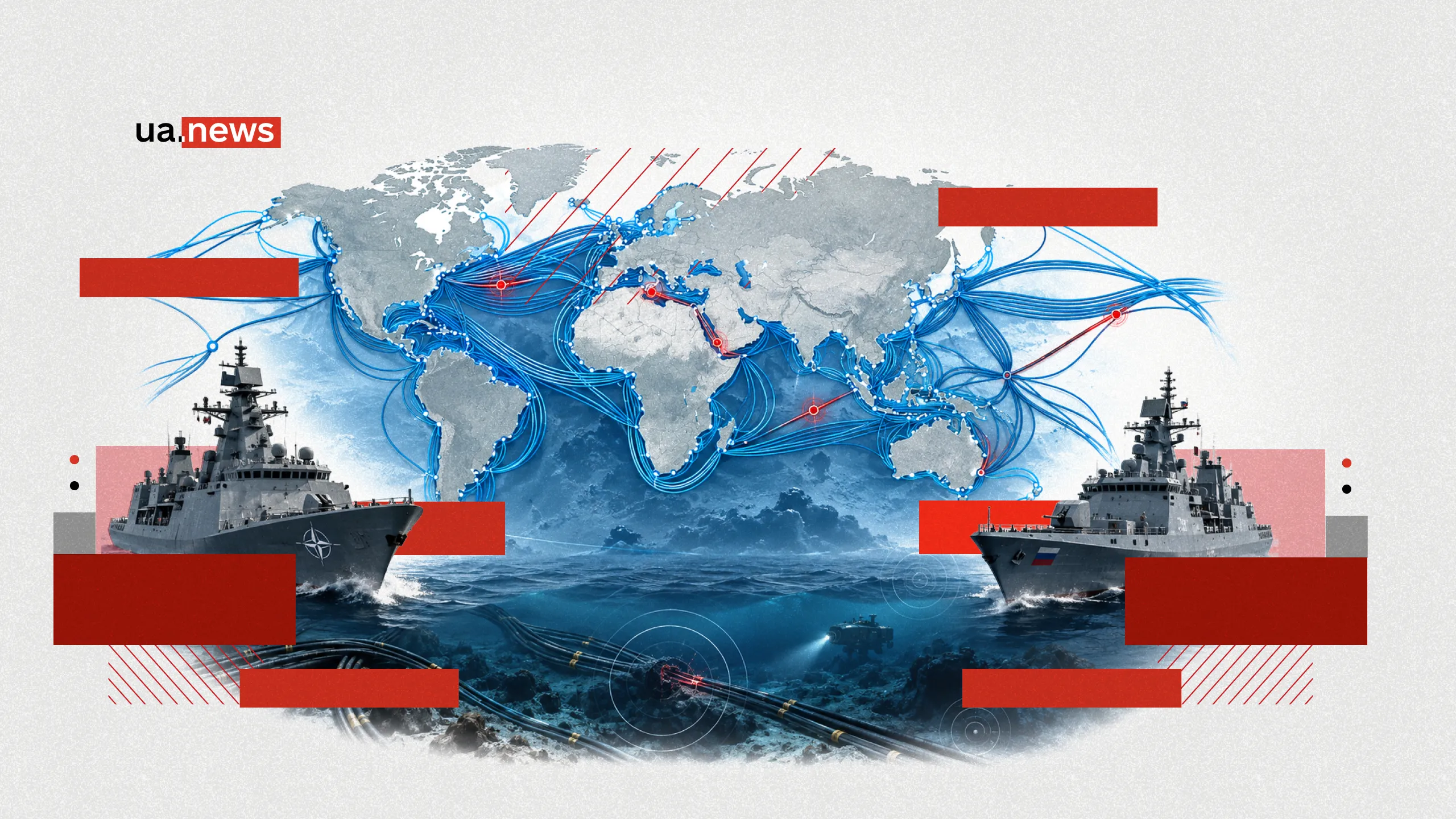
The Internet has long been perceived as something intangible: the cloud, Wi-Fi, satellites, and servers located far away from people. But in reality, its foundation is much simpler—and at the same time, more vulnerable.
A significant portion of global connectivity relies on undersea cables laid along the bottoms of the seas and oceans. It is through these cables that international internet traffic, financial transactions, corporate data, and vast amounts of information flow—without which the modern economy simply cannot function.
Reuters, citing two Western officials, reported that in the spring, NATO allies thwarted a Russian operation near Svalbard. According to them, Russian submarine forces were testing a scenario involving technology that could disable critical undersea cables without leaving any obvious traces.
UA News explains why the story surrounding Svalbard concerns not only the military but also everyone who uses a bank, a phone, a messaging app, a cloud service, or simply opens a website in a browser. Because if the global network really does lie at the bottom of the ocean, the question is no longer whether it can be damaged, but what will happen if someone tries to do so systematically.
The Internet isn’t actually in the cloud—it’s in cables at the bottom of the sea
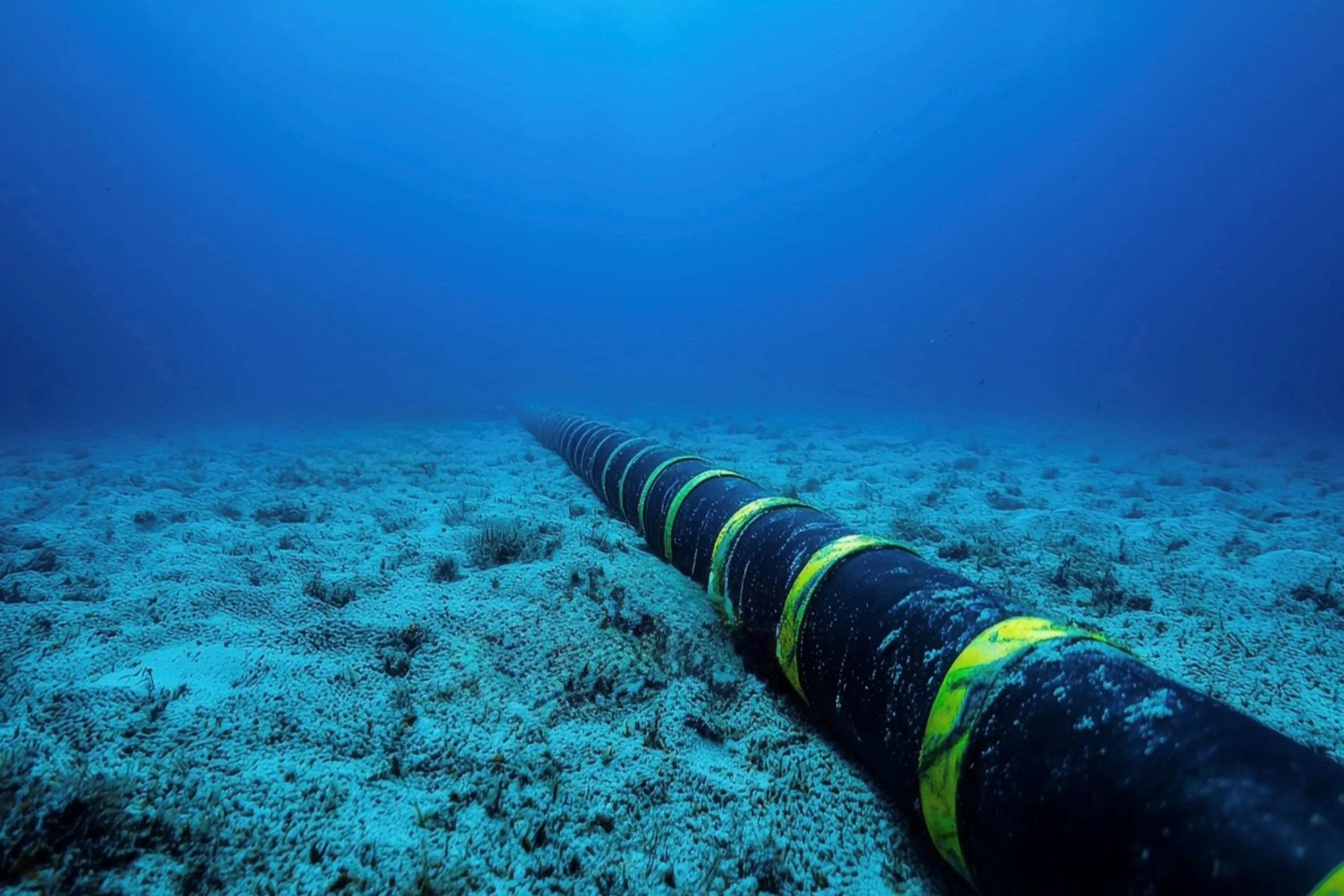
In the public imagination, the global Internet is often associated with data centers and satellites. But when it comes to intercontinental data exchange, its backbone consists precisely of undersea fiber-optic cables. They connect countries, financial centers, continents, stock exchanges, government systems, and cloud platforms.
The vast majority of international data traffic flows through these undersea cables. Satellites are important for remote regions, aviation, maritime communications, and backup channels, but the bulk of global internet traffic still travels not through space but along the ocean floor.
This is physical infrastructure that can be seen on a map, damaged by an anchor, snagged during construction work, or deliberately attacked. That is precisely why the issue has long transcended the telecom market.
NATO’s official website explicitly states that critical undersea infrastructure has become a matter of security for the allies. And this refers not only to communication cables, but also to pipelines, power cables, and other systems on which the functioning of nations depends.
The vulnerability here lies in the fact that a cable may seem like something technologically extremely complex, but physically it is a fairly compact object compared to the scale of dependence on it.
If a large data center goes down, some services can be rerouted to another one. However, if a major undersea cable is damaged, the consequences are far more far-reaching: traffic routes change, latency increases, repairs become more expensive, and sometimes entire segments of national infrastructure are threatened.
Another important point is that cables have long since become not only a civilian asset but also a geopolitical one. Whoever controls the connection points, data transmission routes, and the ability to protect them gains influence far beyond the telecom sector.
What Happened Near Svalbard and Why This Story So Alarmed NATO
According to Reuters, this past spring, the allies tracked a Russian operation near the Svalbard archipelago conducted by the Russian Federation’s Main Directorate for Deep-Sea Research, known by the acronym GUGI. This particular unit has long been associated with special-purpose underwater operations. This was not a matter of routine patrols or a show of force, but rather involved deep-sea vehicles which, according to the agency’s sources, were simulating the deployment of technology designed to disable cables.
According to Reuters, the operation was jointly monitored by the United Kingdom, Norway, and the United States. Russian ships and underwater forces were detected, after which the allies prevented them from completing the training operation, and they left the area. It is important to note that this was not an actual act of sabotage: the cables were not damaged. But the very fact that such a scenario was rehearsed served as a major warning sign for the West.
In April, the British government had already officially announced that the United Kingdom, together with Norway, had detected covert Russian submarine activity near British and Norwegian waters and forced the Russian forces to withdraw. Svalbard is no coincidence. Two undersea fiber-optic cables, each approximately 1,400 kilometers long, run from the archipelago to mainland Norway.
These cables transmit enormous volumes of data from the SvalSat satellite station located on Svalbard. It is one of the world’s most important ground stations for receiving data from satellites. In other words, in the case of Svalbard, this is not simply an “internet cable.” It is part of a more complex system that links satellite infrastructure, telecommunications, and the strategic capabilities of Western countries.
This story is also important because it shows that in new types of warfare, it is not only airfields, warehouses, or power plants that are targeted, but also what was previously perceived as secondary logistical infrastructure.
Why Damaging Cables Can Be the Perfect Weapon in Hybrid Warfare
Submarine cables are nearly the perfect target for the so-called “gray zone.” While a missile strike on an airport is a clear act of aggression, an incident involving a cable can often be attributed to an accident, a civilian ship’s anchor, a storm, or a technical malfunction.
That is precisely why such infrastructure is particularly suitable for hybrid pressure: the consequences are serious, but the threshold for direct accusations is significantly higher. The danger here lies not only in a complete shutdown. In fact, the global network has sufficient redundancy, and a single damaged cable does not mean an immediate “internet blackout” for the entire planet.
But even partial damage can have costly and far-reaching consequences. Traffic has to be rerouted, some services may run slower, repairs require specialized vessels and time, and the infrastructure itself ceases to be perceived as guaranteed to be secure.

Reuters notes that after the Nord Stream gas pipelines were blown up in 2022, the issue of undersea infrastructure came to the forefront. Since then, increasing attention has been focused on vessels that slowly pass over or near sensitive areas of the seabed where pipelines, power cables, and telecommunications lines are located.
Such activity is not always illegal in and of itself. However, security experts view the systematic mapping of critical undersea infrastructure as potential preparation for future sabotage. According to Windward, hundreds of such drifting incidents were recorded in the Baltic Sea in 2025 near critical infrastructure.
The sheer number of incidents is particularly alarming. From October 2023 through the end of 2025, at least 11 undersea cables were damaged or cut in the Baltic Sea. Each individual case could still be explained as an accident. But when there are so many such incidents, a logical question arises: Is someone testing the limits of what is acceptable and the speed of Europe’s response?
This is where the true power of such a tool lies. It allows pressure to be applied to the adversary without formally escalating to full-scale war.
How NATO Began to Turn Cable Protection into a Distinct Military Focus
Following a series of incidents in the Baltic region, NATO launched the Baltic Sentry mission. As the Alliance explains, this involves strengthening the military presence in the Baltic Sea and using frigates, maritime patrol aircraft, new technologies, and unmanned systems to protect critical infrastructure.
The headquarters of the Supreme Allied Commander Europe explicitly states that Baltic Sentry is intended to enhance the Allies’ ability to monitor the situation at sea and protect undersea infrastructure.
In other words, the West no longer views undersea cables as a purely civilian issue for telecommunications operators. The United Kingdom also separately emphasizes the threat posed by Russia’s GUGI. An April statement by the British government mentioned the exposure of a covert Russian operation in the vicinity of undersea infrastructure.
This is an important point: in public discourse, Western capitals are increasingly talking about protecting cables with the same seriousness with which they previously discussed air or cyber defense. Reuters also reports on the British-led Nordic Warden initiative, which brings together maritime surveillance and coordination among allies around critical infrastructure.
In essence, the West is now building an entirely new deterrence system: patrols, intelligence sharing, mapping of vessel activity, faster responses to suspicious maneuvers, as well as political signals to Moscow that “quiet” sabotage will also have consequences.
This is a very telling shift. Whereas preparations for war were previously associated primarily with tanks, aircraft, and missiles, the list of full-fledged military-strategic assets now includes cables, pipelines, satellite channels, and data centers.
The world is gradually recognizing that in the 21st century, a country can be paralyzed not only by strikes on cities but also by covert strikes against its “nervous system.”
Is it really possible to cut a country off from the internet?
The scenario of the internet completely disappearing due to a single incident is likely an exaggeration. Most large systems have backup routes, and providers can reroute traffic through alternative paths.
But the problem lies elsewhere: if attacks become systematic rather than isolated, even backup systems begin to function less effectively. Each new incident reduces the system’s resilience, increases costs, and creates an atmosphere of constant vulnerability.
The most vulnerable are not necessarily large countries with dozens of alternative routes, but rather islands, remote regions, and small countries that may depend on literally just a few backbone lines. If one is damaged, traffic will go through another. If several are taken out of service at the same time, the situation could become much more serious.
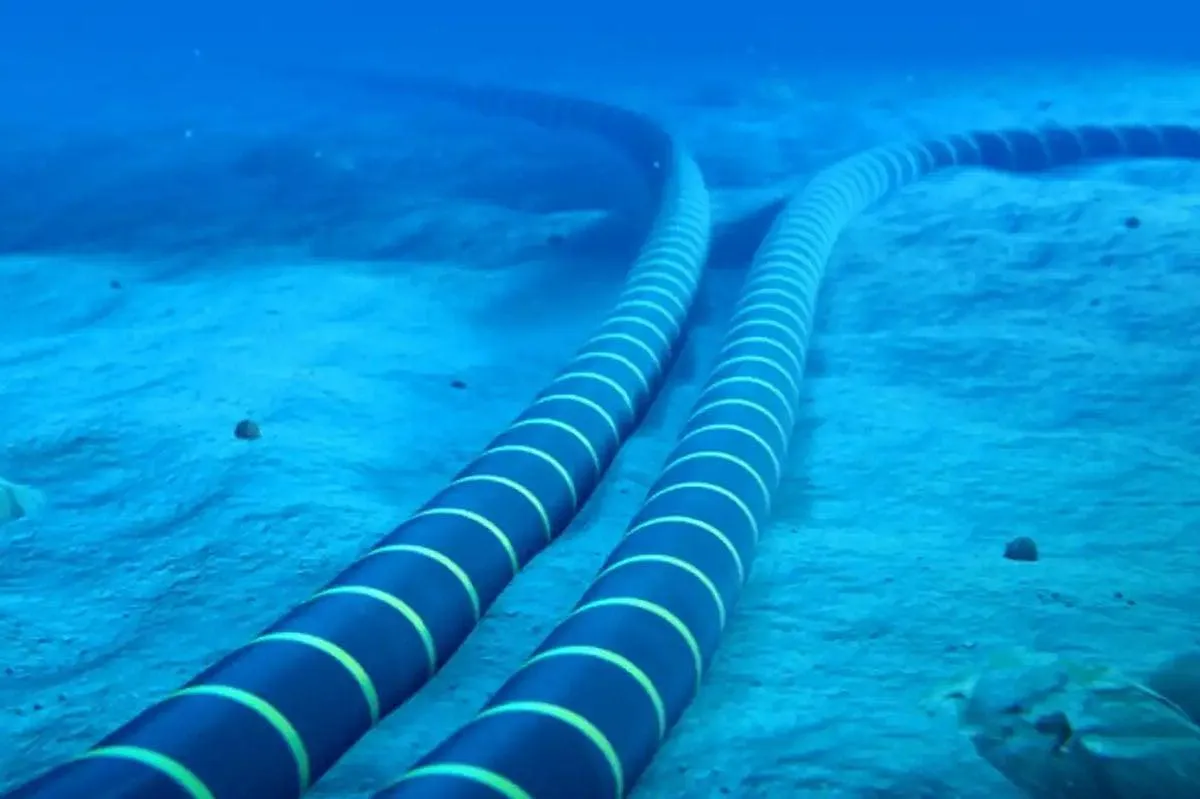
Another problem is finances. Submarine cables connect more than just users to YouTube or social media. They carry data from banks, stock exchanges, payment systems, and international corporations.
Therefore, even brief disruptions at critical points can have consequences that far exceed the cost of the damaged cable itself.
Why Europe Has Proven So Vulnerable
For decades, Europe has increased its dependence on digital and energy infrastructure on the seabed. At the same time, protecting this infrastructure has not been a top defense priority for a long time.
Reuters cites an assessment by Brookings Institution expert Bruce Jones: over the past 25 years, Europe has simultaneously become increasingly dependent on undersea infrastructure while reducing its capacity to protect it.
Now this gap must be closed. NATO is stepping up patrols, countries are investing in sensors, unmanned systems, and surveillance, and governments are beginning to cooperate more closely with private telecommunications companies.
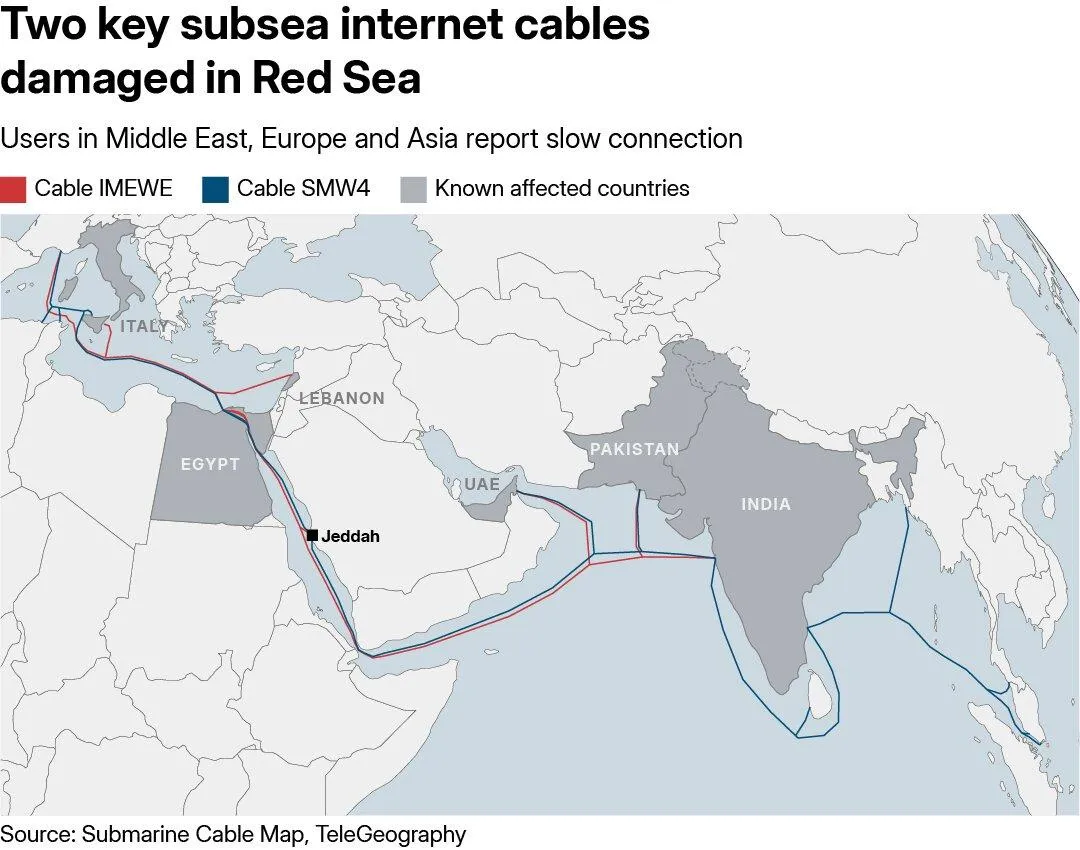
But the problem itself extends far beyond the Baltic Sea. Underwater infrastructure runs through the Atlantic, the Mediterranean, the Red Sea, the Indian Ocean, the Pacific Ocean, and dozens of other regions where political conflicts, military risks, and commercial shipping coexist.
In other words, it is nearly impossible to physically protect “the entire internet.” One can only ensure it has sufficient redundancy and make the cost of an attack so high that a potential adversary cannot be certain of impunity.
What This Means for Ukraine
For Ukraine, the situation with undersea cables is important not just as yet another chapter in the standoff between Russia and NATO. It directly illustrates the logic of modern Russian warfare.
For many years now, Russia has been attacking not only military targets but also the systems on which daily life depends: energy, logistics, communications, ports, warehouses, and supply infrastructure.
Submarine cables fit into this logic almost perfectly. They can be attacked far from the front lines, creating problems for the economy and the state, while at the same time leaving room for denials and claims that the attacks were accidental.
It is also important for Ukraine that its allies are gaining a better understanding of the very principle of such warfare. It is no longer just about defending territory from missiles and drones, but about the resilience of the entire infrastructure—digital, energy, transportation, and satellite.
The better the West understands this logic, the less room there is for scenarios in which Moscow could inflict serious damage without formally crossing the line into open war with NATO.
The incident involving Svalbard attracted so much attention precisely because it was not merely an episode of maritime confrontation. It serves as a reminder that modern civilization relies on things most people hardly ever think about.
As long as the cables lie on the seabed and quietly do their job, the world seems digital, light, and intangible. But as soon as someone tries to reach into this infrastructure—it suddenly becomes clear: the internet is very tangible. And that is precisely why it can be so vulnerable.


