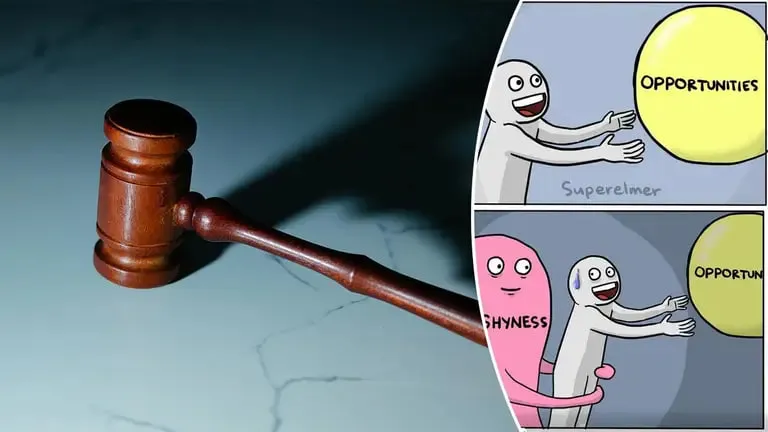
Filipino artist Elmer Saflor, known by the pseudonym Superelmer, has filed a lawsuit against Memes Apps, LLC, the company that operates the Memes.ai and Memes AI Studio services. The artist claims that the company sold paid subscriptions to an ad generator capable of reproducing his popular meme without permission.
The meme in question is the comic “Running Away Balloon,” created by the artist in 2017. In it, a man tries to catch up to a yellow balloon with the word “opportunities” written on it, but he is held back by a pink creature symbolizing shyness.
According to the author, the comic was based on his personal experience and later became a popular meme that millions of people used to joke about their own failures. Now the artist claims that his work has been used for commercial gain without his consent.
This case could set an important precedent for determining how companies can use popular memes and artists’ works in commercial AI products.
Elmer Saflor has filed a lawsuit against Memes Apps, the company that operates the Memes.ai and Memes AI Studio platforms. The artist alleges that the developers are selling paid subscriptions to an ad generator that uses copies of his comic without permission. Access to the service costs between $40 and $199 per month.
Although the author does not object to ordinary people using the meme for entertainment, he considers it unacceptable for his intellectual property to be turned into a commercial product without a license.
“Many of the most famous internet memes began as someone’s original work, photograph, or creative expression,” commented artist Elmer Saflor.
Legal Precedent and a Threat to the Meme Ecosystem
The Memes Apps platform collaborates with over 40 brands that generate up to 1,000 advertisements each month for an audience of 75 million social media followers. Saflor is asking the court to prohibit the use of his work as a template and to provide a full report on the profits the company has earned from its use.
Internet law expert Eric Goldman notes that this case could be significant for the entire artificial intelligence industry. In 2024, a court already ruled on the “SuccessKid” meme, determining that the use of such images in political advertising without permission constitutes a violation.
Goldman believes that Saflor’s strategy—to sue the tool’s developer directly rather than specific advertisers—is quite risky, but at the same time puts serious pressure on the creators of AI models.
The comic’s author emphasizes that he is not opposed to modern technology and uses artificial intelligence in his own work. However, he believes that developers should be held accountable for their content, especially when they offer companies the chance to “fire their ad agency” and replace it with an automated generator.
Saflor hopes this process will help recognize the rights of the creators behind every iconic image on the internet.
Ars Technica reports on this.
Google’s AI Review feature generates millions of incorrect answers every hour — NYT
As a reminder, Japan is replacing people with robots on a massive scale due to the demographic crisis.
Gemini will also introduce mental health monitoring following legal lawsuits.