
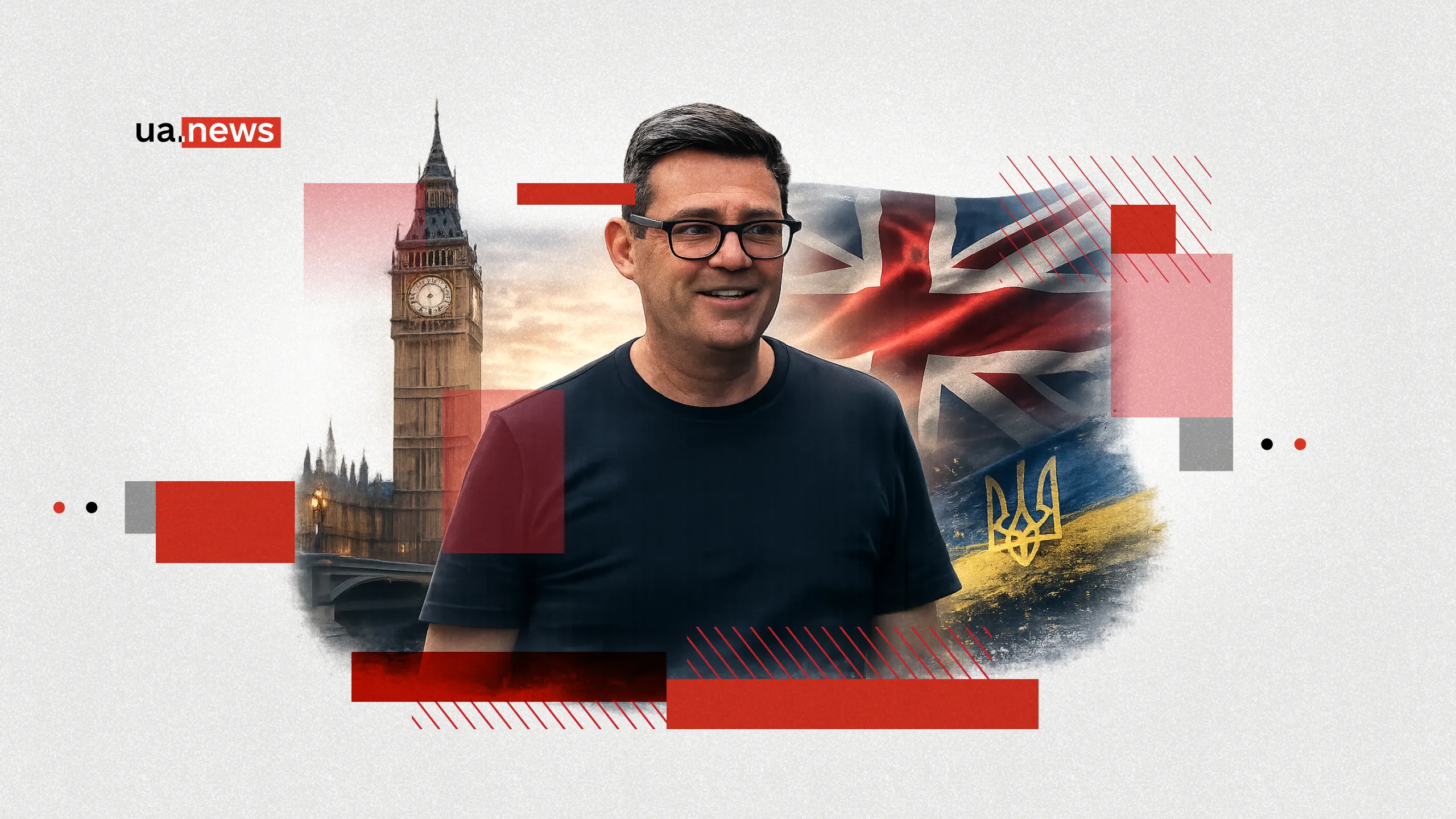
The British political system is entering a period of turbulence—again. On June 22, Prime Minister Keir Starmer officially announced that he was stepping down from his post.
This decision has set in motion the process of selecting a new leader, and among all the possible candidates, the name of Andy Burnham—the charismatic mayor of Greater Manchester—is being mentioned most frequently. Last week, he won a landslide victory in the by-election in the Makerfield constituency and subsequently was sworn in as a Member of Parliament, formally returning to national politics after a ten-year hiatus.
Within the Labour Party, there is increasing talk of Bernam’s so-called “coronation.” This is a scenario in which he would become the sole consensus candidate for the party leadership and, without a grueling internal struggle, would automatically head the government.
If the party leadership does not put forward a serious alternative, Burnham could become the new prime minister as early as this fall, during the annual Labour Party conference. To the general public, this will seem almost like a formality: one person stepped down, another was appointed, and that’s the end of it.
But who exactly is Andy Burnham? Why are his views described as almost socialist, and why is he himself accused of being “too left-wing”? And most importantly—will London’s policy toward Ukraine change with this politician’s rise to power? UA.News political analyst Mykyta Trachuk looked into the matter.
From Everton Fan to National Leader: Burnham’s Journey
Andrew Murray “Andy” Burnham was born in 1970 in the working-class town of Enfield, near Liverpool. His childhood was spent amid the post-industrial decline that hit northern England hard in the 1980s. His father worked as a telephone engineer, and his mother was a secretary, so the family lived modestly, feeling the full brunt of Margaret Thatcher’s highly controversial economic policies.
Bernam attended a typical public Catholic school and later went on to the University of Cambridge, where he was admitted on his own merits to study English literature. This combination of working-class roots and a classical education shaped his unique style: he speaks with a Liverpool accent, roots for the Everton soccer club, and isn’t afraid to use plain language.
His future career began not in political offices, but in the media. Before arriving in Westminster, he worked as a journalist and later became a special adviser to the Home Secretary in the Labour government.
His real rise to prominence came in 2001, when Burnham was elected to Parliament as the MP for the Lee constituency. This was followed by a series of ministerial posts in the governments of Tony Blair and Gordon Brown: he was responsible for health care, culture, and media. It was during his tenure as Health Secretary that he made a name for himself with his outspoken statements on the need to combat advertising for alcohol and fast food.
After losing the party leadership election in 2015 (to left-wing candidate Jeremy Corbyn), Burnham made an unexpected move. He left Westminster for regional politics, stating that he wanted to be “closer to the people.” In 2017, he became mayor of Greater Manchester. And it was this position that eventually transformed him from a mere council member into, as it turned out, a politician of national stature.

Burnham’s Political Views: Left-Wing Reformer or Populist?
On the Labor Party’s ideological spectrum, Burnham has always been on its left, social wing. He is often called a socialist, although it would be more accurate to describe him as a social democrat.
His main message is the decentralization of power and resources. For years, he has emphasized that London “sucks the life out of” the regions and that Britain needs a fundamental redistribution of the budget. The politician criticizes the excessive financialization of the economy and calls for large-scale reindustrialization of the north.
What did Burnham become known for as mayor of Manchester? First and foremost, the transportation revolution. He brought the bus network back under public control by creating the “Bee Network” system, modeled after London’s, where the mayor regulates fares and routes. For Britain, where bus transportation had been left to the mercy of a chaotic private market for decades (a situation all too familiar to Ukrainians), this was a tectonic shift.
Bernam’s social policy does indeed have a certain “leftist flavor.” During the COVID-19 pandemic, he entered into a direct public confrontation with Boris Johnson’s government, demanding financial support for the poorest segments of the population who were forced to remain in quarantine. This principled stance made him very popular compared to the flustered ministers of the central government.
Burnam also actively advocates for solving the housing crisis through large-scale social housing construction. His “housing first” approach to homelessness has yielded tangible results in Manchester, where the number of people living on the streets has dropped significantly during his tenure. He criticizes the current social benefits system (Universal Credit), calling it overly bureaucratic and one that pushes people into debt.
On the issue of immigration, Burnham takes a pragmatic stance: he advocates for controlled, legal labor migration, which is necessary for the economy, but at the same time strongly criticizes the rhetoric of the far right, emphasizing that problems with infrastructure and wages cannot be blamed on migrants.
However, critics on the right accuse Burnham of populism. They point out that his social projects in Manchester were funded by taxes, which are generally higher in the city than the national average, and that balancing such a model across the whole of Britain—with its chronic budget deficit—will be significantly more difficult. Investors are reacting nervously to his rhetoric about “regaining control over key assets,” seeing in it echoes of nationalization, although Burnham himself avoids that term, replacing it with “municipalization.”

Bernham’s Potential Premiership for Ukraine: Stability Without Surprises
For Kyiv, the most important question is whether London will maintain its level of military, financial, and political support should Andy Burnham take office. The answer is clear: yes, no fundamental changes are to be expected.
Over the past ten years, the United Kingdom has had six prime ministers. These included both Conservatives (David Cameron, Theresa May, Boris Johnson, Liz Truss, Rishi Sunak) and Labour members (Keir Starmer). Each change in government was met with some concern in Kyiv, but not once did this lead to a reduction in aid. On the contrary, during this time, Britain has evolved from a supplier of helmets to a strategic leader in the provision of lethal weapons, particularly Storm Shadow long-range missiles.
Andy Burnham is clearly part of the mainstream of British foreign policy when it comes to Russia. His rhetoric regarding Moscow has always been tough.
Indeed, he was one of the first regional leaders to openly support Ukraine after the full-scale invasion. The City of Manchester immediately severed sister-city ties with Russian cities and actively facilitated the resettlement of Ukrainian refugees. Burnham personally met with Ukrainian communities, emphasizing that “this is a war not just for territory, but for a democratic way of life.” In this context, he is Starmer’s full ideological successor.
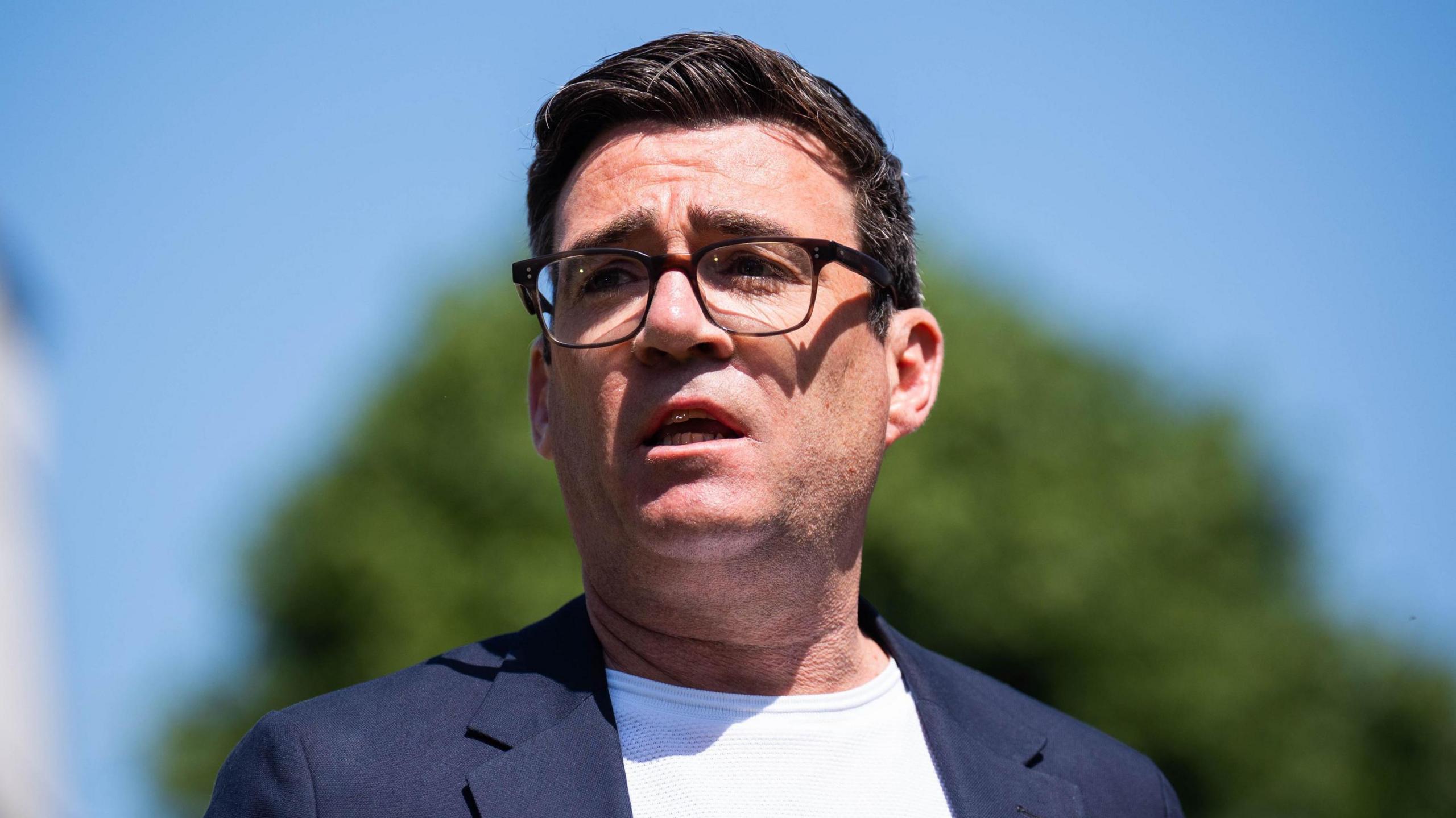
The only difference that can theoretically be predicted is an emphasis on the domestic agenda. Since Burnham is running for office with a mandate for large-scale social reforms, he will be forced to strike a balance between defense spending and social programs. However, given the current security situation in Europe, no British leader would dare to cut military aid to Kyiv.
So, although Britain’s domestic policy under Bernam may undergo significant left-leaning changes—from the nationalization of the railways to greater regulation of the housing market—the direction of foreign policy will remain unchanged. Ukraine will continue to have one of its strongest and most principled partners in London, one who will stand up to Moscow just as his predecessors did. For Bernam, this will be a matter of political credibility: to demonstrate that left-wing social democracy is capable of taking a firm stance on international affairs. Therefore, official Kyiv should expect not changes, but a stable continuation of Britain’s overall foreign policy course.


