
The U.S. and China have spoken out against Iran's plans to block the Strait of Hormuz — Reuters
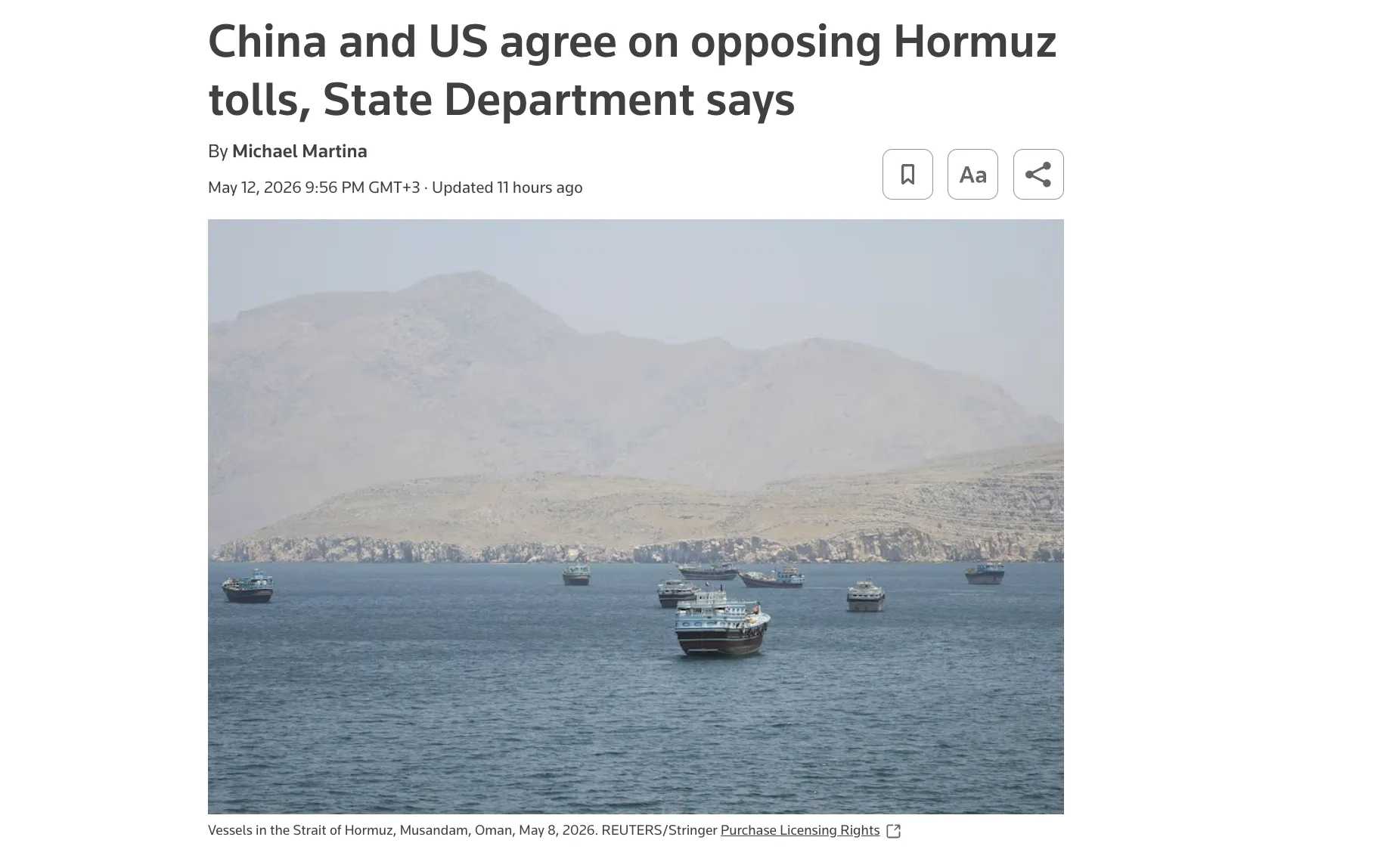
The United States and China have reached a rare consensus on the inadmissibility of imposing any tolls for passage through international sea lanes, including the Strait of Hormuz. According to Reuters, the two countries’ stance is seen as an attempt to jointly pressure Tehran to ensure free navigation.
The statement on their joint position came ahead of the meeting between Donald Trump and Xi Jinping scheduled for Wednesday, where the issue of unblocking the strait will be a key topic. Earlier, Secretary of State Marco Rubio and Chinese Foreign Minister Wang Yi agreed during a phone call that no state or organization has the right to impose tariffs on ships in this strategic route. Beijing, which usually avoids direct criticism of Tehran, did not dispute the U.S. version of the conversation this time, emphasizing the international community’s interest in the safe passage of energy resources.
Washington is using the issue of fees as a tool to influence Beijing, hinting at the possibility of imposing fees even on Chinese vessels to encourage China to play a more active mediating role in the conflict. China remains the largest buyer of Iranian oil, so its position is critical to resolving the crisis. Although Beijing publicly supports Iran’s sovereignty, it simultaneously calls for the resumption of normal trade, through which 20% of global oil and gas supplies passed prior to the war. Tehran, on the other hand, openly demands the right to collect transit fees, presenting this as one of the main conditions for ending hostilities. Donald Trump had previously suggested the possibility of joint control over payments, but following domestic and international criticism, the White House has reverted to demanding absolute freedom of navigation without any restrictions.
The situation remains tense in the UN Security Council as well, where the U.S., together with Bahrain, has drafted a resolution demanding that Iran cease attacks, mine-laying, and attempts to illegally collect fees in the strait. China previously blocked a similar initiative with a veto, calling it biased against Iran, which drew a sharp reaction from Washington. U.S. Ambassador to the UN Mike Woltz accused Beijing of effectively allowing Iran to hold the global economy hostage. Currently, diplomats view the new agreement between Rubio and Wang Yi as an important step, though it remains unclear whether this theoretical agreement will translate into actual support for the U.S. resolution at the UN.
Read also: Classified U.S. intelligence assessments indicate that Iran has retained a significant portion of its missile capabilities and regained access to most key military facilities, despite the U.S. administration’s claims of a serious weakening of Iranian forces.
The Pentagon is discussing the possibility of renaming the U.S. military operation against Iran in the event of a final breakdown of the ceasefire. The new name for the mission could be “Sledgehammer.”
U.S. President Donald Trump stated that Americans’ financial difficulties do not influence his decisions regarding Iran. According to him, the top priority for the U.S. administration remains preventing Tehran from acquiring nuclear weapons.
In addition, U.S. President Donald Trump announced that he plans to hold an extended conversation with Chinese leader Xi Jinping regarding the war with Iran. At the same time, he emphasized that he does not consider it necessary to involve China as a mediator to resolve the conflict.
U.S. President Donald Trump is becoming increasingly frustrated with the progress of negotiations with Iran to end the conflict and is considering the possibility of resuming large-scale military operations against Tehran.


