
US launches next-generation hypersonic cruise missile program
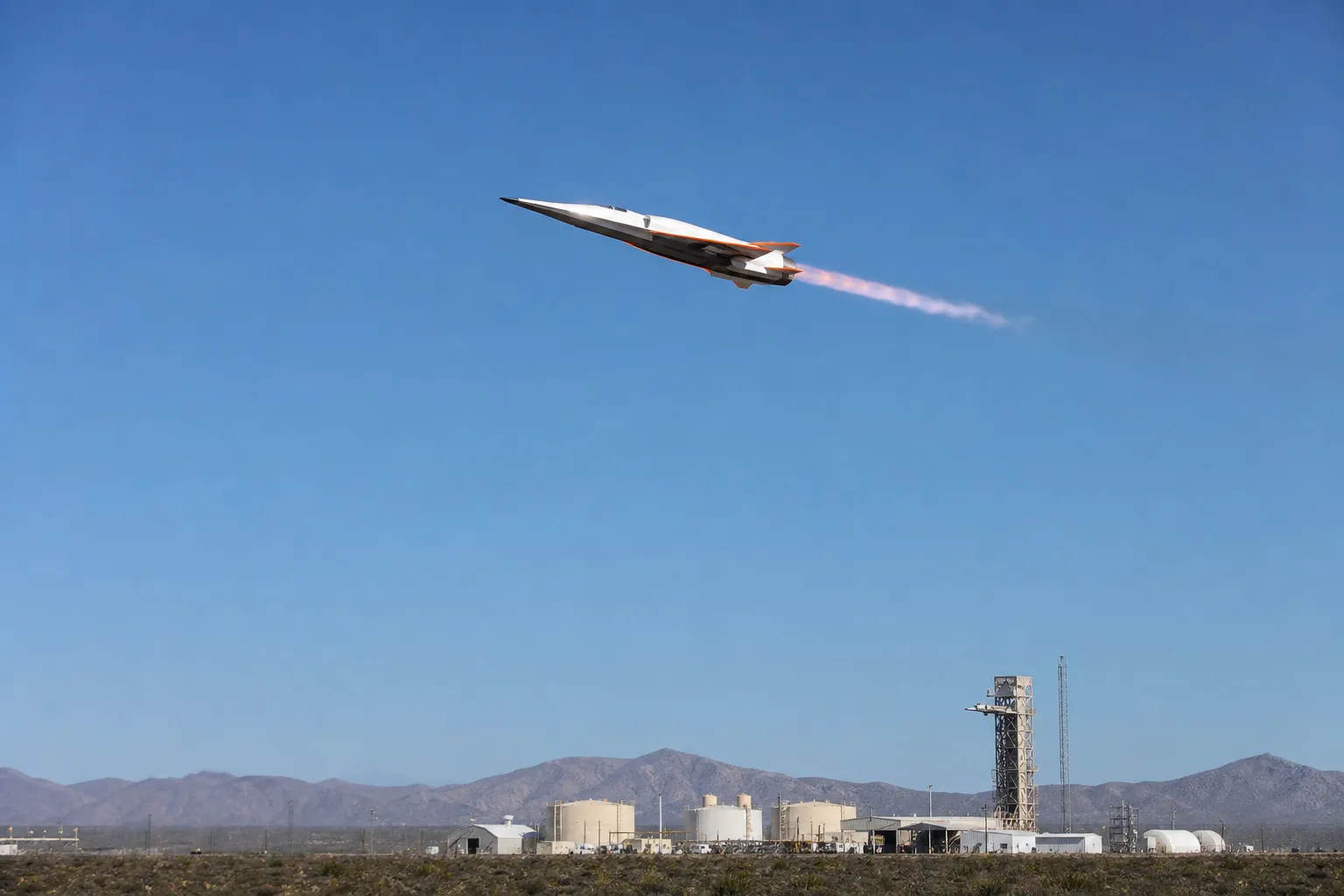
In the United States, the Defense Advanced Research Projects Agency (DARPA) is launching a program to develop a next-generation hypersonic cruise missile with an air-breathing propulsion system. At the end of the month, the agency plans to meet with contractors, where it will outline requirements for the Next Generation Hypersonic Cruise Missile project, the South China Morning Post reports.
Requirements for the new missile
Unlike missiles with rocket engines, air-breathing systems use oxygen from the atmosphere rather than carrying all necessary components onboard. This makes it possible to free up weight for fuel or payload.
DARPA said it is seeking more than simply an upgrade of existing solutions. In a request to industry published last month, the agency called for consideration of fundamentally new engines, fuels, boosters, and systems capable of operating at extreme temperatures during hypersonic flight.
The agency allows for the development of missiles of different sizes, from munitions for tactical aircraft to larger systems that can be launched from bombers or ground platforms. For flight tests, contractors were asked to consider ranges of approximately 250 to 2,000 nautical miles, or 460 to 3,700 kilometers.
More current news is available on the UA.News Telegram channel Telegram.
Chinese systems and previous US tests
Weapons capable of traveling at speeds of at least five times the speed of sound are considered hypersonic. Air-breathing hypersonic cruise missiles differ from boost-glide systems, including China’s DF-17. Both types require initial acceleration by a rocket, but after separation the glide vehicle moves without an engine, while the cruise missile continues flying in the atmosphere thanks to its air-breathing propulsion system.
China demonstrated the YJ-19 anti-ship missile and the significantly larger CJ-1000 missile on a mobile ground platform at a military parade in Beijing last year. Both are believed to be equipped with supersonic combustion ramjet engines and were presented as weapons in service with the People’s Liberation Army of China. Chinese state media reported that the CJ-1000 is intended for long-range strikes against ground, sea, and air targets.
The United States previously tested the technology under the joint DARPA and US Air Force Hypersonic Air-breathing Weapon Concept project. Experimental vehicles with supersonic combustion ramjet engines flew at speeds above Mach 5 over distances exceeding 300 nautical miles, but the program was completed in 2023 without producing a missile accepted into service.
The Russian Federation, an aggressor state, claimed that its Zircon missile, which has been in service since 2023, is a hypersonic cruise missile with such an engine. At the same time, an analysis of debris collected after the missile was used in Ukraine called this description into question: its findings indicate that Zircon may use solid-fuel rockets and operate more like a quasi-ballistic missile.


