
A Romanian court ordered Kelin Georgescu to be held in custody for 30 days
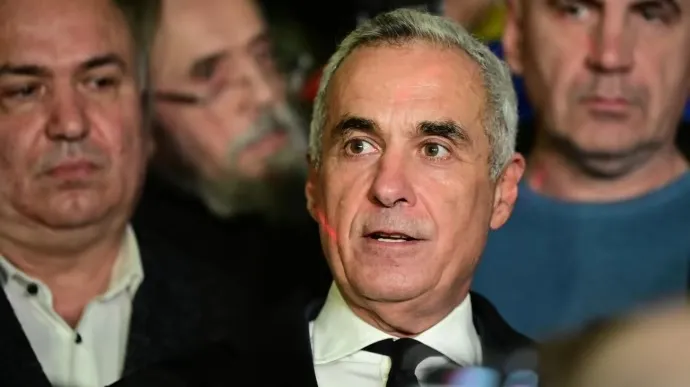
On September 29, the Bucharest Court of Appeals ordered that former Romanian presidential candidate Kelin Georgescu be remanded in custody for 30 days. Previously, a lower court had released him on probation, but prosecutors appealed that decision. Georgescu and businessman Ionel Rousen are suspected of forming an organized criminal group and committing fraud with particularly serious consequences.
Former Romanian presidential candidate Kelin Georgescu was remanded in custody for 30 days. The Bucharest Court of Appeals issued this ruling on September 29 after reviewing the prosecutors’ appeal. The court also ordered the detention of businessman Ionel Rousen, who is a defendant in the same case. The Court of Appeals’ decision is final.
This relates to criminal proceedings in which Georgescu and Rousen are charged with forming an organized criminal group and committing fraud with particularly severe consequences on a systematic basis. It is important to note, however, that the arrest is a preventive measure. It does not mean that the court has already found Georgescu guilty of committing a crime.
Previously, the court had released him on his own recognizance
Last week, the situation was different. On September 22, a judge at the Bucharest Tribunal denied the DIICOT prosecutor’s request to remand Georgescu to pretrial detention for 30 days. Instead, he was released on 60 days of judicial supervision. The same decision was made regarding Ionel Rousen.
The prosecution subsequently appealed the decision. The prosecution insisted on pretrial detention, while Georgescu and Rousen, on the other hand, requested that the judicial supervision be lifted. It was this appeal that the Bucharest Court of Appeals considered on September 29.
The judges did not immediately reach an agreement
Initially, the case was heard by two judges—Violeta-Elena Georgeașcu-Așemimri and Cristina Grecu. They were unable to reach a consensus on what preventive measure to apply to Georgescu and Rousen. Afterward, a third judge—Dragoș Miru—was added to the panel. This formed a special panel to resolve the disagreement.
It was the third judge who supported the option of pretrial detention. As a result, the court ruled to remand Georgescu and Rousen in custody for 30 days. After the hearing, Georgescu left the courthouse, and later the police arrived at his home in Mogoshoaia. Law enforcement officers led him out of the house in handcuffs and transported him to the Central Detention Center in Bucharest. Supporters of the former candidate gathered outside his home. As the police were leading Georgescu away, some of those present began shouting and booing the officers.
What is he suspected of?
According to investigators, the case began after a complaint was filed by Rezvan Leu, a businessman from Buzău. He claims to have lost approximately 1.1 million euros following agreements regarding a major financial transaction. According to Romanian law enforcement, Leu met Georgescu through a mutual acquaintance. The former candidate allegedly offered him the opportunity to participate in a business venture involving precious metals.
They planned to secure a 6-million-euro credit line for this deal. According to the investigation, Georgescu advised the businessman to contact Ionel Rousen. Rousen, in turn, introduced Leu to an Italian citizen, Massimiliano Arena, who allegedly represented a Swiss bank. To secure the loan, the businessman was asked, according to the prosecution, to first make a security deposit of 1 million euros. Of this amount, 100,000 euros, prosecutors claim, were to be used to finance Georgescu’s presidential campaign. A plan was allegedly even drawn up for these expenses.
Leu was then persuaded to transfer another 100,000 euros with the promise that the loan could be increased to 15 million euros. However, the loan was ultimately not granted. The businessman asked for his money back but, according to the investigation, did not receive the full amount. The total reported loss amounts to 1.1 million euros.
Georgescu had been detained previously
In this case, Georgescu was detained on September 21 for 24 hours. On the same day, law enforcement officers conducted searches at his home in Mogoshoaia. During the searches, according to DIICOT, documents, data storage devices, and equipment for blocking wiretaps were seized. Investigators also seized two passports and an ID card, which they planned to verify for authenticity.
After the detention period ended, prosecutors petitioned the court to remand Georgescu and Rousen in custody for 30 days. However, the trial court initially rejected this request and imposed a less severe preventive measure. That decision has now been overturned by the Court of Appeals.
What’s Next
Following the Court of Appeals’ decision, Georgescu must remain in custody for 30 days. According to AGERPRES, he has already been transferred from his home in Mogoșoaia to the capital’s Central Detention Center. The investigation into the case is ongoing. Law enforcement officials must establish all the circumstances of the financial scheme and the role of each of the individuals involved.
Georgescu remains a suspect in the criminal proceedings, and the charges brought by the prosecutor’s office do not yet constitute a conviction. A final determination of his guilt must be made by the court as part of the criminal trial. Meanwhile, the prosecutor’s office has already placed a lien on his home in Mogoshoaia. According to AGERPRES, this was done to ensure potential compensation for the alleged damages. Digi24 reports this.
On September 22, a Bucharest court released former Romanian presidential candidate Kelin Georgescu from custody and placed him under judicial supervision in a case involving alleged fraud.




