
Holiday on September 15, 2026 — Free Money Day: People Around the World Give Money to Strangers
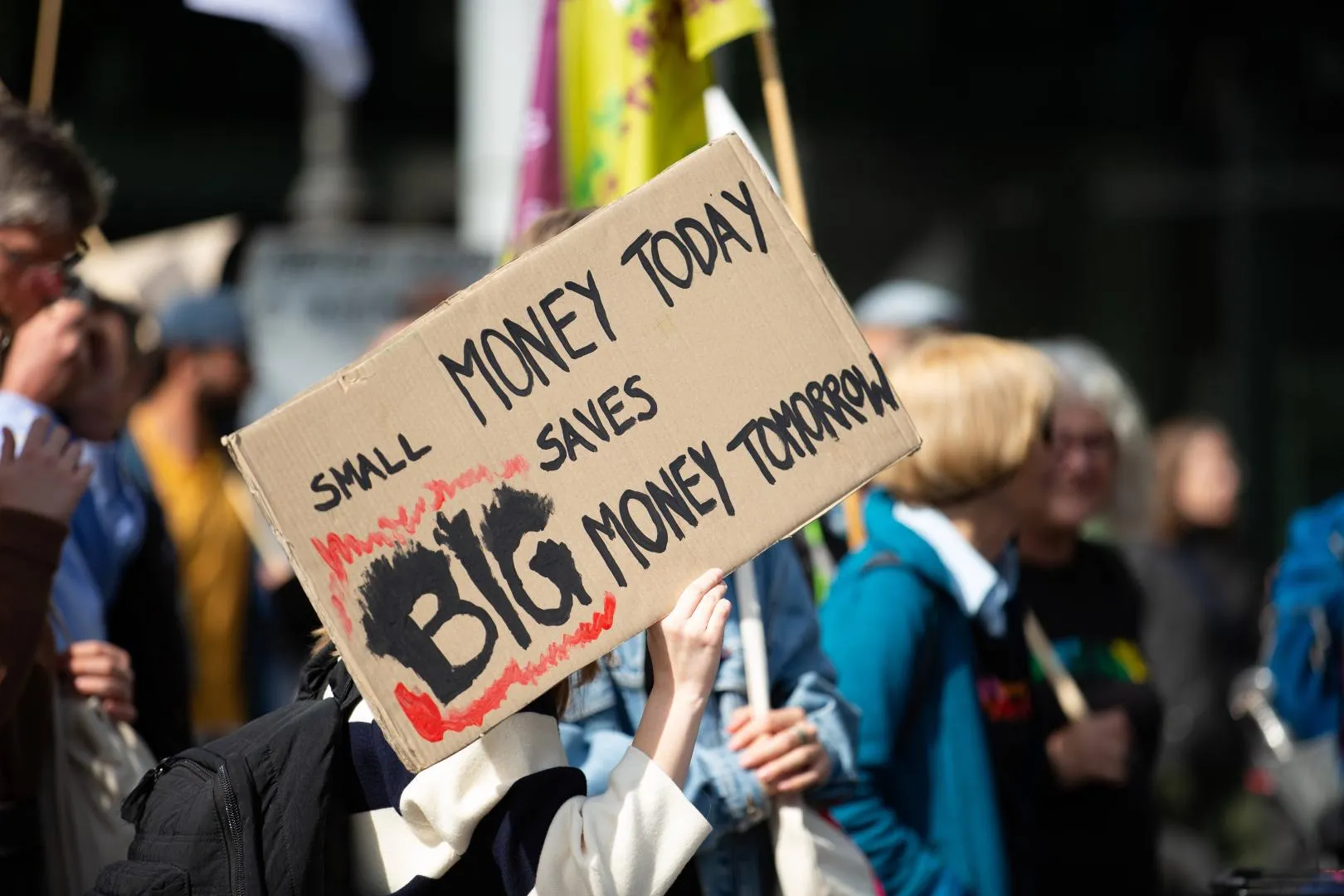
Every year on September 15, people around the world celebrate Free Money Day. It’s an unusual social campaign during which people share their own money with strangers and ask them to pass on a portion of what they received to someone else. The idea originated as a social experiment designed to encourage people to take a fresh look at money, generosity, and how money circulates in society.
Free Money Day falls on September 15 every year. It is not a national holiday nor an official international day established by the UN. It was launched as a community initiative and social experiment that invites people to change their usual attitude toward money for one day. The tradition began in 2011 at the initiative of the Post Growth Institute—an international organization that researches alternative economic models and ways of building a society where well-being does not depend solely on constant economic growth.
At the heart of the concept is a very simple action. A person takes their own money, approaches a stranger, and, without any conditions, gives them two bills or two coins. The recipient is asked to keep one and pass the other on to someone else. In this way, the money is meant to keep circulating from one stranger to another.
How Free Money Day Came to Be
The idea originated with researchers at the Post Growth Institute, who were looking for an unconventional way to engage a broad audience in a conversation about the financial system. Instead of yet another conference or lecture, they decided to conduct an experiment that people could see and experience firsthand. That’s how the idea of simply handing out money to people on the street came about. The first Free Money Day was held on September 15, 2011. The organizers invited people from different countries to join the campaign and come up with their own ways to spread the idea. Already in its first year, participants from all over the world joined the initiative, and the organizers began collecting stories about how people reacted to the unexpected gift.

The idea turned out to be much more interesting than simply handing out money. Participants noticed that people were often surprised, didn’t immediately believe the offer was sincere, or even suspected some kind of trick. It was precisely this reaction that was crucial to the experiment, as the organizers wanted to demonstrate just how unusual it is for a modern person to receive money without being asked to buy something or do something in return.
Why September 15?
The date for Free Money Day was not chosen at random. On September 15, 2008, the American investment bank Lehman Brothers filed for bankruptcy. This event became one of the key moments of the 2008 global financial crisis. At the time, Lehman Brothers was one of the largest investment banks in the U.S. Its collapse became a symbol of the massive problems plaguing the global financial system. Following the bankruptcy, financial markets were rocked by turmoil, and the effects of the crisis were felt in various countries for a long time afterward.
That is why the creators of Free Money Day deliberately chose September 15. They wanted to juxtapose two completely different scenarios: on the one hand, the collapse of a massive financial institution, and on the other, ordinary people voluntarily giving away their own money to strangers. The organizers do not claim that giving away a few coins can change the global financial system. The point of the experiment lies elsewhere entirely. It invites us to reflect on what happens to money when we don’t try to hoard it, but instead allow it to flow freely from person to person.
What Is the Main Idea Behind the Event?
At first glance, Free Money Day might seem like just a fun event where people hand out bills to strangers. In reality, its concept is much broader. Through a simple and somewhat unusual experiment, the organizers want to get people talking about the economy, money, generosity, and mutual aid. In everyday life, money is most often viewed as a personal resource. We earn it, spend it, save it, and try to make it grow. For most people, giving money away for free to a complete stranger is an unusual situation. That’s exactly why such an act can make a person stop and think about their own attitude toward money.
“Free money” in this context does not mean that it appears out of nowhere or that participants receive financial assistance for free. On the contrary, participants use their own funds. What’s important is the voluntary nature of the act and the fact that there’s no expectation of repayment. According to the organizers’ concept, money in this situation becomes more than just a means of payment. It turns into a conversation starter between strangers—a kind of symbol of trust and a willingness to share.
How Free Money Day Works
The classic format of the event is very simple. A participant takes two coins or two bills and approaches a stranger. They offer to keep one for themselves and pass the other on to someone else. For example, you could give someone two $1 bills. They keep one for themselves and can pass the other on to another stranger. That person, in turn, can do the same. As a result, a small amount of money can pass through the hands of many people.
At the same time, participants aren’t required to give away large sums. The official Free Money Day website explicitly states that each person decides the amount themselves, since the money is intended primarily as a reason to interact and strike up a conversation. The event can take place on the street, in a park, at work, during a community event, or in any other public place. The main thing is that the transfer of money be voluntary and without any pressure on people.
People come up with their own ways to celebrate
Over time, participants have begun to move away from the classic approach of using coins and bills. The organizers encourage a creative approach, so instead of money, people can give strangers other items or services. For example, during previous events, musicians handed out money to people who stopped to listen to their music. In other cases, participants held free workshops or offered people free services. Thus, the idea of “free money” gradually evolved into a broader concept of free exchange and generosity.

In 2018, for example, participants gathered near the former Lehman Brothers building in New York City. They offered passersby two dollars each and asked them to keep one bill and pass the other on. In this way, the organizers symbolically linked the history of the financial crisis to the idea of a more just and humane approach to money.
What Results Were Achieved
Despite the simplicity of the idea, the campaign quickly spread beyond the boundaries of a single city or country. As early as 2015, the organizers reported that over the course of four years, more than 200 events had taken place in 41 countries, and participants had distributed over $10,000.
Later, the initiative continued to expand geographically. According to the Post Growth Institute, since Free Money Day began, approximately 350 events have taken place in 43 countries. The organization notes that during these events, people explored their own attitudes toward money, particularly what happens when they voluntarily give it away to strangers. However, it is difficult to determine the exact number of participants. Some people hold small, private events, do not register them on the website, and do not report the results to the organizers. Therefore, official statistics reflect only those events that have been reported to the Post Growth Institute.
Interesting Facts About Free Money Day
One of the most interesting aspects of this event is that people often don’t immediately believe that the money is truly being given away for free. Strangers may think it’s an advertisement, a prank, a disguised charity drive, or even a scam. This reaction itself becomes part of the experiment, as it shows just how unusual it is to receive something of value with no strings attached.
Sometimes the reaction is very emotional. Participants in previous events have described laughter, surprise, long conversations, and even tears. For the organizers, this is more important than the amount of money itself, since the main goal is to create human connection and get people to talk about what is usually taken for granted as a normal part of everyday life.
Another interesting point is that the money can literally travel around the city. If every recipient actually passes on a single coin or bill, the same amount of money could end up in the hands of dozens of people. In this case, the value of the experiment lies not in the amount of money spent, but in the number of connections made.
Is it necessary to hand out money?
No. The organizers emphasize that participation is possible even without handing out cash. A person can offer someone a free service, lead a short workshop, offer help, or come up with their own way to share a resource. This approach makes Free Money Day more accessible. After all, not everyone can or wants to give cash to strangers. For some, it’s easier to treat someone to coffee; for others, to help with work; and for still others, to share a book or their own knowledge.
The main idea remains the same—to give something to another person without expecting a direct benefit in return. That’s why the organizers call Free Money Day a social experiment, rather than just a day of charity.
How to Celebrate Free Money Day
You can join the initiative even without a large sum of money. If you’d like to follow the classic format, you can take two small bills or coins and offer them to a stranger. At the same time, it’s important to explain right away that this is a voluntary social experiment and no one is expecting anything in return. You can also give a small gift to someone you know or a stranger and ask them to pass it on. For example, treat someone to coffee, pay for a small purchase, or leave money for the next customer at a coffee shop. Another option is to give a free mini-lecture, host a workshop, or help someone with their work.
At the same time, this day shouldn’t be seen as a call to thoughtlessly give money to strangers. If someone doesn’t want to participate, their decision should be respected. Likewise, participants should keep their own safety in mind and avoid creating situations that might resemble forcing money on someone or fraud.
Why This Day Is Relevant
Free Money Day is interesting because it explains economics in very simple terms—not through complex charts and financial jargon, but through the everyday situation where one person gives money to another without asking for anything in return. The initiative encourages us to ask ourselves a few simple questions. Why do we cling so tightly to money? Why is it hard for us to believe in a selfless gift? What would happen if we shared our resources more often? And can money function not only as a means of accumulation but also as a tool for interaction between people?
This is precisely the main idea behind September 15—Free Money Day. It is not a celebration of wealth, nor is it a day when everyone is promised free money. It’s a social experiment that invites us, for at least one day, to look at money a little differently—as something we can not only own but also share.


