
Holiday on October 2, 2026 — Email Birthday: How Email Came to Be

October 2, 2026, marks the Birthday of Email. This date is associated with the emergence of the first networked email on ARPANET in 1971, although the exact date the first message was sent has not been historically established. It was then that programmer Ray Tomlinson did something without which it is difficult to imagine work, study, and everyday communication today—he made it possible to send messages from one computer to another and proposed using the @ symbol in email addresses.
The birthday of email is celebrated annually on October 2. In calendars of notable dates, this event is associated with the emergence of the first networked email system in the early 1970s. In 2026, October 2 falls on a Friday. There is an interesting historical detail associated with this date. Popular calendars often state that it was on October 2, 1971, that Ray Tomlinson sent the first email. However, authoritative sources, including the Internet Hall of Fame and Guinness World Records, simply cite the year 1971. The exact date of the first message has not been preserved. Tomlinson himself later explained that the first messages were merely tests, so he did not consider them historically significant and did not save their content.

Therefore, October 2 should be viewed more as a commemorative date marking the advent of email rather than as the documented date of the first email. This is the most accurate way to describe this event without introducing unnecessary historical inaccuracies.
How It All Began
To understand the history of email, we need to go back to the 1960s. Back then, computers bore no resemblance to modern laptops or smartphones. They took up entire rooms, cost a fortune, and were accessible mainly to universities, government agencies, and large research centers. The Massachusetts Institute of Technology (MIT) operated the CTSS—the Compatible Time-Sharing System. It allowed several users to work on a single large computer almost simultaneously. It was within the CTSS environment in the mid-1960s that early forms of electronic messaging emerged. Users could leave messages for one another on the same computer. MIT notes that CTSS was a major milestone in the development of email and other forms of digital communication.
In other words, email didn’t happen overnight. At first, people learned to leave digital messages on a single computer. The next major step was the ability to send such messages between different machines. It was Ray Tomlinson who took that very step.
Who Invented Modern Email
Ray Tomlinson was an American programmer and engineer. He studied at the Massachusetts Institute of Technology and, starting in 1967, worked at Bolt Beranek and Newman, known as BBN. This company played a key role in the creation of ARPANET—the network considered the predecessor of the modern Internet. In 1971, Tomlinson was working on programs that already allowed users to leave messages for one another on the same computer. One of them was called SNDMSG. There was also a separate program called CPYNET, which enabled the transfer of files between computers.
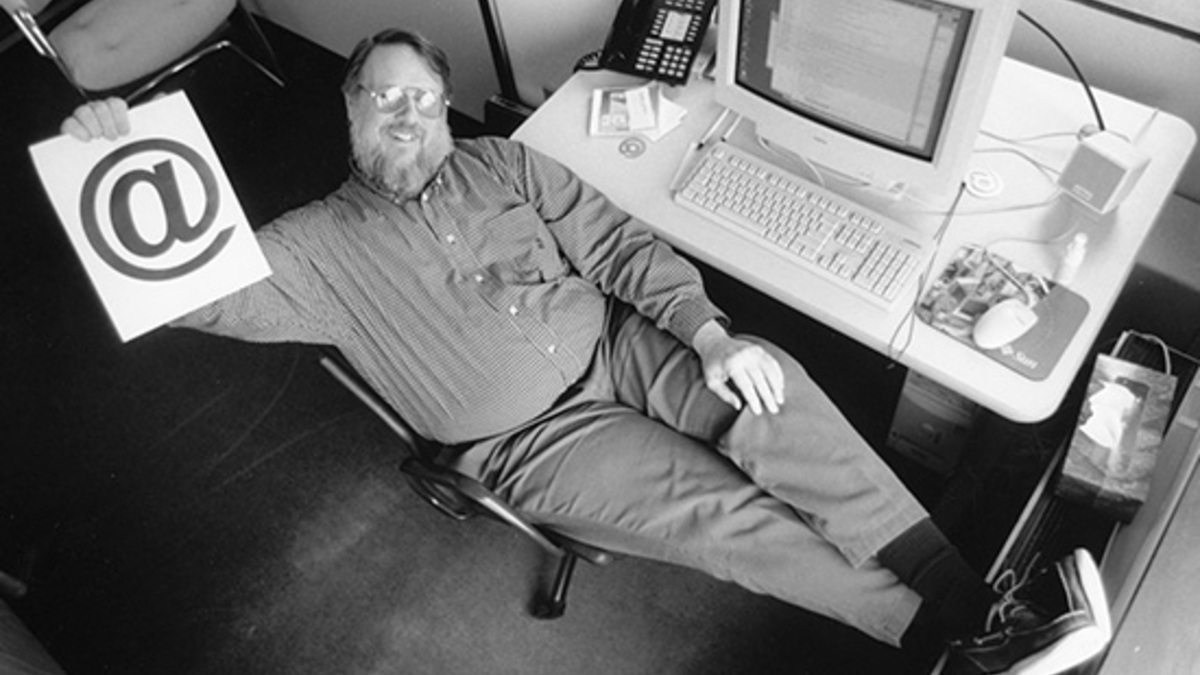
Tomlinson combined these capabilities. The result was a program that allowed messages to be sent to a user on another computer via ARPANET. It was this invention that laid the foundation for the networked email we use today. It’s important to understand the difference. Electronic messages existed even before Tomlinson, but they usually remained within a single computer or system. His work made it possible to address messages to a specific user on another machine. That is why Tomlinson is called the creator of modern networked email.
Where Did the @ Symbol Come From?
One of the most famous aspects of Tomlinson’s invention—not even the ability to send a message itself, but the @ symbol—was a simple solution to a problem. If a message can be sent to another computer, the system needs to be told who exactly it’s intended for and on which computer that person is located. Tomlinson decided to separate these two parts of the address using the @ symbol.

This is how the format “user@host” came about. The first part denoted the user, and the second denoted the computer or the user’s location on the network. Over time, this principle evolved into the email address format familiar to everyone. Why did Tomlinson choose @? According to his explanation, this symbol was one of the few characters available on the keyboard that wasn’t used in people’s names. In addition, in English, @ already meant “at,” meaning “at,” “on,” or “at the address.” Therefore, a construct like “user @ computer” seemed logical.
Today, this symbol is so closely associated with email that it is often perceived as part of the very concept of the Internet. It has also long since moved beyond email and is now used on social media, messaging apps, and other digital services to identify a specific user.
What Was the First Email?
Here, the story is far less dramatic than one might expect. The first email was not a long greeting, an important announcement, or a historic message. Tomlinson was simply testing to see if the system worked. He sent test messages between two computers standing side by side. The inventor himself later could not recall exactly what was written in the first message.
The sequence “QWERTYUIOP”—the top row of the keyboard—is most often cited in the history of email. Guinness World Records lists this very sequence as the content of the first email. At the same time, Tomlinson’s memoirs included a clarification that the first messages were a random set of characters used to test the system. In other words, the very first email was not a brilliant piece of writing. It was simply a routine technical test. But it was precisely these few random characters that gave rise to a technology that would later change the way people communicate around the world.
Tomlinson did not initially consider this a major invention
There’s another interesting detail. Tomlinson didn’t create email as a major commercial product. In his own words, he was largely just experimenting with the capabilities of ARPANET. He was curious to see if it was possible to transfer an existing messaging system from one computer to another. According to the recollections of his colleagues and Tomlinson himself, at first he didn’t even think this work would have such enormous significance. One well-known account of the story says that after demonstrating his creation to a colleague, Tomlinson joked, “Don’t tell anyone! This isn’t what we’re supposed to be working on.”

The reason was simple. He wasn’t fulfilling some grand commission to create a new global communications system. It was an experiment to explore the network’s capabilities. However, the experiment turned out to be extremely successful. By 1973, email already accounted for more than half of ARPANET’s traffic, according to the Computer History Museum. Other networks also began adding their own email capabilities.
What Happened After the First Email
After Tomlinson’s invention, email began to develop rapidly. In 1972, he participated in work to improve the protocols related to email transmission. In 1973, Tomlinson became one of the co-authors of the first standard for email format, RFC 561. It defined the fields that users are still familiar with today, including From, Subject, and Date.

But widespread use was still a long way off. In the 1970s, computers remained large, expensive, and complex devices. The average person couldn’t simply buy a laptop, set up an email account, and write to friends. The situation began to change in the late 1980s and especially in the 1990s. Personal computers became more affordable, online services developed, and the Internet gradually expanded beyond universities and government research networks. Email ceased to be a tool exclusively for programmers and scientists.
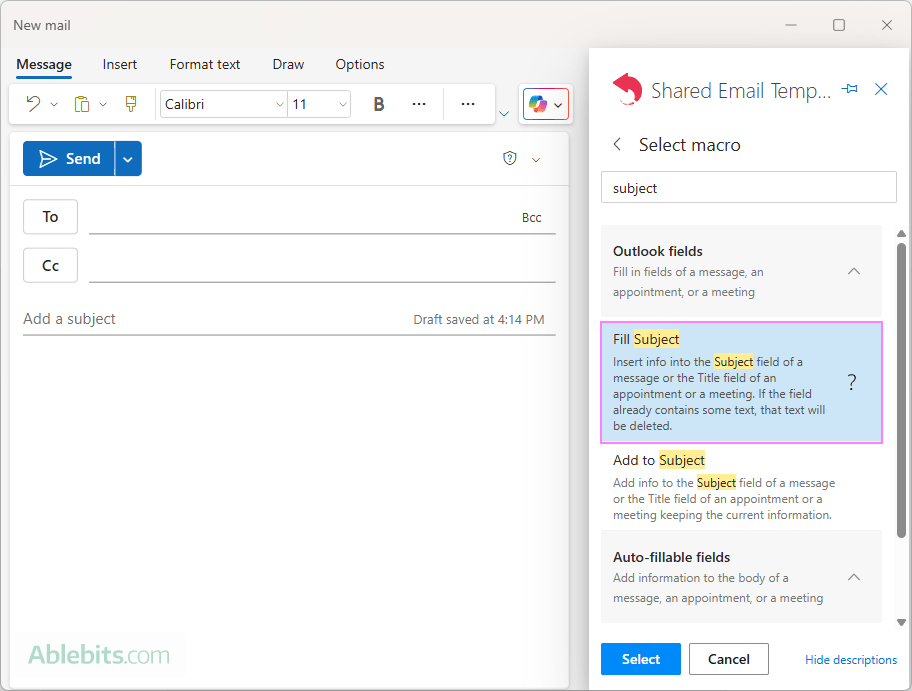
In the 1990s, popular free email services emerged. They made email much simpler for ordinary users. People no longer needed to understand how ARPANET worked or which protocols a computer network used.
When Email Went Mainstream
One of the key milestones was the spread of personal computers. Once computers were no longer confined to university labs or large companies, email had the chance to become part of everyday life. Then the Internet came along. People began using email not only for technical communications but also for work, school, shopping, and keeping in touch with family and friends.

Over time, an email address became almost as commonplace as a phone number. It became necessary for registering on websites, receiving documents, making online purchases, conducting banking transactions, and working. Today, email is used not only by people but also by automated systems, services, and various digital platforms. According to the Internet Hall of Fame, Tomlinson’s invention radically changed the way people communicate and has influenced not only personal lives but also the operations of companies and the development of digital services.
Interesting Facts About Email
The first email was very simple. Tomlinson didn’t write a long letter. He was testing the system, so the content of the first message was a random string of characters. It is most often associated with the sequence “QWERTYUIOP.”
The @ symbol existed long before the Internet. Tomlinson did not invent it. The symbol had already been used in various contexts, including in commercial records. His contribution was that he turned the @ symbol into a separator between the username and the email address.
The exact date of the first email is unknown. Historians and technology organizations cite 1971, but the specific day has not been confirmed. Tomlinson himself did not save the first message, as he considered it a routine technical test.
The first computers used for email were nothing like today’s. They were large machines, and access to them was via special terminals. Smartphones, Wi-Fi, and instant messaging weren’t even on the radar back then.
Email quickly became essential to ARPANET. By 1973, it already accounted for more than half of the traffic on this research network, according to the Computer History Museum. This shows just how quickly people realized the practical benefits of this new way of communicating.
Tomlinson himself was not a typical user of modern technology. Despite his enormous contribution to the development of digital communication, his colleagues described him as a rather modest man. He remained known primarily among experts, even though millions of people used his invention every day.
How Email Day Is Celebrated
This is not an official national holiday, nor is it a day with strict rules for celebration. There are no mandatory traditions for October 2. The date is used primarily as an occasion to reflect on the history of a technology without which it is difficult to imagine the digital world today. In educational institutions, this day can be used to hold short lectures or themed classes on the history of the Internet. For schoolchildren and students, the story of the first email can serve as a good example of how major technological changes sometimes begin with a simple experiment.

In companies, this day can be dedicated to digital communication. For example, you can remind employees about email security rules, protection against phishing, and the need to check suspicious attachments. For regular users, the reason is even simpler. You can write a letter to someone you haven’t spoken to in a long time, send a thank-you note to a colleague, or simply reflect on how much the way we communicate has changed over the past 50 years.
Why Email Is Still Necessary
It would seem that with the advent of messaging apps, social media, and video calls, email should have lost its significance. But that hasn’t happened. Email remains one of the primary methods of formal and business communication. People use email to send documents, resumes, invoices, receipts, and work-related messages. It’s used to register accounts and regain access to various services. Many important digital transactions are still unimaginable without an email address.
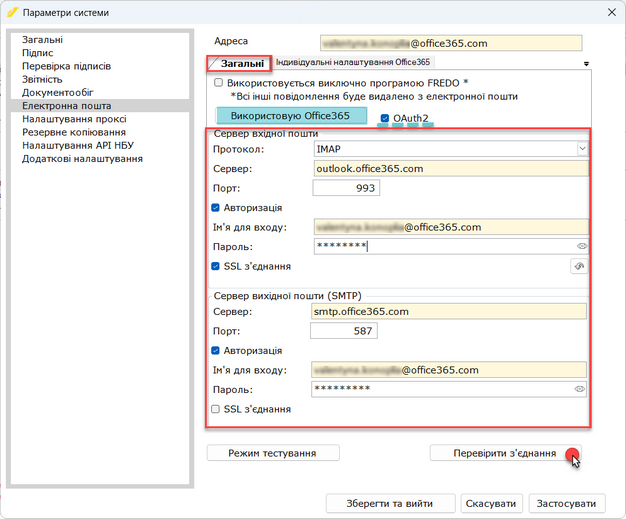
There’s another advantage. Unlike instant messages in messaging apps, an email can be saved, forwarded, organized, and used as documented proof of communication. That is why email continues to be an essential tool for businesses, government agencies, universities, and millions of everyday users. And it all started with an experiment by a programmer who wanted to see if it was possible to send a message between two computers. Today, thanks to email, people communicate across continents in a matter of seconds.
A Day to Reflect on the Ordinary @ Symbol
The history of email clearly illustrates just how much technology can transform everyday life. In 1971, it was all about an experiment with two computers in a lab. A decade later, email had become a familiar part of work, study, and personal communication.

That’s why October 2 is a good occasion to remember not only email itself, but also the people who stood at the dawn of digital communication. Ray Tomlinson created a system that allowed messages to travel beyond the confines of a single computer, and the @ symbol became one of the most recognizable icons of the digital age. And although the exact date of the first email remains unknown, 1971 has forever gone down in history as the year modern networked email was born.




