
June 4 Holiday: Estonia Celebrates Flag Day
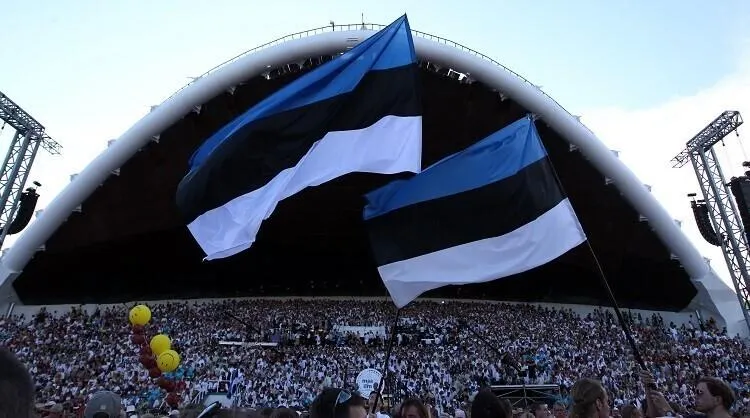
On June 4, Estonia celebrates National Flag Day—a symbol of the country’s independence and historical memory. On this day, solemn ceremonies are held throughout the country, and the national flag is raised on the tower of the Long Hermann in Tallinn.
The holiday has deep historical roots tied to the 19th-century national movement and the struggle for independence. For Estonians, this is a day when the blue, black, and white flag serves as a reminder of the path the country has taken from subjugation to statehood.
National Flag Day in Estonia is linked to the period of national revival that began in the 19th century, when Estonians were actively shaping their own cultural and political identity. The tricolor itself—blue, black, and white—was first used as a symbol of the student movement in the 1880s and quickly became a sign of unity and the pursuit of freedom.

The flag was officially established as a national symbol during the struggle for independence in 1918, when Estonia first declared its statehood. After decades of Soviet occupation, it was reinstated as a state symbol in 1990, and it was then that the flag took on special emotional significance. Flag Day began to be celebrated as a national holiday in modern, independent Estonia to emphasize historical continuity and national memory.
What the Estonian Flag Means
Each color of the flag has its own symbolic meaning, deeply rooted in the national consciousness. Blue symbolizes the sky, faith, and hope for the future; black symbolizes the earth, historical trials, and the people’s difficult journey; and white symbolizes purity, freedom, and the pursuit of light. It is this combination of colors that has become one of the most recognizable symbols of the Baltic region. For Estonians, the flag is not just a state symbol, but an emotional code of the nation that unites generations.

How National Flag Day is celebrated
The main celebrations traditionally take place in Tallinn near Toompea Castle, where the national flag is raised on the Long Hermann tower. The ceremony is attended by government officials, military personnel, schoolchildren, and civic organizations, and the moment the flag is raised is accompanied by the national anthem. Concerts, lectures, themed exhibitions, and patriotic events dedicated to Estonian history take place throughout the country.
Schools and kindergartens hold lessons explaining the significance of national symbols and fostering respect for the state from an early age. Many people decorate their homes and offices with flags on this day, demonstrating their connection to the national community.
Interesting facts about the Estonian flag
The Estonian tricolor is one of the oldest national flags in the Baltic region, having originated in student circles. Its history is closely tied to the University of Tartu, where the blue, black, and white colors were first used.

During the Soviet period, the use of the flag was banned, and its return became one of the symbols of the restoration of independence. The Estonian flag has very strict rules of use, and its display is regulated by law, which underscores the special respect for this national symbol. There is a tradition in the country of keeping a flag in every household as a sign of national identity.
The Main Meaning of the Holiday
National Flag Day in Estonia is not only a celebration but also a reminder of the country’s historical path, which was neither easy nor short. It is a day when Estonians emphasize their unity, independence, and responsibility for the future of the state.

In this context, the flag becomes a symbol not only of the past but also of the present, which is built on the memory of the struggle and the pursuit of freedom. That is why June 4 in Estonia is a day when the national symbol becomes a living part of public life and serves as a reminder that statehood always requires support and an awareness of its value.


