
Holiday on September 9, 2026 — Tajikistan Independence Day

On September 9, Tajikistan celebrates Independence Day—the country’s main national holiday. It was on this day in 1991 that the Supreme Council of the Republic adopted a declaration and a resolution on Tajikistan’s independence. Since then, September 9 has become a symbol of a new era in the country’s history and the day when the Tajik state officially declared its independent path.
Tajikistan’s Independence Day is celebrated annually on September 9. It is an official national holiday, which, according to the country’s legislation, is a non-working day. Tajikistan’s independence was proclaimed during the collapse of the Soviet Union. In the early 1990s, one after another, the union republics began to declare state sovereignty, and the political situation in the USSR was changing rapidly. Tajikistan also began moving toward independence.
As early as August 24, 1990, the Supreme Soviet of the Tajik SSR adopted a Declaration of Sovereignty. This marked an important preliminary step toward full independence. The following year, after the August coup in Moscow and the de facto collapse of the Soviet system, the issue of full state sovereignty became particularly pressing. On September 9, 1991, at an extraordinary session of the Supreme Council of Tajikistan, deputies adopted the “Declaration on the State Independence of the Republic of Tajikistan.” The document explicitly declared that Tajikistan was becoming an independent, democratic, and constitutional state.
On the same day, the Supreme Council adopted a separate resolution proclaiming state independence. It officially designated September 9, 1991, as a national holiday and a day of celebration.
What Happened in Tajikistan Before Independence
Tajikistan’s path to independence began even before September 1991. In the second half of the 1980s, political and economic changes began in the Soviet Union. The policies of perestroika and glasnost allowed for more open discussion of the problems facing the union republics, as well as issues of national culture, language, the economy, and the political future. In Tajikistan, too, civic and political movements began to emerge, advocating for greater autonomy for the republic. Mass rallies were held in Dushanbe, with participants demanding, among other things, the declaration of independence. Against the backdrop of a general crisis in the USSR, these sentiments intensified.

After the failure of the August 1991 coup, it became clear that the Soviet Union was rapidly losing its ability to maintain the former political system. One by one, the republics began to declare independence. Under these circumstances, Tajikistan also took the final step toward state sovereignty. Interestingly, the Tajik authorities did not view independence as a complete severance of all ties with the former Soviet republics. A statement issued on September 9 specifically mentioned the possibility of establishing new relations between sovereign states on an equal footing. Tajikistan declared its readiness to cooperate with other independent states and advocated for the development of international relations.
What Independence Meant for the Country
The declaration of independence meant that Tajikistan gained the ability to independently determine its domestic and foreign policies. The republic became a separate subject of international law and began to build its own state institutions. The declaration of independence stated that the country sought to establish a democratic state governed by the rule of law that would guarantee the rights and dignity of its citizens. The document also proclaimed Tajikistan’s readiness to enter into international relations on an equal footing and to conclude treaties with other states.

For the country, this marked the beginning of a difficult period. Independence came hand in hand with an economic crisis, political instability, and the collapse of old economic ties. Tajikistan had to build many state institutions—which had previously been part of the Soviet system—practically from scratch. Later, the country endured a civil war that lasted throughout the 1990s. Therefore, the modern perception of Independence Day in Tajikistan is linked not only to the proclamation of sovereignty but also to the themes of peace, stability, and national unity.
How Independence Day Is Celebrated
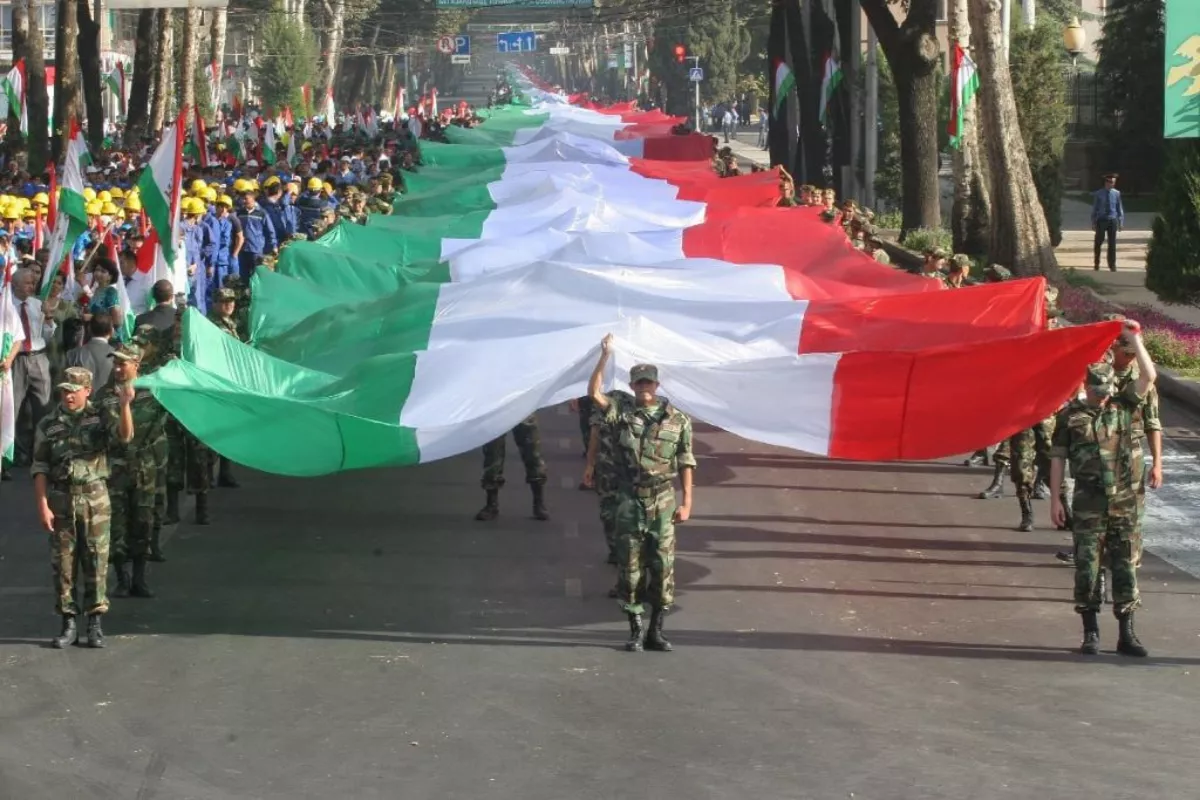
On September 9, Tajikistan hosts official ceremonies, concerts, cultural events, exhibitions, and mass celebrations. In the capital, Dushanbe, streets, squares, and public spaces are usually decorated for the national holiday. National flags are displayed on buildings, and festive programs are held in cities. One of the main symbols of this day is the national flag of Tajikistan. According to official regulations, the flag is raised throughout the country on Independence Day.

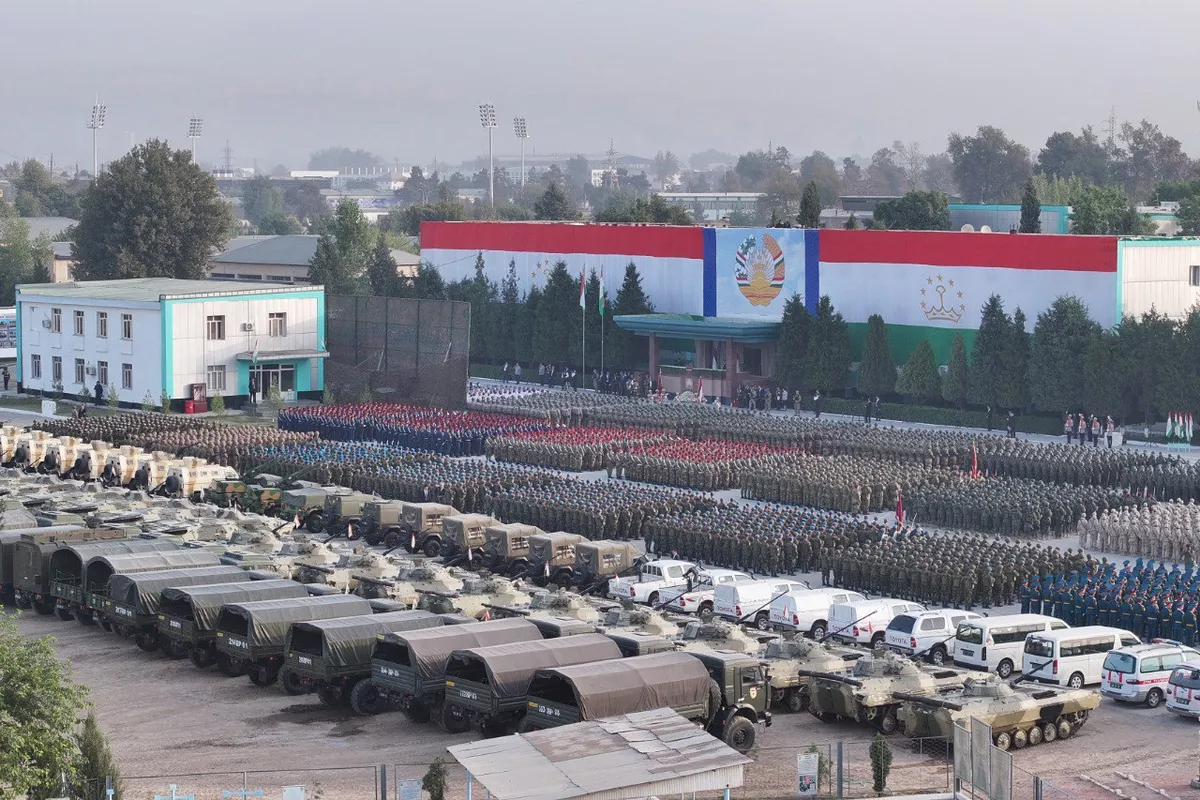
Representatives of the government, civil society organizations, employees of state institutions, military personnel, college students, and schoolchildren take part in the festivities. Concerts featuring traditional Tajik music and dance, sporting events, and various cultural programs are organized. Performances by folk ensembles play a special role. Through music, dance, national costumes, and traditional crafts, the cultural heritage of the Tajik people is showcased during the celebrations.

In Dushanbe and other cities, festive events may conclude with large concerts and fireworks displays. At the same time, the main focus of official celebrations is usually on the country’s history, national unity, and future.
Flag, Coat of Arms, and National Symbols
Independence Day also serves as an occasion to highlight Tajikistan’s state symbols. The country’s flag consists of three horizontal stripes—red, white, and green. In the center of the white stripe are a golden crown and seven stars. The crown holds special significance in Tajik state symbolism. The seven stars are also an important national symbol. The number seven holds special significance in Tajik cultural tradition and is often associated with the concepts of completeness and perfection.

National symbols can be seen almost everywhere during celebrations. Flags adorn government buildings, squares, streets, and venues for festivities. For many citizens, these are not merely festive decorations. National symbols have become part of the country’s identity that has taken shape since independence.
Interesting Facts About Tajikistan’s Independence Day
On September 9, 1991, the Supreme Council of Tajikistan adopted several important documents related to independence. Among them were a declaration of state independence and a resolution on its proclamation.
Another important date is August 24, 1990. It was then that the Declaration on the Sovereignty of Tajikistan was adopted. In other words, the proclamation of full independence was preceded by nearly a year of political and legal formalization of the republic’s autonomy.
The Supreme Council’s resolution of September 9 explicitly stated that the day of the proclamation of independence should become a national holiday. In other words, the status of a holiday was established virtually simultaneously with the proclamation of independence.
Later, September 9 was enshrined in Tajik legislation as the Day of State Independence of the Republic of Tajikistan. Today, it is an official non-working holiday.
After declaring independence, Tajikistan began to formulate its own foreign policy and join international organizations. In particular, on December 25, 1991, the country joined the Commonwealth of Independent States, and on February 26, 1992, it joined the OSCE.
Why September 9 Is Important for Tajikistan
Independence Day is not just another public holiday for Tajikistan. It is the date from which the country counts the modern period of its history. It was on September 9, 1991, that the decision to establish an independent Tajik state was legally formalized. For society, this date has also become a symbol of the people’s right to determine their country’s future independently. After decades as part of the Soviet Union, Tajikistan gained its own status as an independent state and the opportunity to represent itself independently on the world stage.

Today, on September 9, the country commemorates its independence, statehood, culture, and national identity. During official speeches, much attention is paid to peace, stability, and development. That is why Independence Day remains a central date on Tajikistan’s national calendar. For modern Tajikistan, this is a day to commemorate the decision made in 1991 and, at the same time, to discuss how the country envisions its future.


