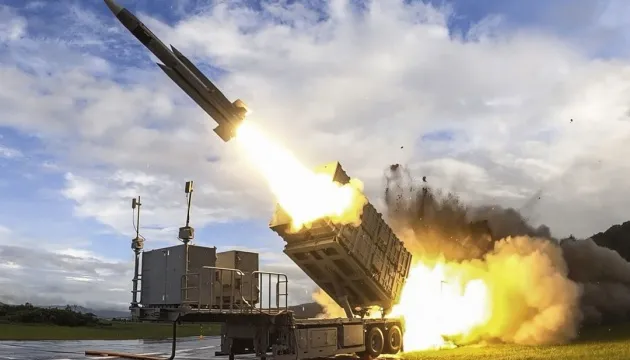
Taiwan has decided to increase production of its own long-range missiles due to concerns about possible delays in the delivery of U.S. weapons. The island’s authorities want to strengthen their own defense capabilities amid rising tensions in the region.
The missile in question is a long-range “surface-to-surface” cruise missile designed to strike fortified targets and enemy troop positions.
Production is being handled by the Chung-Shan National Institute of Science and Technology—Taiwan’s primary state-run weapons developer and manufacturer. The island’s government explains this decision by the need to maintain a stable stockpile of its own weapons due to potential difficulties in obtaining U.S. systems.
Officials in Taipei emphasize that domestic production is not intended to replace U.S. supplies, but only to supplement them. “Domestic weapons programs and foreign purchases—primarily of American weapons—are equally important for strengthening the island’s defense capabilities,” Taiwanese officials state.
The increase in missile production comes amid growing global demand for American weapons. Due to military conflicts and support for partners—particularly Ukraine and Israel—U.S. manufacturers have more orders than they can fulfill quickly. This is precisely what is causing concern in Taipei, which seeks to avoid a situation where, in the event of a crisis, it might be left without the necessary quantity of weapons.
According to Taiwan News, Taiwan is not the only country trying to boost its own missile production. Japan, Australia, and South Korea are also expanding their defense programs, using both their own designs and American technology. Military experts note that developing domestic production could reduce Taiwan’s dependence on foreign supplies in the event of a potential escalation.
At the same time, developing modern missiles remains a complex process. Some projects are hampered by a shortage of key components and restrictions on the transfer of certain technologies. In recent years, Taiwan has been actively strengthening its defenses due to fears of a possible conflict with China, which considers the island its territory and has not ruled out the use of force to establish control, according to Taiwan News.
Powerful Typhoon Bavi isapproaching China’s east coast. According to meteorologists, the maximum sustained wind speed at the typhoon’s center is reaching 155 km/h.