
Tokyo museum receives archive of student mobilized during World War II
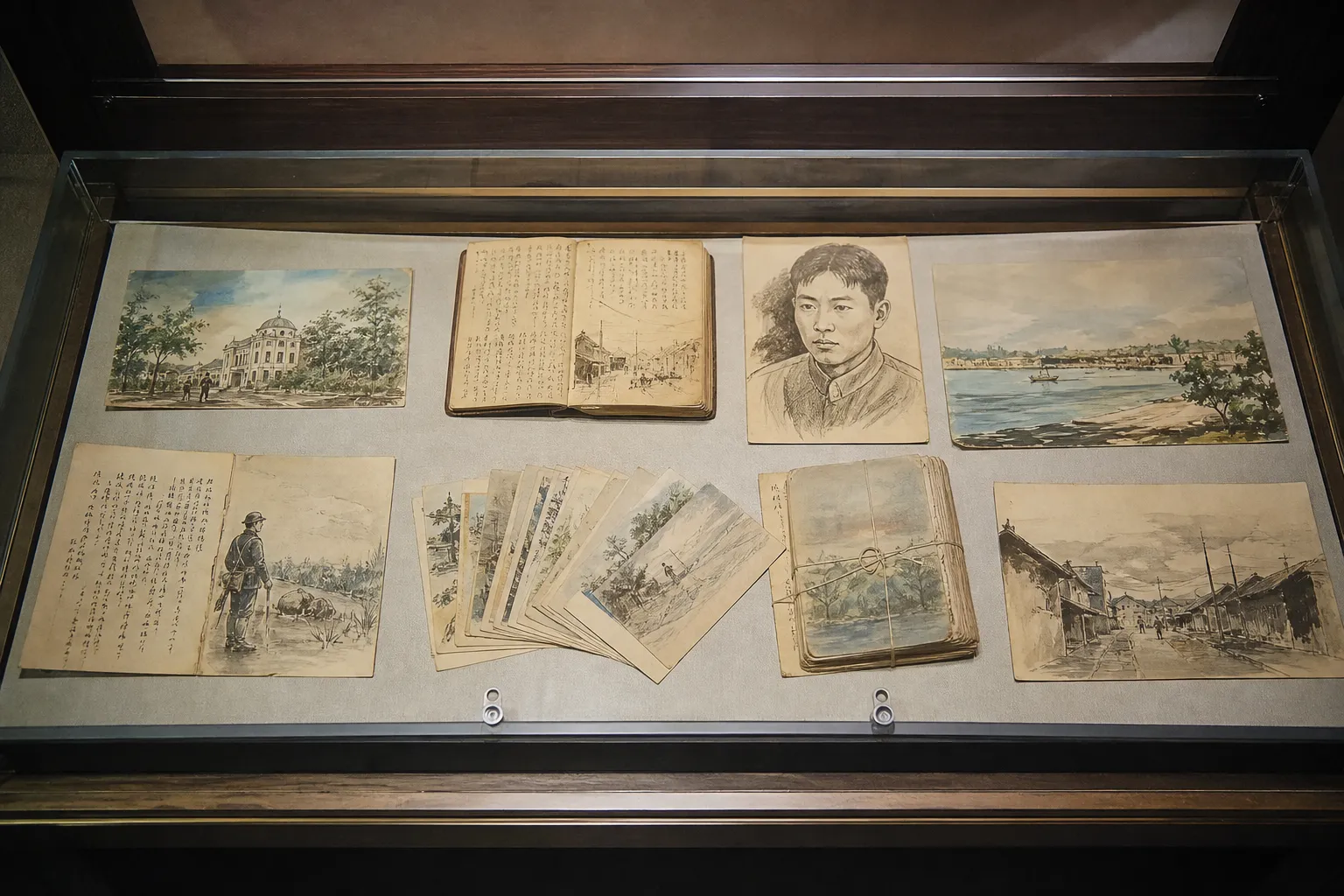
The Wadatsumi no Koe Memorial Museum in Tokyo, Japan, has received around 200 items belonging to Itaru Maruo, a student at Tokyo Imperial University who was mobilized into the Imperial Japanese Army during World War II. The materials handed over include his memoirs, letters, notebooks, postal cards and watercolors, The Japan Times reports.
Maruo was born in Tokyo in 1920 and enrolled in the Faculty of Literature at Tokyo Imperial University in 1942, the predecessor of the University of Tokyo. He studied in the Department of Aesthetics and Art History, painted, and was captain of the university baseball team.
Mobilization and death
In 1944, Maruo was sent to China under the wartime student mobilization program. There, he repeatedly fell ill and was hospitalized. According to the source, it is believed that he ended up in the area of the Soviet invasion and died on August 30, 1945, at a military hospital in Manchuria, in what is now northeastern China.
This happened about two weeks after Japan's surrender. Maruo was 25 years old, and his remains were never returned to Japan. Even during the war, he continued to paint, documenting the everyday lives of military personnel.
More current news is available on the UA.News Telegram channel Telegram.
In letters to his parents, Maruo asked them to send art supplies and buy used books. He wrote that knowledge does not change even if it is acquired from a dirty book, and noted that he would carry out his military duties while waiting for the day when he could read again.
Materials in the museum collection
Maruo's belongings were found between January and July 2026 by Sonoko Hamazaki, the 63-year-old granddaughter of one of his cousins, at her parents' home. The exhibits include illustrated postal cards depicting life in China, as well as a literary anthology he compiled with his baseball teammates before mobilization. Maruo also wrote novels and poetry.
The museum in Tokyo's Bunkyo district, near the University of Tokyo's Hongo campus, will mark the 20th anniversary of its opening in December. Its collection includes around 2,100 items, including letters, diaries and other personal belongings of students who died in the war.


