
Tusk Urged Spain to Follow Poland's Example Amid the Crisis in Ceuta
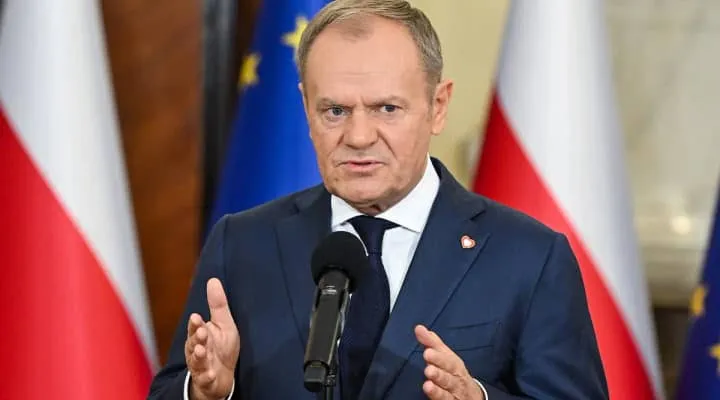
Polish Prime Minister Donald Tusk believes that Spain should follow Warsaw’s example in responding to the migration crisis. According to him, the future of the Schengen Area depends on the effective protection of its external borders.
Polish Prime Minister Donald Tusk commented on the migration crisis in the Spanish enclave of Ceuta. He stated that Spain should draw on the experience of Poland, which several years ago faced a massive influx of migrants at its border with Belarus. Against the backdrop of events in Ceuta, where tens of thousands of migrants are arriving, Tusk recalled that Poland significantly strengthened security along its eastern border in response to the crisis.
According to him, the country changed its asylum rules, built a physical barrier on the border with Belarus, and allocated significant resources to protect its national border. “We have invested billions of euros and mobilized thousands of military personnel, police officers, and border guards. Spain must follow our example—if we want the Schengen Area to continue to exist,” Donald Tusk stated.
The Polish prime minister also emphasized that Warsaw viewed the migration crisis on the border with Belarus as a means of exerting pressure on the European Union. That is why, he said, Poland resorted to stricter control measures. Tusk’s statement came amid a large-scale migration crisis in Ceuta. In recent days, tens of thousands of migrants have arrived in the Spanish enclave, prompting European politicians to once again discuss the need to strengthen the protection of the European Union’s external borders.
The Polish prime minister is convinced that effective control at the external borders is one of the key factors in preserving the free movement of people within the Schengen Area. The politician wrote about this on the social media platform X.
As a reminder, on the night of July 29–30, an air raid alert was issued in eastern Poland due to a massive Russian attack on western regions of Ukraine. Earlier, Polish authorities reported discovering a crater and debris from an unidentified object in the Lublin Voivodeship; the circumstances surrounding their appearance are currently being investigated.
On the night of July 30, Russian forces carried out one of the largest combined attacks on Ukraine, using more than 70 missiles and over 280 attack drones. Kyiv and the surrounding region, as well as the Dnipropetrovsk, Lviv, Poltava, and Kharkiv regions, came under fire. As a reminder, on the night of July 30, an air raid alert was issued in eastern Poland due to a massive Russian attack on western regions of Ukraine. Earlier, Polish authorities reported discovering a crater and debris from an unidentified object in the Lublin Voivodeship; the circumstances surrounding their appearance are currently being investigated.
On the night of July 30, Russian forces carried out one of the largest combined attacks on Ukraine, using more than 70 missiles and over 280 attack drones. Kyiv and the surrounding region, as well as the Dnipropetrovsk, Lviv, Poltava, and Kharkiv regions, came under fire.


