
France and Italy have stepped up border controls in response to the migration crisis in Ceuta
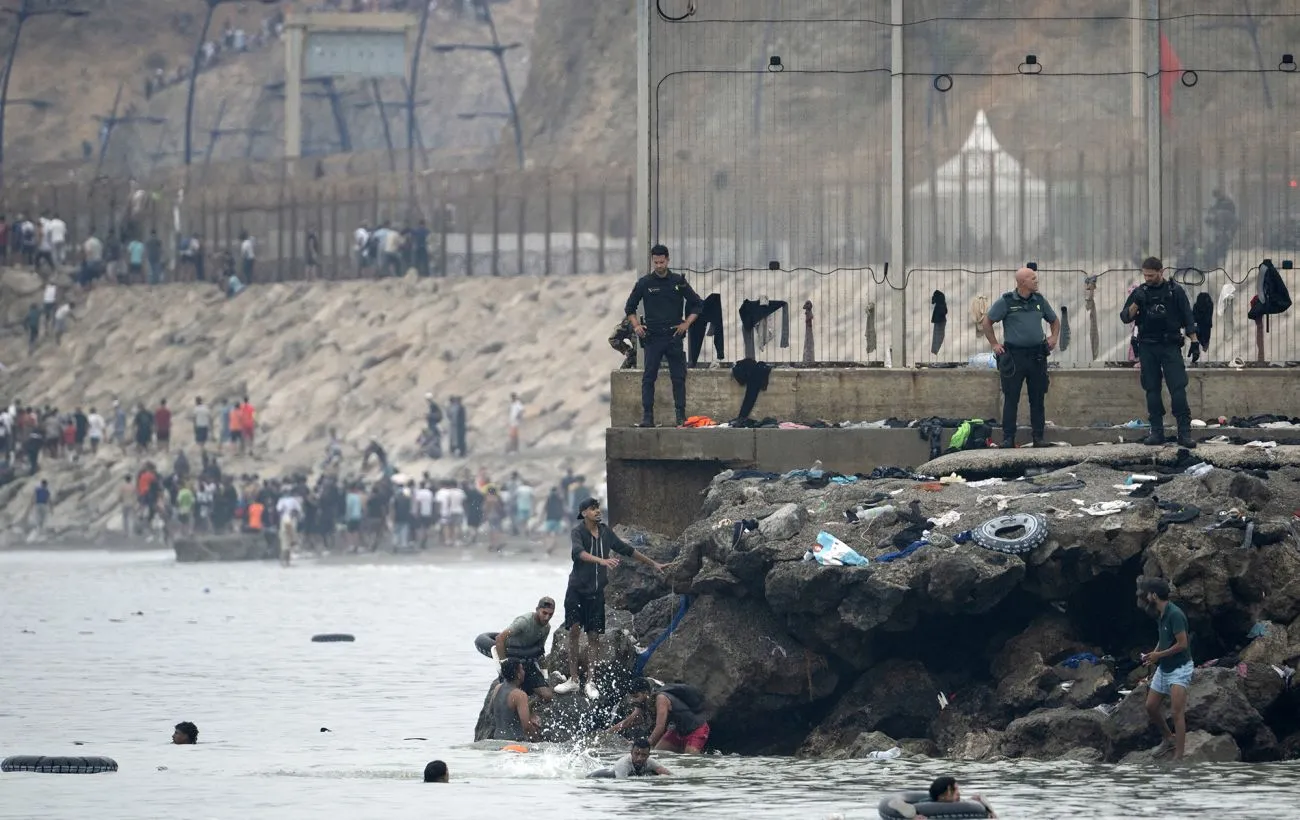
France and Italy have introduced additional border control measures following a massive influx of migrants into the Spanish enclave of Ceuta. European countries fear that the situation could escalate into the largest migration crisis in the EU in recent years.
The Italian government has announced a temporary suspension of certain provisions of the Schengen Agreement regarding Spain for a period of one month.
However, these restrictions will not apply to citizens of Spain or other European Union member states. Enhanced controls will apply to third-country nationals arriving from Spain by sea or air.
“This is an extraordinary measure taken to ensure national security and prevent potential consequences for our country,” said Italian Prime Minister Giorgia Meloni.
She emphasized that the restrictions will remain in effect only for as long as necessary and should not significantly impact the tourist season.
French President Emmanuel Macron has instructed the Ministry of the Interior to step up checks at the French-Spanish border.
Interior Minister Laurent Nunez announced that:
- 334 police officers and gendarmes will be deployed to secure the border;
- drones and three aircraft will be used for aerial surveillance;
- checks on rail services between France and Spain will be stepped up;
- additional mobile units will conduct checks within the country.
France is also consulting with the governments of Spain and Morocco to coordinate further actions.
According to Spanish authorities, the flow of migrants to Ceuta has been largely halted.
Of the nearly 50,000 people who illegally crossed the enclave’s border, more than 48,000 have already voluntarily returned to Morocco.
Spanish Prime Minister Pedro Sánchez has called on European institutions to urgently convene a meeting of EU interior ministers to develop a joint response to the migration crisis.
According to official data from Spain’s Ministry of the Interior, at least 67 people died while attempting to reach Spanish territory.
Meanwhile, the opposition in Italy has called the government’s decision largely symbolic.
Critics point out that there is currently no evidence that migrants from Ceuta are attempting to enter Italy en masse.
“The problem is that this is a purely demagogic proposal, as always, designed for domestic consumption and to compete with Vannacci, which does not solve any problems,” said Piero De Luca, a member of the opposition Democratic Party.
In recent days, tens of thousands of migrants, mainly from sub-Saharan African countries, have reached the Spanish enclave of Ceuta from Moroccan territory, many of them by swimming.
Ceuta and Melilla remain Spanish enclaves in North Africa that are part of the European Union but are not part of the Schengen Area, making them one of the main routes for illegal migration to Europe.
This was reported by Reuters and dpa.
Spain’s Ministry of the Interior reported that 37,000 migrants have already voluntarily returned from Ceuta to Morocco. According to official estimates, about 23,000 people who arrived during the massive influx remain in the Spanish enclave.
Spain has stepped up security in the North African enclave of Ceuta following a mass border breach by migrants from Morocco. According to local authorities, thousands of people illegally crossed the border by sea and land, causing temporary shelters to become overcrowded. Military units were deployed to the region to stabilize the situation.


