
The tallest tower of the Sagrada Família has been completed in Barcelona — The Art
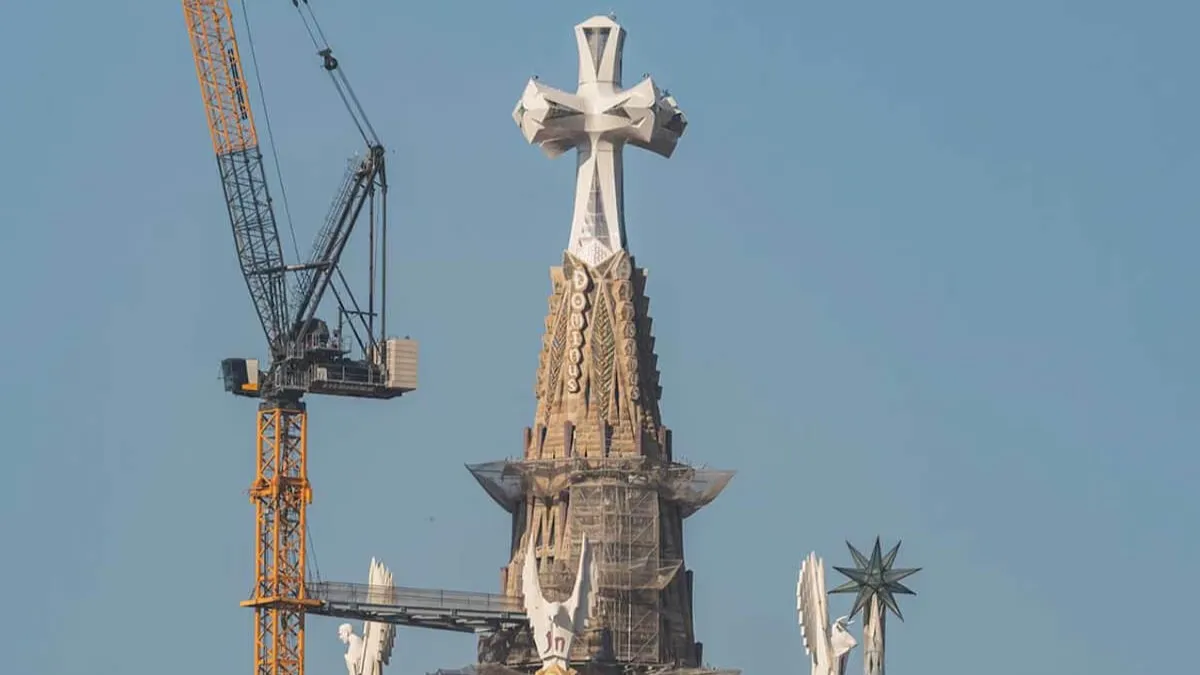
The Sagrada Família in Barcelona, which has been under continuous construction for 144 years, is officially nearing its historic completion.
It is expected that on June 10, on the 100th anniversary of the tragic death of the brilliant architect Antoni Gaudí, Pope Leo XIV will solemnly bless the Tower of Jesus Christ, the final construction work on which was completed in February of this year.
This momentous event will mark the symbolic completion of the basilica’s main structure, although finer finishing work on this unique site will continue for at least another ten years.
The newly built Tower of Jesus Christ is the 14th tower of the magnificent cathedral, while the architectural complex is intended to consist of 18 separate towers in total.
The architects dedicated twelve of them to the apostles, four to the evangelists, and one to the Virgin Mary, which was fully completed in 2021 and traditionally crowned with a large, bright star.
The Tower of Jesus Christ is the main central structure of the entire cathedral, so at its summit, engineers installed a massive four-pointed cross made of glass and white ceramic, which will be brightly illuminated day and night in accordance with Gaudí’s original vision.
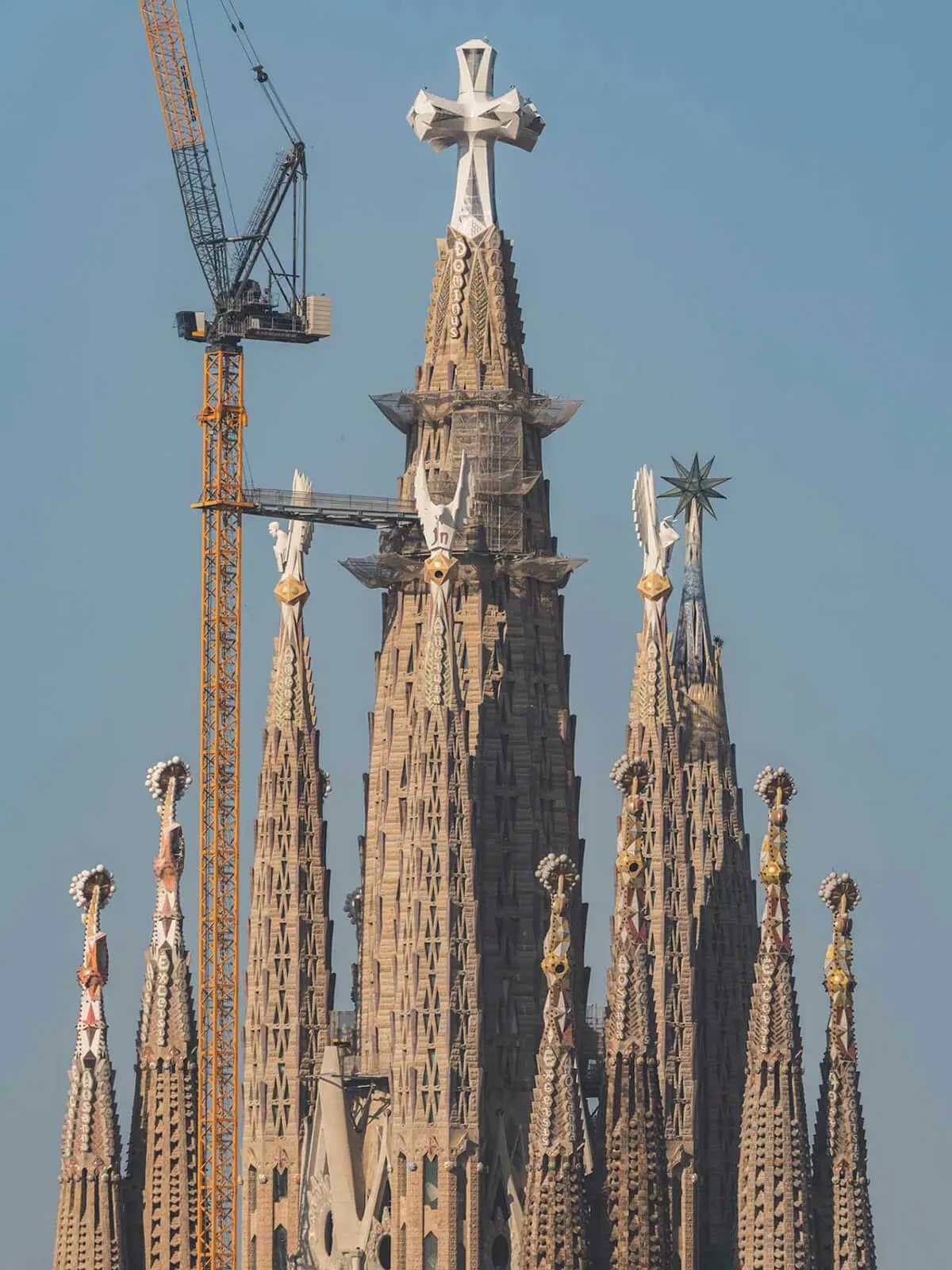
Upon completion of this structure, the Sagrada Família officially became the tallest Christian church in the world, reaching a record height of 172.5 meters.
Construction of this iconic building began way back in 1882 under the direct supervision of the first architect, Francisco de Paula del Villar, who planned to build a traditional Neo-Gothic penitential church.
However, less than a year later, the grand project was officially taken over by 30-year-old Antoni Gaudí, who radically changed the building’s original concept and dedicated his entire life to it.
The famous architect drew inspiration exclusively from wild nature and sincerely believed it to be God’s most perfect creation on earth.
The master sought to create a structure that would remind people of a living fairy-tale forest rather than a classic, gloomy church; thus, the columns inside the building resemble tree trunks, and the architectural forms replicate natural structures.
When Gaudí first presented his revised design to the religious community, he confidently promised to complete all the work within ten years, but was later forced to constantly revise these optimistic estimates.
In the following decades, the artist became one of the key figures of Catalan Modernism and the creator of such world-renowned masterpieces as Park Güell, Casa Batlló, and Casa Milà.
Toward the end of his life, he completely isolated himself from the world and settled in a small studio right inside the unfinished Sagrada Família.
In 1926, the architect died tragically after being struck by a streetcar.
At the time of his sudden death, builders had completed only about a quarter of the planned work, and the master himself was buried with honors in the cathedral’s underground crypt.
After the death of its chief visionary, the long-running construction project was repeatedly brought to a complete halt due to political upheavals.
In particular, during the protracted Spanish Civil War of 1936–1939, all work was suspended, and radical anarchists destroyed most of the original drawings and unique models left by the late architect during the riots.
It was not until the 1950s that construction of the basilica was fully resumed.
A new generation of talented architects, engineers, and restorers began to gradually recreate Gaudí’s vision using preserved archival photographs, plaster models, and the few testimonies of people who had personally worked with the master.
Despite the current symbolic completion of the tower’s construction, the entire religious complex will not be fully ready for visitors for quite some time.
The most ambitious and complex part that architects still have to build in the future remains the Facade of Glory on the south side of the basilica.
This final stage will include four new towers, a monumental staircase, and a large green park directly in front of the main entrance to the church.
However, the practical implementation of this ambitious project is already sparking serious social controversy in the city. The fact is that to accurately execute Gaudí’s original plan, city authorities will have to completely demolish two existing residential neighborhoods.
This is reported by The Art Newspaper.
Spain has completed the tallest residential building in the EU
Turkey has completed an onshore pipeline for the transmission of Black Sea gas


