
In Britain, a man tried to sell fake antique statues through Sotheby’s
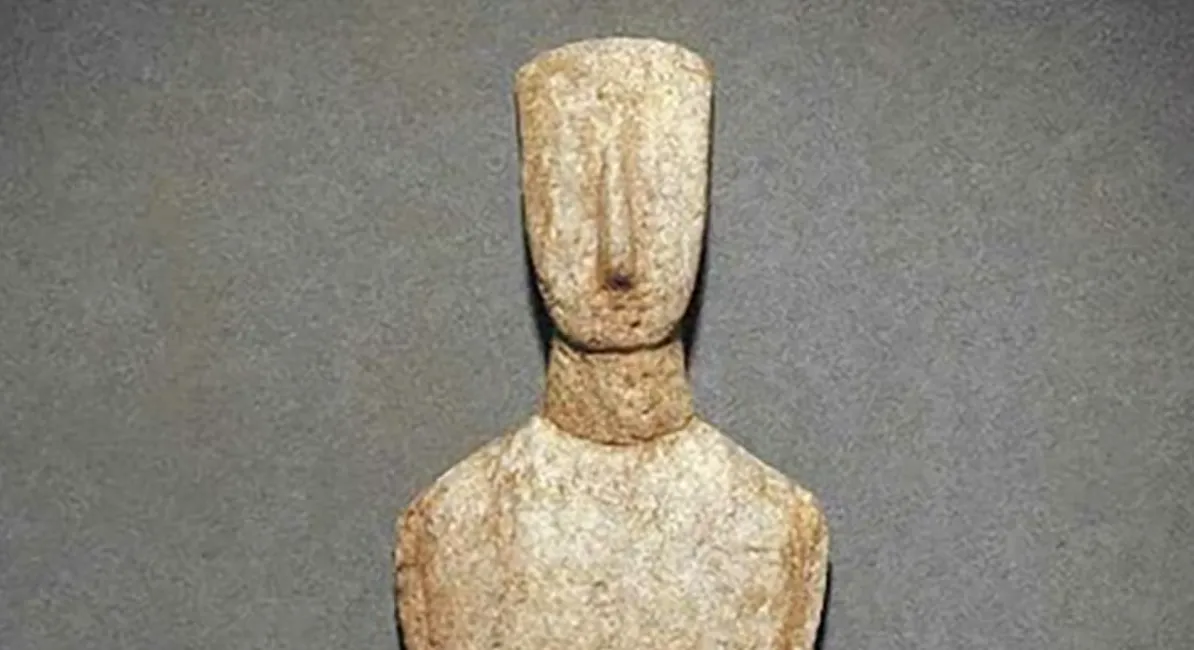
In the United Kingdom, a court has sentenced a man who attempted to sell counterfeit antique statues through Sotheby’s auction house using forged documents regarding their provenance.
This was reported by The Guardian.
As established by a London court, 46-year-old Andrew Crowley approached the auction house asking to appraise three statues allegedly from the Cyclades, as well as one Anatolian figurine. According to him, he had inherited the artifacts from his grandfather.
The prosecution noted that if the items had turned out to be genuine, their value could have reached 680,000 pounds. However, the court reduced this estimate to 340,000 pounds, finding the previous calculations to be inflated.
Crowley provided documents purporting to confirm the statues’ provenance dating back to 1976. They were styled to look like old papers with printed text, an embossed antique dealer’s logo, and a postage stamp.
However, an expert analysis determined that these documents were created using printing technologies that did not emerge until 2001. Experts also found spelling errors in the accompanying papers.
The court acknowledged that the man himself may not have known the statues were forgeries, as he had indeed inherited them from a relative. The offense specifically involved providing false documentation for the purpose of making a profit.
Crowley had previously pleaded guilty. The court sentenced him to a two-year suspended sentence, 200 hours of community service, and ordered him to pay £1,630 in court costs.
We previously reported that the recent discovery of two skeletons mutilated in the same manner suggests that limb amputation was used as a punishment during the Eastern Zhou Dynasty in China, over 2,000 years ago.
We also recall that during excavations in the ancient city of Laodicea in the Turkish province of Denizli, which is included on UNESCO’s tentative list of World Heritage Sites, a statue of Asclepius, the god of medicine in Greek and Roman mythology, and the head of a statue of his daughter Hygieia were discovered.


